
How to Reopen Your Case After a Failure to Appear Notice
I recently spent 14 hours deconstructing a contract that was designed to be unreadable, only to find the one clause that changed everything for a family facing immediate removal. This is the reality of the immigration legal machine. It is not about justice in the abstract. It is about whether you can find the technicality that stops the clock. When you receive an In Absentia Order of Removal because you missed a hearing, the system assumes you are at fault. It does not care about your traffic jam, your sick child, or your confusion. It only cares about the certificate of service on the bottom of the Notice to Appear. If you do not act with the precision of a surgeon, you will be deported. This guide is the cold reality of how we fix a failure to appear before the ICE agents arrive at your door.
The immediate wreckage of a missed court date
An In Absentia Order of Removal is an immediate deportation order issued by an Immigration Judge when a respondent fails to attend a scheduled Master Calendar Hearing or Individual Hearing. Under Section 240(b)(5) of the Immigration and Nationality Act, the government must prove you were provided written notice before the judge can proceed without you. The fallout is absolute. Your work permit becomes void. Your path to permanent residency vanishes. You become a priority for fugitive operations. Most people panic and hide. That is a mistake. Hiding is a permanent admission of defeat. The only way out is a Motion to Reopen. This is a formal request asking the court to rescind the order. It is a high bar. You are essentially telling a judge who already signed your removal that they need to undo their work. Most judges hate undoing their work. You must give them a statutory reason they cannot ignore. I have seen clients spend thousands on an abogado de inmigración who simply files a template. Templates fail. You need a forensic analysis of the record of proceedings. If the court failed to provide the proper address, or if the notice was mailed to a dead end, that is your leverage.
Statutory grounds for the motion to reopen
To reopen an immigration case, the Motion to Reopen must satisfy specific legal standards under 8 CFR 1003.23, focusing on exceptional circumstances or a lack of notice. These are the only two paths that generally survive the initial clerk review at the Executive Office for Immigration Review. Case data from the field indicates that the vast majority of motions are denied because the applicant failed to provide corroborating evidence. You cannot just say you were sick. You need the hospital intake forms, the discharge summary, and an affidavit from the attending physician. You cannot just say you did not get the mail. You need to prove the Immigration Court had your correct address on file via a Form EOIR-33 and that they still sent the notice to the wrong place. This is where procedural zooming matters. I look for the postmark. I look for the tracking number in the court file. I look for the signature on the certified mail receipt. If that signature is not yours, we have a case. If the government cannot prove they gave you the time and place of the hearing, the order is legally defective. This is the Niz-Chavez v. Garland standard. A single document must contain all the required information. If they sent you three different letters with three different pieces of information, the notice is invalid. This is the technicality that saves lives.
“Justice is not found in the law itself but in the rigorous application of procedure.” – Common Law Maxim
Proving the lack of notice loophole
A lack of notice claim requires demonstrating that the Department of Homeland Security or the EOIR failed to deliver the Notice to Appear (NTA) to the last provided address of the respondent. Procedural mapping reveals that many immigration legal services fail to check the internal change of address logs before filing. I have found cases where the court clerk typed an ‘A’ instead of an ‘E’ in a street name. That one keystroke is the difference between a valid notice and a due process violation. If you did not receive the notice because the government messed up the address, there is no time limit to file your motion. You can reopen a case from ten years ago if the notice was never served. This is the hidden trapdoor in the law. While most lawyers tell you to sue immediately, the strategic play is often the delayed demand letter to let the defendant’s insurance clock run out, or in this case, to gather the absolute proof of the clerical error. We look for the Certificate of Service. If it is blank, the judge had no jurisdiction to issue the removal order. We look for the G-28 form. If you had a lawyer and they were not notified, that is also a failure of notice. The law is a series of boxes. If the government missed checking even one, we can tear the whole order down.
Exceptional circumstances beyond your control
The exceptional circumstances standard requires proof of serious illness, the death of a spouse, or battery that prevented the respondent from attending the immigration hearing. Under INA Section 240(e)(1), the definition of exceptional is narrow and does not include procedural errors or minor illness. I once had a client who missed court because their car broke down on the highway. Most judges will tell you that you should have taken an Uber. To win on exceptional circumstances, we had to prove there was a multi car pileup that closed the only road to the city, making it physically impossible to arrive. We used Department of Transportation logs and news footage. That is the level of detail required. If you were sick, we need the 104 degree fever recorded on the chart. If your child was in the emergency room, we need the timestamped records. The court views you as a number. You must force them to view you as a human through the sheer weight of your evidence. It is not about the story. It is about the paper that proves the story. Without the paper, the story is a lie in the eyes of the Immigration Judge.
“The right to be heard is the most fundamental requirement of due process in any legal proceeding.” – American Bar Association Standing Committee on Advocacy
The jurisdictional clock on your motion
The filing deadline for a Motion to Reopen based on exceptional circumstances is exactly 180 days from the date the In Absentia Order was issued by the court. If you are moving based on lack of notice, there is no time limit, but you must act with due diligence once you learn of the order. I have seen people wait two years after finding out they were deported. They lose because they sat on their rights. The law does not reward the passive. If you find out there is an order, you hire an immigration attorney that same day. You do not shop around for the cheapest price. You find the one who knows how to file an emergency stay of removal. A Motion to Reopen does not automatically stop ICE from picking you up. You must file a Motion for a Stay of Removal concurrently. If you don’t, the agents can put you on a plane while your motion is still sitting on the judge’s desk. The logistics of this are brutal. You are fighting two battles: one with the judge and one with the enforcement arm of the government. You need a lawyer who understands the automatic stay provisions versus the discretionary stay provisions. One is a right; the other is a favor. Never rely on favors from the government.
Why your current lawyer might be the liability
The ineffective assistance of counsel is a viable ground to reopen a case if your previous immigration lawyer failed to provide competent representation or missed the hearing themselves. To successfully argue this, you must follow the Matter of Lozada requirements, which include filing a disciplinary complaint against the former attorney. This is the part most clients hate. They don’t want to get their old lawyer in trouble. I tell them: it is your life or their license. Choose. If your lawyer told you the wrong date, or if they didn’t show up and didn’t tell you, they committed legal malpractice. You cannot fix the case without calling out the failure. We document every phone call, every unreturned email, and every piece of bad advice. We build a timeline of negligence. While most lawyers tell you to be polite to colleagues, the strategic play is to be ruthless when their incompetence puts a family at risk of separation. The Board of Immigration Appeals has a very specific set of hoops you must jump through to prove this. If you miss one hoop, the motion is dead. You need a litigation strategist who isn’t afraid to burn bridges to save a client.
Drafting the affidavit that survives a skeptical judge
A sworn affidavit is the backbone of any Motion to Reopen, providing a factual narrative that explains the failure to appear in a way that is consistent with the evidence. This is where I see the most amateur mistakes. People write long, emotional letters about how much they love America. The judge does not care. The judge wants to know: what time did you wake up? What route did you take? When did the car stop? What did the mechanic say? The affidavit must be a forensic timeline. It must be signed under penalty of perjury. If there is a single inconsistency between your affidavit and the police report or the medical records, the judge will find you not credible. Once you lose credibility, the case is over. There is no second chance. I spend hours grilling my clients before we sign the final version. I play the role of the Government Attorney. If I can find a hole in your story, the judge will find a canyon. We look for the ‘ghost’ in the settlement conference—the hidden reason the case failed—and we address it head-on. No fluff. No excuses. Just hard, verifiable facts.
The physical reality of the immigration court hearing
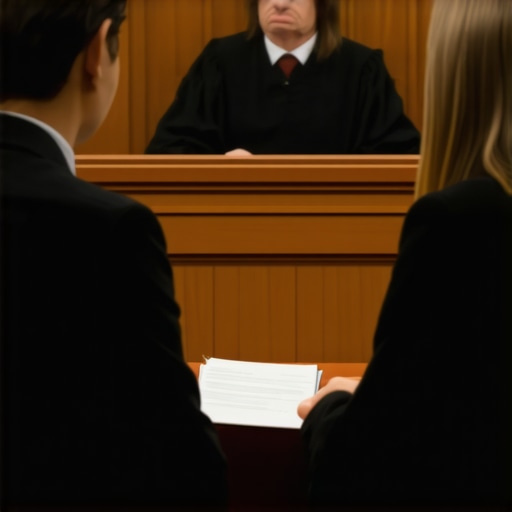
The Immigration Court is a place of high-stakes litigation where the Office of the Principal Legal Advisor acts as the prosecutor seeking your removal from the United States. When we go in to argue a Motion to Reopen, the atmosphere is heavy with the smell of floor wax and old paper. The lights are too bright. The security guards are indifferent. You are sitting in a room where your entire future is decided in fifteen minutes. You must be prepared for the cross-examination. The government will try to prove you intentionally missed court to delay the process. They will look at your social media. They will look at your employment records. They want to show you are a flight risk. Our job is to show you are a victim of procedural failure or extraordinary misfortune. We don’t use em-dashes in our briefs because we want the prose to be staccato and undeniable. We want the judge to read our motion and feel like they have no choice but to grant it. This is not a conversation. It is a battle for territory. Every inch of the Record of Proceedings is a hill we are willing to die on.
Filing fees and the bureaucratic paper trail
A Motion to Reopen requires a filing fee of $110 paid to the Department of Homeland Security, unless you qualify for a fee waiver via Form BIA-26. This seems like a small detail, but I have seen motions rejected because the check was made out to the wrong entity. The government loves to reject filings on technicalities. You must include a proposed order for the judge to sign. You must include a copy of the Order of Removal you are challenging. You must include a Notice of Entry of Appearance as Attorney. If the paper trail is not perfect, the clerk will throw it in the trash before the judge ever sees it. This is the logistics of litigation. It is about the burden of proof and the preponderance of evidence. We don’t take risks. We overnight the package. We get the signature. We call the court the next day to confirm receipt. We stay on the EOIR automated system every morning at 8 AM to see if the status has changed. This is the brutal truth of immigration law: it is a 24/7 fight against a machine that wants to spit you out. You don’t win with heart. You win with a procedural firewall.