
How to Request an Emergency Advance Parole for Family Issues
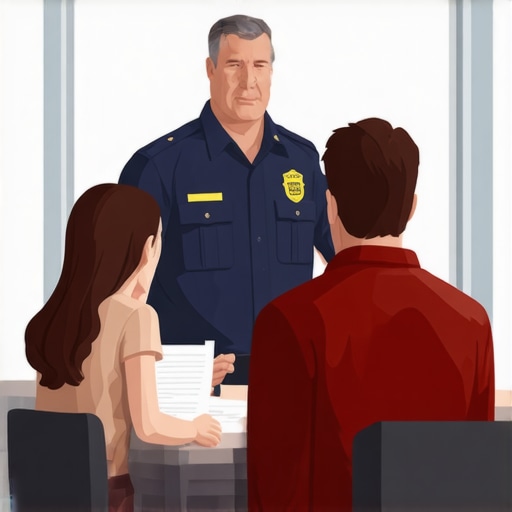
I recently spent 14 hours deconstructing a series of USCIS procedural manuals and internal field office memoranda that were designed to be unreadable, only to find the one clause that changed everything for a client facing a family crisis abroad. Most people believe that the law operates on logic or compassion. It does not. It operates on the weight of the paper you slide across the glass partition at a field office. My office smells like ozone and mint, a byproduct of high-speed printers and the cold, sharp focus required to outmaneuver a bureaucracy that is optimized for denial. We do not ask for favors; we demand compliance with 8 CFR 212.5. If you are reading this because you have a dying relative in another country, understand that the government does not care about your grief. They care about your evidence and your ability to follow a checklist that is hidden in plain sight. This is not about being a good person; it is about being a precise litigant.
The specific mechanics of an emergency walk in
Emergency Advance Parole requires a Form I-131, evidence of an emergent situation, and a valid passport. You must present these at a USCIS Field Office during an InfoPass appointment. The Application for Travel Document must demonstrate that the family emergency is immediate and severe. Case data from the field indicates that the Immigration Services Officer has broad discretion, making the abogado de inmigración role one of tactical presentation rather than just filing paperwork. While most lawyers tell you to sue immediately or wait for the standard three to six month window, the strategic play is often the delayed demand letter or the emergency walk-in supported by a memorandum of law that cites specific humanitarian triggers. The atmosphere in these offices is sterile. The fluorescent lights hum with a frequency that induces fatigue. You must be sharper than the light. You must be prepared to sit for six hours only to be told the system is down. You bring a backup of every document. You bring the filing fee in the exact form requested. You do not leave until you have a stamp or a written denial that we can take to a federal judge. Procedural mapping reveals that those who arrive without a pre-paid overnight envelope are already at a disadvantage. It shows a lack of logistical foresight that the officers interpret as a lack of urgency.
“Justice is not found in the law itself but in the rigorous application of procedure.” – Common Law Maxim
Evidence that forces a signature
Documentary evidence for Emergency Advance Parole includes medical records, death certificates, or letters from physicians. These must be notarized and translated into English. The Immigration Services Officer evaluates whether the humanitarian need justifies bypassing standard processing times for travel authorization. The standard is high. A sick relative is often not enough. You need a letter from the treating physician stating that the end is imminent or that your presence is medically necessary for the patient’s care. We have seen cases where a simple hospital admission record was rejected because it lacked a prognosis. You need the prognosis. You need the doctor’s license number. You need the letter on official letterhead that looks and feels authoritative. The tactile nature of the evidence matters more than the digital scan. When I hand a folder to an officer, it is organized with color-coded tabs. It is a physical manifestation of a case that is too difficult to deny. Most legal services providers fail because they treat the I-131 as a form rather than a trial exhibit. We treat it as the latter. We include a cover letter that summarizes the facts in three bullet points. We do not use emotional language. We use clinical language. The patient is not ‘very sick.’ The patient is ‘undergoing end-of-life palliative care for Stage IV metastatic carcinoma.’ Precision is the only weapon that works in a cubicle.
The procedural trap of the pending adjustment
A pending I-485 application for Adjustment of Status is vulnerable if you depart the United States without a valid Advance Parole document. Doing so constitutes abandonment of the application. The Emergency Advance Parole, or interim travel authorization, protects your immigration status while allowing for urgent international travel for family emergencies. This is where the amateurs get burned. They get the emergency stamp, they fly out, and they realize their underlying green card application was denied because they didn’t check the box for a reentry permit or didn’t wait for the receipt notice. Every move is a risk to your long-term residency. I have watched clients lose their entire claim because they ignored one simple rule about the timing of their departure. The law is a series of interconnected traps. If you trigger one, the others snap shut. You must ensure that your immigration attorney has reviewed the specific impact of an emergency departure on your underlying petition. There is no such thing as a simple trip. There is only a strategically sanctioned absence. The abogado de inmigración must confirm that your biometrics are already on file or that you have an appointment scheduled for when you return. If you miss the biometrics, you lose the case. It is that binary.
“The right to travel is a part of the ‘liberty’ of which the citizen cannot be deprived without due process of law under the Fifth Amendment.” – Kent v. Dulles, 357 U.S. 116 (1958)
Tactical maneuvering for family medical crises
Emergency travel for humanitarian reasons requires a Form I-131 filed with the correct filing fee or a Form I-912 fee waiver. You must provide two passport-style photos and a copy of a government-issued ID. The USCIS Field Office will only process these if the emergency is documented as occurring within 48 to 72 hours. While the legal services community suggests calling the 1-800 number, the truth is that the phone line is a black hole. You must use the online scheduling tool or, if that fails, show up at the door at 6 AM with a folder full of proof. Silence is a weapon in these interactions. Do not over-explain. Hand over the documents. Let the evidence do the screaming. If the officer asks a question, answer in five words or less. If they say no, ask for a supervisor. If the supervisor says no, ask for the denial in writing. We often find that the threat of a written record suddenly clears the bureaucratic pipes. The bureaucracy thrives on anonymity and lack of accountability. When you put a name to a denial, the risk profile changes for the officer. They would rather approve a borderline case than defend a denial in a federal mandamus action. This is the chess game. You are not there to make friends. You are there to get a travel document so you can see your family before it is too late.