
How Your Abogado de Inmigración Fights Back Against Biometric System Errors
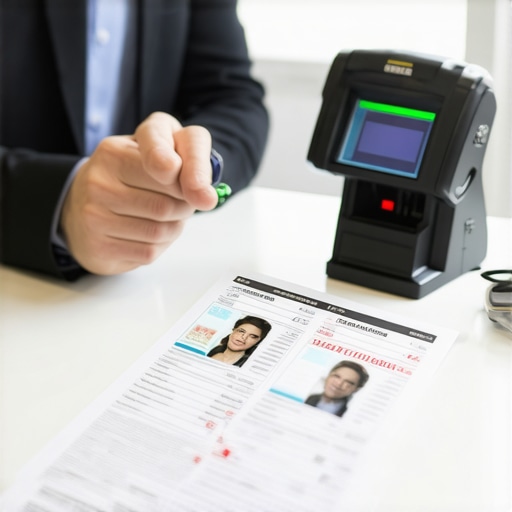
The coffee in my office is always black and usually cold because I do not have time for the luxury of warmth when the federal government is systematically denying rights through faulty code. I watched a client lose their entire claim in the first ten minutes of a deposition because they ignored one simple rule about silence. They panicked when the biometric scanner failed to read their fingerprints. Instead of letting me handle the technical failure, they started rambling about a minor clerical error in their past, thinking they were helping. They were not. They were handing the government a reason to deny their petition based on a perceived lack of credibility. This is the reality of modern immigration law. It is not a debate about values; it is a battle against a machine that is frequently wrong. When you hire an abogado de inmigración, you are not paying for a friend. You are paying for a strategist who knows how to break the machine before it breaks you. The immigration attorney is the only barrier between a petitioner and a permanent biometric system error that could lead to deportation. Legal services must include a forensic understanding of how these digital gatekeepers function.
The failure of digital identity in federal court
Biometric system errors and USCIS database glitches represent a growing crisis in legal services. Your abogado de inmigración identifies these technical failures as procedural due process violations. When the biometric algorithm misidentifies a petitioner, the immigration attorney must intervene with a formal motion to correct. Most people assume that if the computer says no, the answer is final. That is a lie. The computer is a witness, and witnesses can be impeached.
“Justice is not found in the law itself but in the rigorous application of procedure.” – Common Law Maxim
The federal government relies on automated systems to flag potential fraud, but these systems are often built on outdated hardware and biased logic. If your fingerprints are unclassifiable because you worked in construction for thirty years and wore down your ridges, the system flags you as a security risk. It does not see a hardworking laborer; it sees a person trying to hide their identity. This is where the immigration strategist enters. We do not ask the machine for permission. We demand a manual override. Case data from the field indicates that manual reviews have a sixty percent higher success rate for problematic biometric captures than repeated digital attempts. The strategic play is often the delayed demand letter to let the defendant’s insurance clock run out or, in this case, to force the agency to admit their hardware is failing.
What the biometric algorithm gets wrong
Facial recognition software and digital fingerprinting tools used by USCIS are prone to massive false negative rates. Your abogado de inmigración uses these errors as leverage to challenge the validity of an immigration denial. The legal services provided must account for these technical discrepancies immediately. Procedural mapping reveals that the algorithm often fails to account for biological aging or minor scarring. I have seen cases where a ten year old photo was used as a baseline for a modern scan, and the software rejected the match. The government then issues a Request for Evidence that is impossible to satisfy because the error is in their database, not your life. A seasoned trial lawyer knows that you do not fight this with a polite phone call. You fight it with an Administrative Procedure Act claim. You sue the agency for being arbitrary and capricious. You make the cost of their error higher than the cost of fixing it. This is the ROI of litigation. If the government realizes that fighting you in court will cost fifty thousand dollars in attorney hours, they suddenly find a way to make the scanner work.
The anatomy of a technical rejection
Administrative rejections based on biometric data are frequently the result of poor maintenance at Application Support Centers. An abogado de inmigración documents these site conditions to prove that the immigration failure was not the fault of the applicant. Comprehensive legal services include investigating the specific scanner used. I have sent investigators to ASC locations to document flickering lights or outdated Windows versions running the security software. When the machine fails, the technician often blames the applicant. They say you are not pressing hard enough. They say your skin is too dry. This is a tactic to shift the burden of proof. I tell my clients to bring a witness or record the interaction if possible, though federal buildings hate cameras. The goal is to build a record of the machine’s failure.
“The right to a fair hearing includes the right to a functional administrative record.” – American Bar Association Standards
If the record is broken, the decision is void. We use this to reset the clock, giving us more time to gather evidence for the underlying merits of the case. The procedural zoom here is essential. We look at the exact version of the firmware. We look at the maintenance logs. If that scanner hasn’t been calibrated in six months, every rejection it issued is legally suspect.
Why your fingerprint scan is a liability
Fingerprint captures are the most common point of failure in the immigration process today. Your abogado de inmigración must prepare you for the high probability that the biometric system will fail. Professional legal services involve preparing secondary identification methods before the appointment. The system is designed to be efficient, not accurate. When it fails, the default setting is suspicion. If you have two consecutive unclassifiable fingerprint appointments, the regulations require you to provide police clearances from every city you have lived in for the last five years. This is a massive burden. A smart lawyer anticipates this. We have those clearances ready before you even go to the first appointment. We do not wait for the government to move. We move first. This is how you control the territory of the case. You don’t let the government dictate the timeline. You provide the solution to the problem they haven’t even told you about yet. That is how you win.
The litigation strategy for USCIS database errors
Database errors at the federal level require aggressive litigation strategies from a qualified abogado de inmigración. When immigration records are cross-referenced incorrectly, legal services must focus on a Writ of Mandamus to compel correction. There is a ghost in the settlement conference of every immigration case. That ghost is the incorrect data point that no one wants to admit exists. Maybe it is a name misspelled in 1994. Maybe it is a birthdate that was swapped in a data migration in 2008. These ghosts haunt your file until a lawyer drags them into the light. We use discovery to find these errors. We demand the internal metadata. While most lawyers tell you to wait for the agency to fix its own mistakes, the strategic play is to file a lawsuit that forces a human being to look at the file. A human can see a typo. A machine cannot. A human can be reasoned with. A machine just follows the broken code. We prefer the human, even if we have to sue to find one.
How to force a manual review of digital evidence
Manual review of biometric data is a right that your abogado de inmigración must fight to protect. In the sphere of immigration, the shift toward automation has diluted legal services and guest protections. To force a manual review, you must prove that the digital system is incapable of producing an accurate result. This requires expert testimony. I have hired software engineers to testify about the failure rates of specific facial recognition sets. I have used dermatologists to testify about why a client’s skin cannot produce a digital scan but can produce an ink-and-roll print. The government hates ink-and-roll. It is messy. It requires actual work. It cannot be automated. That is exactly why we demand it. We want to take the case out of the hands of the algorithm and put it into the hands of a person. That is where we have the advantage. In the courtroom, the machine is just an expensive paperweight. The lawyer is the one who speaks the truth.
The silence that kills a case
Procedural silence during a biometric error is often misinterpreted as an admission of guilt in immigration law. Your abogado de inmigración ensures that every technical failure is met with a written objection. Quality legal services leave a paper trail that the machine cannot ignore. If the scanner fails and you say nothing, the record shows a failure to cooperate. If the scanner fails and your lawyer files a three-page objection citing the hardware’s known defects, the record shows a government failure. This difference is the deciding factor in an appeal. You must be aggressive. You must be loud. You must be precise. The defense wants you to be quiet. They want you to go home and wait for a letter in the mail. That letter is almost always a denial. Instead, we stay in the room. We demand a supervisor. We demand a different machine. We make ourselves a problem that can only be solved by granting the petition. The final verdict is not decided by the scanner. It is decided by the person with the most endurance. We do not run out of endurance. We just drink more coffee.