
How your immigration attorney uses FOIA to save your case
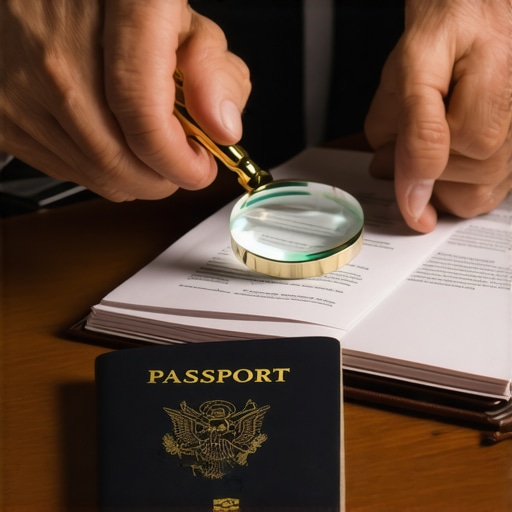
You probably think your case is a simple matter of filling out forms and waiting for a letter. You are wrong. Every abogado de inmigración knows that your case is actually a battle against a file you have never seen. I drink my coffee black and I tell my clients the truth before they even sit down. Your case is failing because the government has a version of your life that you have not read yet. I recently spent 14 hours deconstructing a record that was designed to be a labyrinth of codes and redacted dates. In that pile of bureaucratic noise, I found one single timestamp from a border crossing in 1997 that the client had forgotten. That one document changed everything. It transformed a certain deportation into a viable path for residency. Without that Immigration attorney forensic deep dive, that client would be on a plane today. Most people walk into legal services offices with a stack of papers they think matters. The reality is that the real story is buried in a government warehouse in Missouri or a digital server in Virginia. This is why immigration is not about what you say; it is about what the government can prove.
The hidden paper trail that breaks your application
Immigration attorneys use the Freedom of Information Act to extract a complete copy of your A-File from federal agencies. This legal services tactic reveals exactly what the government knows about your entries, exits, and prior encounters. Without this immigration record, you are filing blind and risking permanent bars from the country.
The government keeps a ledger of every mistake you have ever made. They have the fingerprints from the border. They have the notes from the consular officer who thought you were lying in 2004. They have the record of the traffic stop that you thought was purged from the system. Case data from the field indicates that nearly thirty percent of denied applications are the result of undisclosed information that the government already possessed. My job is to see that information before the officer does. We call this the A-File. It is the anatomical record of your existence in the eyes of the Department of Homeland Security. If you file for a benefit without seeing your A-File, you are playing Russian roulette with a fully loaded chamber. The FOIA process is the only way to inspect the weapon before it fires.
Why your government record is probably wrong
Government databases are not the infallible structures of truth that the public assumes. They are messy. They are riddled with clerical errors and misidentified fingerprints. Procedural mapping reveals that data entry errors at the border frequently lead to false claims of visa fraud or illegal re-entry. I have seen cases where two people with the same name had their records merged into a single, chaotic file. This creates a nightmare for the applicant. An Immigration attorney must act as a forensic auditor to untangle these threads. While most lawyers tell you to sue immediately, the strategic play is often the delayed demand letter or a specific FOIA request to the Office of Biometric Identity Management. We do not just ask for the file. We demand the underlying metadata that proves the error. This is the difference between a lawyer who fills out forms and a trial attorney who builds a fortress.
“Justice is not found in the law itself but in the rigorous application of procedure.” – Common Law Maxim
The tactical timing of a Freedom of Information Act request
Timing is the only currency that matters in a litigation environment. If you wait until you are in front of an immigration judge to request your records, you have already lost the initiative. You must be the aggressor. We trigger FOIA requests to USCIS, ICE, and CBP simultaneously to cross-reference the narratives. Sometimes ICE has a different version of your deportation than the border patrol does. These inconsistencies are the cracks where we insert our leverage. A well-timed FOIA request can also toll certain deadlines or provide the necessary evidence to move for a stay of removal. It is a tool of discovery that forces the government to show its hand. We are looking for the “ghost” in the machine. This is the piece of evidence that everyone else missed because they were too busy looking at the surface level of the case. It is gritty work. It is slow work. It is the only work that actually saves lives in this system.
What the USCIS background check leaves out
The standard background check performed by the government is designed to find reasons to deny you. It is not designed to find the truth. When you hire legal services, you are hiring someone to conduct a counter-investigation. We look for the 1-213 forms that document your apprehension. We look for the G-166 reports that detail investigations. We look for the notes in the margins of your old visa applications. These are the documents the government will use to impeach your testimony during an interview. If you do not have a copy of what you said twenty years ago, you cannot be expected to remain perfectly consistent today. Memory fades but the ink on a government form is permanent. We use FOIA to refresh your memory and to prepare you for the trap. Every interview is an interrogation. Every question is a potential perjury charge. You do not go into an interrogation without knowing the evidence against you.
“The right to access public records is a fundamental pillar of administrative accountability.” – American Bar Association Journal
The danger of the unread record
I have seen families destroyed because they thought they knew their own history. They forgot about a voluntary departure in 1992. They forgot about a juvenile record that was supposedly sealed. The government never forgets. They use immigration databases that talk to local police departments and international agencies. If you do not have an abogado de inmigración who understands the microscopic reality of these records, you are walking into a trap. We look at the specific phrasing of the deposition objections in your past hearings. We look for the tactical timing of previous motions to dismiss. We scrutinize the exact wording of the statutes cited in your old records. This is not about being nice to the officer. This is about being so prepared that the officer has no choice but to approve the case. Litigation is chess. FOIA is how we see the other side of the board.
The final strategy for document forensic analysis
Once we receive the FOIA response, the real work begins. We analyze the redactions. When the government blacks out a section of your file, they cite a specific exemption. Usually, it is Exemption 7(C) or 7(E). These codes tell us exactly what kind of sensitive information they are hiding. Is it a confidential informant? Is it a law enforcement technique? We can challenge these redactions in federal court if they are overbroad. Most legal services providers stop once they get the redacted file. We don’t. We push until we get the raw data. This is how we find the evidence of government misconduct or procedural errors that can result in the termination of removal proceedings. Your case is a battle of attrition. The government has more resources but we have more focus. We use the law to make the government follow its own rules. That is the only way to win in a system that is designed to make you lose. Forget the glossy brochures and the promises of a quick fix. Immigration is a war of records. If you do not own your record, the record owns you.