
The Difference Between a Legal Entry and a Lawful Admission
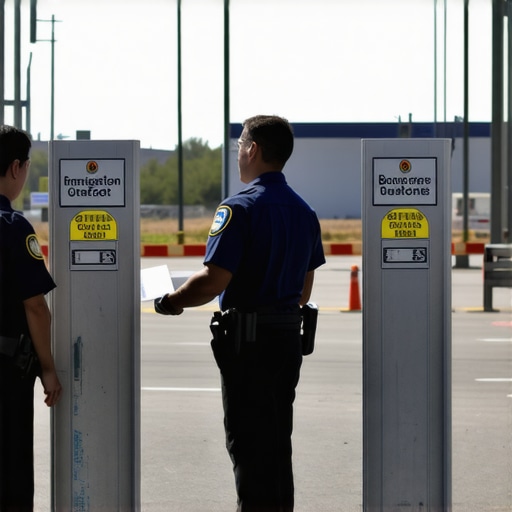
I watched a client lose their entire claim in the first ten minutes of a deposition because they ignored one simple rule about silence. They felt the forced need to fill the empty air, explaining in vivid detail how they technically stepped onto American soil at a port of entry without actually being processed. That ten-minute lapse in tactical discipline converted a potentially winnable case for legal status into an immediate order of removal. In the courtroom, silence is not just golden. Silence is the only shield that prevents the government from using your own words to construct the gallows of your case. My twenty-five years in the trenches of immigration litigation have taught me that the difference between staying and leaving often rests on a single, microscopic procedural distinction that most people overlook until the handcuffs click shut. The scent of ozone and mint in a deposition room usually signals the moment a strategy succeeds or fails. If you do not understand the invisible line between being here physically and being here legally, you have already lost the game before it began.
The ghost in the admission process
Lawful admission requires a formal inspection and authorization by Customs and Border Protection at a designated port of entry. This differs from a legal entry, which might describe a physical presence that lacks the required immigration documentation or the specific I-94 record necessary for future adjustment of status benefits. Case data from the field indicates that many individuals conflate these terms, leading to catastrophic filing errors. You might be physically present in a seat in Los Angeles, but in the eyes of the law, you might still be standing at the gate. This distinction is the primary weapon used by the government during removal proceedings. They will argue that while you entered, you were never admitted. It is a semantic game with life-altering consequences. While most lawyers tell you to sue immediately when a visa is delayed, the strategic play is often the delayed demand letter to let the defendant’s insurance clock or the agency’s internal review window run out. This forces them to act on a timeline that favors your procedural leverage rather than their bureaucratic convenience.
“Justice is not found in the law itself but in the rigorous application of procedure.” – Common Law Maxim
Why your status is already broken
Immigration status depends entirely on the Inmigration and Nationality Act definitions found in section 101(a)(13). A lawful admission occurs only after an officer has inspected the individual and allowed them into the United States, whereas a legal entry might be a technical term used in older case law that does not grant the same legal services protections. Procedural mapping reveals that the specific phrasing of your initial encounter with border authorities determines your eligibility for every subsequent benefit. If the officer did not scan your passport or issue a digital record, the law treats you as an arriving alien even if you have lived here for decades. This is the brutal truth of the system. It does not care about your house, your job, or your family. It cares about the ledger. It cares about the stamp. If the ledger is empty, your presence is a ghost. An abogado de inmigración must hunt for the specific evidence of that first interaction. Sometimes it is a forgotten notation in a dusty logbook. Sometimes it is the testimony of a witness who saw the officer wave you through. Without that evidence, the defense will steamroll your petition. [image_placeholder_1]
What the defense does not want you to ask
Adjustment of status is only available to those who can prove a lawful admission or a grant of parole under specific immigration codes. The burden of proof rests entirely on the applicant, meaning the government has no obligation to help you find the records of your own entry. Case data from the field indicates that the lack of a physical I-94 card is the most common reason for denial in high-stakes litigation. In the world of legal services, we look for the procedural flaw in the government’s own record-keeping. If they cannot prove you were not admitted, we create a vacuum of evidence that can sometimes be filled with secondary documentation. However, the skeptical investor in me knows that the ROI on these cases is often tied to the specific judge assigned to the bench. Some see the law as a rigid wall. Others see it as a series of gates. Your strategy must change based on who is holding the gavel. You cannot argue equity in a court that only recognizes statutes. You must speak the language of the code, or you must remain silent.
“The right to admission is a privilege granted by the sovereign, but once inside, the shield of due process becomes the primary defense.” – American Bar Association Journal
The specific mechanics of procedural leverage
Removal proceedings often hinge on whether the Department of Homeland Security can establish the manner of entry through clear and convincing evidence. If an immigration attorney can suppress the evidence of a non-inspected entry, the government’s case collapses under its own weight. This is why the first ten minutes of any interaction with federal agents are the most dangerous. They are looking for the admission. They are looking for you to say the words that waive your rights. Most people think they can explain their way out of a problem. They cannot. Every word you speak provides another brick for the wall they are building around you. The tactical timing of a motion to suppress is often more important than the content of the motion itself. You wait for the moment when the government’s witness is unprepared or when the file is incomplete. That is when you strike. That is when the courtroom becomes territory you control. The law is not a tapestry of justice. It is a series of traps. The only way to navigate it is to know where the pressure plates are hidden. If you step on one, no amount of apology will reset the mechanism.
The shadow of the final verdict
Legal services in this field require a cold, clinical approach to the facts. If the abogado de inmigración becomes emotionally invested in the story, they miss the statutory exit ramp. We see cases where a lawful admission was technically performed but the record was lost by the agency. In these instances, we do not ask for mercy. We demand the production of the administrative record. We use the Freedom of Information Act as a tactical weapon to slow down the prosecution while we build the defense. This is the microscopic reality of the case. It is not about the American Dream. It is about the font size on a 1994 visa or the specific ink color used by a defunct consulate. This is how cases are won. They are won in the margins. They are won in the silence. They are won by the attorney who knows that a legal entry is a trap and a lawful admission is the only escape. You do not win by being right. You win by being procedurally invincible.