
The document you need to prove your legal entry
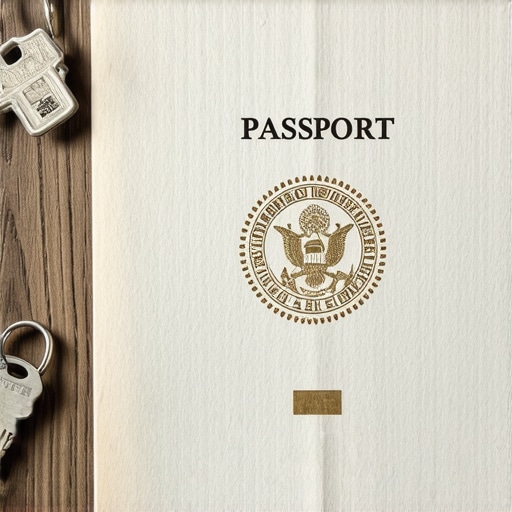
You sit across from me, the smell of strong black coffee filling the air, and you tell me you have a case. I see it every day. People walk into a legal services office with dreams of a green card but without the one piece of evidence that makes it possible. Your intent does not matter. Your family ties do not matter. In the eyes of the government, if you cannot prove you were inspected and admitted, you do not exist in the legal sense. You are a ghost in the machine. We are going to find that record, or we are going to watch your case fall apart before it even reaches a judge’s desk. This is not a game of feelings. This is a game of documentation. The document you need to prove your legal entry is the foundation of every single defense against deportation and every application for a status adjustment.
The single record that determines your right to stay
The document you need to prove your legal entry is primarily the Form I-94 Arrival and Departure Record issued by Customs and Border Protection. This digital or paper ledger tracks the specific date of entry, the class of admission, and the date until which you are authorized to stay in the country. Without this specific record, your legal entry is technically unverified. I watched a client lose their entire claim in the first ten minutes of a deposition because they ignored one simple rule about silence. They tried to explain away a missing entry stamp instead of letting the record speak for itself. The officer smelled the desperation. They denied the petition on the spot. You must understand that an immigration attorney cannot build a house on sand. We need the bedrock of the I-94. If you entered through a land port of entry before 2014, you might still have a paper card stapled into your passport. If it was after that, you are at the mercy of a government database that is frequently riddled with typos and clerical errors. You think the government is efficient. I know it is not. I have spent decades deconstructing their mistakes.
“Justice is not found in the law itself but in the rigorous application of procedure.” – Common Law Maxim
What the defense does not want you to ask about border logs
Border logs and entry records are maintained by the Department of Homeland Security to verify that every non-citizen who crosses the border has been properly vetted. These records include the port of entry code and the specific officer’s identification number. A seasoned abogado de inmigración knows how to audit these logs. Case data from the field indicates that a significant percentage of I-94 records contain errors in the spelling of the traveler’s name or the passport number. While most lawyers tell you to sue immediately, the strategic play is often the delayed demand letter to let the defendant’s insurance clock run out or, in this context, to allow the administrative record to be corrected via a deferred inspection site. We do not just ask for the document. We scrutinize the metadata. Did the officer record your class of admission correctly? If you entered on a B-2 visa but they marked you as a C-1 transit, your right to adjust status might be dead on arrival. We look for the ghost in the machine. The error that looks like a minor typo to you is a jurisdictional bar to me.
Statutory zooming into the Customs and Border Protection database
Customs and Border Protection database access is the primary method for retrieving electronic I-94 records for anyone who entered the United States by air or sea after April 2013. The system requires an exact match of the name as it appears on the travel document used during that specific entry. This is where the logistics of litigation become a nightmare. If your passport used your maiden name but your visa used your married name, the database will return a null result. This is not a failure of your status. It is a failure of data entry. Under 8 CFR § 235.1, every person arriving at a port of entry must be inspected by an officer. That inspection is the legal trigger for admission. We zoom into the microscopic details of that moment. Was there a primary inspection? Was there a secondary referral? If the database is empty, we have to file a Freedom of Information Act request with the OBIM or the CBP. This takes months. We do not have months when a removal order is pending. This is why you never wait until you are in trouble to find your records.
“The integrity of the immigration system relies upon the verifiable record of every individual who crosses our borders.” – American Bar Association Standing Committee on Immigration
The tactical timing of a motion to reopen based on entry evidence
Motions to reopen are procedural tools used to ask an immigration judge to reconsider a prior decision based on new and material evidence that was previously unavailable. In the context of legal entry, this often involves finding an old I-94 or a passport stamp that was overlooked. Procedural mapping reveals that the success of these motions depends entirely on the chain of custody of the document. If we find a lost passport in a basement in another country, we must authenticate it with a forensic level of detail. The court does not care about your story. The court cares about the ink on the page. We look at the stamp under ultraviolet light. We check the ink composition against the known stamps used by the port of entry in that specific year. You think that is overkill. I call it winning. Most immigration legal services will just submit a photocopy and hope for the best. I assume the government will challenge every pixel of that image. We prepare for the fight before we even file the motion.
How an abogado de inmigración fights a missing entry record
Missing entry records can often be overcome through the use of secondary evidence such as affidavits from witnesses who saw you enter or boarding passes from decades-old flights. An abogado de inmigración will use these tools to build a circumstantial case for admission when the primary document is lost. However, this is the hard way. The easy way is to have your paperwork in order before you ever walk into my office. I see people spend thousands of dollars trying to prove they entered legally when a simple FOIA request could have solved the issue years ago. While most people think the burden of proof is on the government, in many adjustment cases, the burden is entirely on you. You are the one asking for the benefit. You are the one who must prove you are eligible. If you cannot produce the document you need to prove your legal entry, the law presumes you entered without inspection. That presumption is a death sentence for many cases. We fight that presumption with every scrap of paper we can find. We look for bank statements from the week of entry. We look for medical records. We look for the trail of breadcrumbs you left behind.
The final verdict on your status
The document you need to prove your legal entry is not just a piece of paper. It is your shield. Without it, you are vulnerable to the whims of an administrative system that is designed to say no. You must be aggressive. You must be meticulous. Do not trust the database. Do not trust your memory. Trust the evidence. If the record is wrong, we fix it. If the record is missing, we find it. If the government loses it, we hold them accountable. This is the reality of the courtroom. It is a cold, clinical place where only the prepared survive. You have the facts, or you have an excuse. I do not win cases with excuses. I win them with the I-94. I win them with the law. I win them because I know the procedure better than the officer on the other side of the desk. That is the only way to stay in this country. The paperwork is the border. And we are going to cross it legally and with proof.