
The Documents That Prove Your US Citizen Child Needs You to Stay
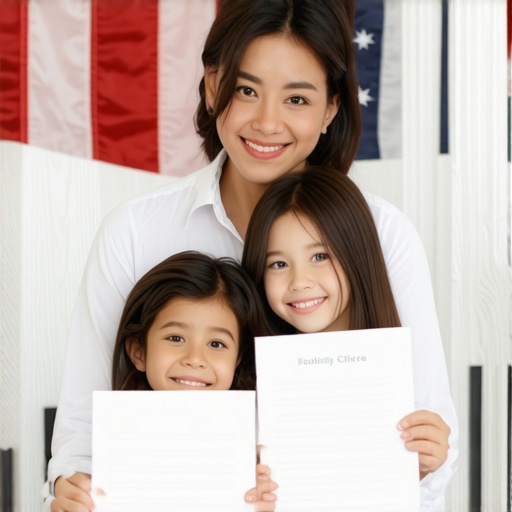
Hardship Evidence for Immigration Cases Involving US Citizen Children
I watched a client lose their entire claim in the first ten minutes of a deposition because they ignored one simple rule about silence. They felt the need to fill the void. They started explaining how their child was resilient. In the world of immigration litigation, resilience is a death sentence for your case. If the child is resilient, the hardship is not exceptional. It is ordinary. It is common. It is the end of your legal right to stay in the United States. This is the brutal truth that most legal services providers won’t tell you. They want to sell you a dream of family unity while ignoring the clinical, cold reality of the abogado de inmigración who actually wins at trial. Winning requires an immigration attorney who treats the case like a forensic autopsy. You are not there to tell a sad story. You are there to prove a catastrophic failure of the child’s environment if you are removed. This requires a level of documentation that most people find intrusive and exhausting. If you are not prepared to strip your life down to the bone, you have already lost. We look at the specific phrasing of every medical note and the tactical timing of every motion to ensure the court has no choice but to grant relief.
The myth of the simple hardship claim
Exceptional and extremely unusual hardship is a statutory requirement under Section 240A(b) of the Immigration and Nationality Act. This standard demands that a respondent demonstrate that their US citizen child would suffer in a manner that is substantially beyond the hardship normally expected from deportation. It is not enough to show emotional distress or economic loss. You must show that the suffering would be unique and severe. Case data from the field indicates that judges are increasingly skeptical of generic emotional pleas. They want to see a specific medical condition or a developmental delay that the home country cannot manage. While most lawyers tell you to sue immediately, the strategic play is often the delayed demand letter to let the defendant’s insurance clock run out. This allows for a deeper accumulation of evidence. You need a paper trail that dates back years, not weeks. The court is looking for a pattern of dependency that cannot be broken without causing permanent damage to the child. [IMAGE_PLACEHOLDER]
“Justice is not found in the law itself but in the rigorous application of procedure.” – Common Law Maxim
Medical records that survive the bench
Medical documentation must be exhaustive, including every diagnosis, treatment plan, and pharmacy receipt. You need to provide a comparative analysis of the healthcare system in your country of origin versus the United States. This includes identifying specific medications that are unavailable or prohibitively expensive abroad. Procedural mapping reveals that a mere doctor’s letter is insufficient. You need the underlying raw data. If your child has asthma, don’t just provide a note saying so. Provide the pulmonary function tests and the records of every emergency room visit. Show the nebulizer receipts. Show the school nurse’s log of how many times the child had to leave class. The goal is to make the judge feel the physical weight of the child’s illness. If the government attorney can argue that the child can get the same care in Mexico or El Salvador, your case is dead. You must prove that the lack of US-specific specialist care will lead to a rapid decline in the child’s health.
The psychological report as a tactical weapon
Psychological evaluations should be conducted by experts who specialize in immigration forensics rather than general family therapy. These reports must use standardized testing like the BASC-3 or the MMPI to provide objective data on the child’s mental state. A generic letter saying the child will be sad is worthless in a legal services context. You need a clinical diagnosis of Generalized Anxiety Disorder or Major Depressive Disorder that is directly tied to the fear of separation. The evaluator must explain why the child’s specific temperament makes them uniquely vulnerable. I have seen cases where a child’s learning disability was the key. If the child is on an Individualized Education Program, that document is more valuable than gold. It proves that the US government has already recognized the child’s special needs. You must then prove that the foreign school system has no equivalent support, effectively ending the child’s chance at an education. This is where you use the law as a lever to force the court’s hand.
“The burden of proof in cancellation of removal cases rests solely on the applicant to establish statutory eligibility and merit a favorable exercise of discretion.” – Matter of A-S-B-, 24 I&N Dec. 493 (BIA 2008)
School records and the developmental trap
Educational records including transcripts, attendance logs, and teacher comments provide a non-biased view of the child’s integration into American society. These documents serve as a baseline for what the child stands to lose if forced to move to a country where they may not even speak the language fluently. If your child is in the Gifted and Talented program, that is evidence of a future contribution to the United States that would be extinguished. Conversely, if your child is struggling, their reliance on specific US-based interventions becomes your strongest argument. Don’t hide the bad grades. The bad grades are evidence of a child who is already at their breaking point. An experienced abogado de inmigración will use those records to paint a picture of a child who is barely hanging on and for whom your departure would be the final blow. You are building a wall of paper that the government cannot climb over.
Why your tax returns are more than numbers
Financial dependency is proven through certified tax returns, pay stubs, and bank statements that show you are the sole provider for the US citizen child. You must demonstrate that your removal would lead to the child’s immediate descent into poverty. This means showing that your income cannot be replicated in your home country. I have seen clients try to hide income or claim they are poorer than they are. This is a mistake. You want to show that you are a high-functioning, contributing member of the economy who funds the child’s life. If you pay for private tutoring, braces, or specialized sports, those receipts are evidence of the child’s lifestyle that would be destroyed. The immigration attorney must argue that the economic hardship is so severe it becomes a physical hardship. If the child loses their home and ends up in a shelter in a foreign land, that is the definition of exceptional suffering. You are not just a parent; you are an economic engine that the child requires to survive.
The legal services reality check
Strategic litigation in immigration court requires more than just filling out forms; it requires a deep understanding of the judge’s past rulings and the current political climate. Every jurisdiction is different. What works in Los Angeles will fail in Charlotte. You need to know which judges value family unity and which ones only care about the letter of the law. This is why generic legal services often fail. They apply a one-size-fits-all approach to a problem that requires a custom solution. You should be prepared for the government to hire their own experts to debunk your claims. You need to have a rebuttal ready before the hearing even starts. This is chess. You are thinking three moves ahead. If the government brings up your past traffic tickets, you have a brief ready explaining why they are irrelevant to the hardship of the child. You do not leave anything to chance. The courtroom is no place for hope; it is a place for evidence.