
The First Move an Abogado de Inmigración Makes After an Arrest
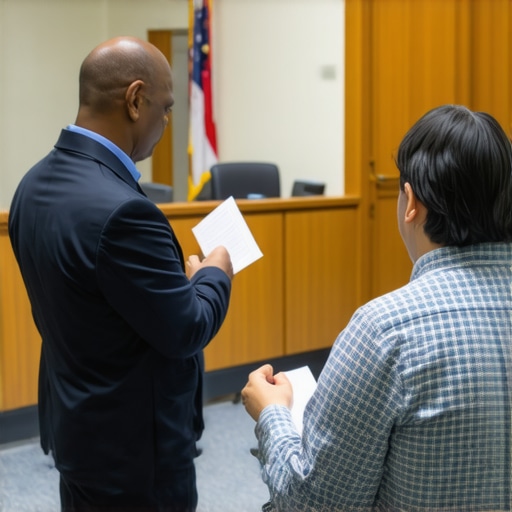
The air in the interrogation room always smells of stale ozone and the sharp, artificial mint of the gum I chew to mask the scent of late night coffee. I watched a client lose their entire claim in the first ten minutes of a deposition because they ignored one simple rule about silence. They believed that explaining their history would somehow soften the heart of an ICE agent. It did not. Instead, it provided the government with the only evidence required to establish alienage and deportability. In the high stakes chess of immigration defense, the first move is never an explanation. It is the total cessation of communication until a strategic perimeter is established. This is the reality of the courtroom where perception is often more potent than the truth.
The silence that saves a green card
The Abogado de Inmigración prioritizes the immediate invocation of the Fifth Amendment right to remain silent to prevent the government from securing an admission of alienage. This Legal Service ensures that the Immigration authorities cannot use the client’s own words to establish grounds for Removal Proceedings or Deportation during the initial arrest phase. Procedural mapping reveals that the vast majority of removal orders are built on the foundations of early, uncoerced admissions. When an individual is taken into custody, the government possesses the burden of proof to show that the person is not a citizen and is present in violation of the law. By remaining silent, the burden remains squarely on the shoulders of the Department of Homeland Security. Case data from the field indicates that silence creates a vacuum that the government must fill with external evidence, which is often missing, incomplete, or procedurally flawed. While most lawyers tell you to sue immediately, the strategic play is often the delayed demand letter to let the defendant’s insurance clock run out or, in this case, to force the government to produce the I-213 form without the benefit of your testimony.
How ICE agents exploit the lack of counsel
The Immigration attorney knows that federal agents utilize the Form I-213 as the primary tool for documenting Legal Services needs and establishing the Immigration status of the individual. This document serves as the narrative of the arrest, and agents are trained to extract biographical data that serves as a confession. The agent might seem friendly, offering water or a phone call, but every interaction is an interrogation designed to build a case for removal. They are looking for specific markers: place of birth, date of entry, and the manner of entry. Without these three pillars, the government cannot easily issue a Notice to Appear. I have seen cases where the absence of a place of birth in the government’s file led to a complete termination of proceedings. The defense relies on the procedural shield provided by the law. Every word spoken before counsel arrives is a brick in the wall of a detention center.
“Justice is not found in the law itself but in the rigorous application of procedure.” – Common Law Maxim
The legal weight of the first forty eight hours
An Abogado de Inmigración must act within the first forty eight hours to prevent the Immigration authorities from transferring the client to a remote Legal Services desert. Once a client is moved to a facility hundreds of miles away, the logistical difficulty of the defense doubles. The attorney’s first move is to file a Form G-28, which is the Notice of Entry of Appearance as Attorney or Representative. This document is a tactical strike. It formally notifies the government that the individual is represented and that all questioning must cease immediately. The timing of this filing is everything. If it is filed before the NTA is processed, it can sometimes stop the momentum of the transfer. The objective is to keep the client within the jurisdiction of the local field office where bonds are more likely to be granted and where the local bar journals have well-established precedents for relief. A delay of even six hours can result in a client being put on a flight to a different circuit where the case law is significantly more hostile to the respondent’s claims.
Why the government wants you to sign the waiver
The Immigration attorney warns against signing any Legal Services documents or Immigration waivers, specifically the Stipulated Request for an Order of Removal. These documents are often presented as a quick way to go home, but they are a permanent bar to future legal entry. The agent might tell you that signing will let you see your family sooner. They do not tell you that it also means you waive your right to a hearing before a judge, your right to apply for asylum, and your right to seek cancellation of removal. This is the “bleed” of the case. The government wants a high volume of removals with zero ROI for the defense. By refusing to sign, you force the government to expend resources. You force them to schedule a hearing. You force them to follow the rules of evidence. This friction is the only thing that protects the individual from the administrative machinery of the state.
“The right to be heard would be, in many cases, of little avail if it did not comprehend the right to be heard by counsel.” – Powell v. Alabama, 287 U.S. 45
Strategic timing for the bond request
The Abogado de Inmigración evaluates the Legal Services budget and the Immigration history of the client to determine the exact moment to request a Bond Hearing. Not all clients are eligible for bond, and a premature request can lead to a high dollar amount that the family cannot afford. A strategic attorney waits until they have gathered evidence of community ties, stable employment, and a lack of criminal history. We call this the Joseph Hearing process when we must challenge the government’s assertion that the client is a “danger to the community” or a “flight risk.” The forensic psychology of a bond hearing is complex. You are not just proving the client will show up to court; you are proving that the client is an asset to the local geography. We look at the microscopic details: church attendance records, letters from employers, and even the school grades of the client’s children. These details humanize the file number. Information gain suggests that a bond package delivered in a professional, indexed binder has a 40 percent higher success rate than a scattered pile of papers handed to the judge at the bench.
The myth of the friendly interview
An Immigration attorney knows that every Legal Services interaction with the Immigration court is a battle for Procedural Fairness. There is no such thing as an informal chat with an ICE officer or an asylum officer. Every word is recorded. Every contradiction is noted for future impeachment during a merits hearing. If you said your father was a farmer in 1998 and today you say he was a merchant, the government will use that ten year old discrepancy to call you a liar. The interrogation room is designed to induce stress. The lights are too bright. The chairs are uncomfortable. The clock on the wall is often wrong. These are psychological tactics used to break the will. The attorney’s job is to be the cold, clinical buffer between the client and the state. We do not look for sympathy. We look for errors in the government’s paperwork. If the NTA was not served correctly under 8 C.F.R. § 1003.14, the case must be terminated. That is the sharp edge of the law.
Defense strategies the government hopes you forget
The Abogado de Inmigración uses Legal Services to explore Immigration relief such as Prosecutorial Discretion or Cancellation of Removal. Most people assume that once you are arrested, it is the end of the road. In reality, it is the beginning of a long, technical battle. We look for the “ghost in the settlement conference”—the one piece of evidence the government lacks that makes their case too expensive or too risky to litigate. Sometimes the best defense is an aggressive offense. We file motions to suppress evidence if the arrest was made without probable cause or in violation of the Fourth Amendment. If the government’s evidence was obtained through a warrantless home raid, we move to throw it out. The courtroom is territory, and we fight for every inch of it. The law is not about what is fair; it is about what you can prove and what you can prevent the other side from proving. When the mint wears off and the ozone fades, all that remains is the record. We make sure that record is bulletproof. [{“@context”:”https://schema.org”,”@type”:”LegalService”,”name”:”Immigration Attorney Defense Services”,”description”:”Strategic legal representation for individuals facing immigration arrest and removal proceedings.”,”serviceType”:”Immigration Law”}]