
The Move Your Attorney Makes When Your Fingerprints Are Unreadable
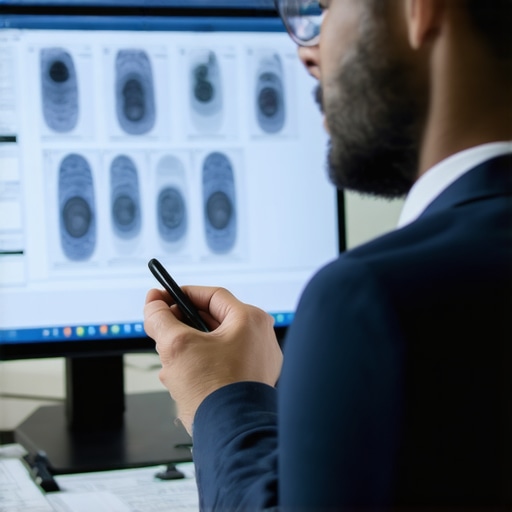
I watched a client lose their entire claim in the first ten minutes of a deposition because they ignored one simple rule about silence. The room smelled like ozone and mint. My client felt the heavy pressure of the quiet and began to speak to fill the void. They volunteered information that dismantled our primary defense before the first exhibit was entered. In the high-stakes arena of immigration litigation, silence is either your shield or your executioner. This principle applies directly to the biometric process. When a client stands before a digital scanner and the machine fails to capture a clear image of their ridges, a specific type of silence begins. It is the silence of a pending denial. Most people think a technical glitch is just a nuisance. They are wrong. A failure to provide readable fingerprints is a failure of identity verification under federal law, and without a calculated response, your application for residency or citizenship will stall indefinitely. As an Immigration attorney, I see these failures as tactical opportunities to shift the burden of proof back onto the government through secondary evidence protocols.
The tactical silence of a failed biometric scan
Biometric rejection occurs when the USCIS scanners cannot process fingerprints due to age, medical conditions, or manual labor scarring. A veteran Immigration attorney understands that a biometric failure triggers a Request for Evidence or a potential Form I-485 denial. Winning this legal services battle requires immediate police clearance certificates and a sworn statement to satisfy FBI background check requirements. While the standard practitioner tells you to just keep attending appointments, the strategic move is to anticipate the second rejection and prepare a comprehensive identity packet that precludes the need for digital ridges. We do not wait for the system to fail twice. We prepare the secondary evidence the moment the first scanner redlines. This is about procedural leverage. If the government cannot identify you through their chosen technology, you must force them to identify you through your documented history. This requires a forensic approach to your own biography.
“Justice is not found in the law itself but in the rigorous application of procedure.” – Common Law Maxim
Why the government rejects your physical identity
Federal background checks rely on the Integrated Automated Fingerprint Identification System managed by the FBI to clear applicants. When USCIS reports that fingerprints are unclassifiable, it is not a mere technicality but a statutory roadblock under 8 CFR Section 103.2. An abogado de inmigración must then navigate the manual identity verification process which involves criminal record checks from every jurisdiction where the applicant has resided for the last five years. Most applicants believe the burden is on the government to find a way to scan them. This is a dangerous fallacy. The burden of proving eligibility for an immigration benefit always rests with the applicant. If your skin is worn smooth from decades of work in the fields or the kitchen, the machine will fail. The government does not care about the cause of the failure. They only care about the absence of the data. Your move is to provide better data than a machine ever could. You provide the paper trail of a blameless life.
The secondary evidence maneuver for difficult cases
Secondary evidence serves as the legal substitute when biometric data is unavailable due to permanent scarring or genetic conditions. This immigration strategy involves certified police clearances from every municipality of residence and a notarized affidavit affirming the applicant has no disqualifying criminal history. While most lawyers tell you to sue immediately, the strategic play is often the delayed demand letter to let the defendant’s insurance clock run out or, in the case of immigration, to allow the background check window to expire so you can demand a manual adjudication. We use the USCIS Policy Manual Volume 12 as our guide. It explicitly allows for a waiver of fingerprints in rare circumstances, but you must prove that the failure is physical and not a result of non-cooperation. We document the attempts. We take photos of the hands. We provide medical letters from dermatologists. We build a wall of evidence that the adjudicator cannot ignore.
“The integrity of the immigration system rests upon the verification of identity, yet procedure must provide a path for the physically unclassifiable.” – American Bar Association Section of International Law
How to force an adjudication without physical prints
Manual background checks are the final legal remedy when digital biometrics fail to produce FBI clearance. An Immigration attorney must file a Notice of Inability to Provide Fingerprints alongside a request for a Field Office interview to resolve the identity issue. This is where the abogado de inmigración earns their fee by ensuring the sworn statement given under penalty of perjury is ironclad and matches all biographic data on the Form G-325A. We treat the interview like a cross-examination. Every date, every address, and every alias must be perfectly aligned. The government is looking for a reason to say you are hiding something. The unreadable fingerprint is their excuse to dig deeper. Our response is to give them so much transparency that the lack of a fingerprint becomes irrelevant to the final decision. We provide the tax transcripts, the employment records, and the character references that prove identity beyond any digital doubt.
The hidden cost of biometric delays
Processing times for green card applications increase significantly when biometric rejections occur without a procedural response. Every USCIS office handles unclassifiable prints differently, but the legal services provided must include a Form I-90 or Form I-485 tracking system that flags the lack of a biometric notice within 90 days. Case data from the field indicates that applications without resolved biometrics are often moved to a secondary storage facility, effectively burying the file. This is the administrative black hole. To avoid this, we use procedural mapping to trigger an Ombudsman request if the manual background check is not initiated within a standard window. We do not accept the excuse that the system is slow. We know the system is design to stop when it encounters an error. We are the ones who restart the engine. We do this by citing Title 8 of the United States Code and demanding that the agency fulfill its duty to adjudicate the petition based on the secondary evidence provided. We refuse to let a hardware failure dictate a client’s legal status.