
The Reason Your Religious Worker Visa Depends on Your Church’s Size
The office smells of ozone and fresh mint this morning. I am sitting across from a man who just lost his future because he thought a deposition was a conversation. He filled a three second silence with a rambling explanation of his church’s basement office. I watched his religious worker visa claim evaporate because he lacked the tactical discipline to remain silent. In the world of immigration law, silence is a shield, but the documents you provide are the sword. If those documents show a congregation of twelve people trying to sponsor a full time minister, you have already lost the war. You just do not know it yet. A seasoned Immigration attorney knows that USCIS does not care about the depth of your faith. They care about the depth of your bank account and the square footage of your sanctuary.
The financial threshold of faith
USCIS adjudicators evaluate the Religious Worker Visa by scrutinizing the tax returns and audited financial statements of the petitioning organization to ensure wage transparency. A small church size often triggers a Request for Evidence because the Internal Revenue Service filings fail to demonstrate consistent net income capable of sustaining a full-time salary for the R-1 visa beneficiary.
When I review a file, I look for the bleed. If the church’s annual income is less than eighty thousand dollars and they want to pay a worker forty thousand, the math is a death sentence. The government assumes the worker will end up washing cars or painting houses to survive. This is the reality of legal services in the immigration sector. We are not just filing forms. We are conducting a forensic audit of a religious institution. We look at the Form I-129 through the eyes of a skeptical auditor who believes every small church is a front for a labor trafficking ring. You must provide a W-2 or a detailed compensation plan that leaves no room for interpretation. If the money is not there on paper, the visa will not be there in your hand. While most lawyers tell you to sue immediately upon a delay, the strategic play is often the delayed demand letter to let the defendant’s insurance clock run out or to allow the church to finish a new capital campaign that proves financial health. We wait for the leverage to shift.
Why small congregations trigger fraud investigations
Immigration officers prioritize site visits for smaller religious organizations because limited membership rosters are statistically linked to higher visa fraud rates. An Immigration attorney must document liturgical activity via weekly bulletins, signed member registries, and utility bills that prove the worship space is active and functional during stated hours.
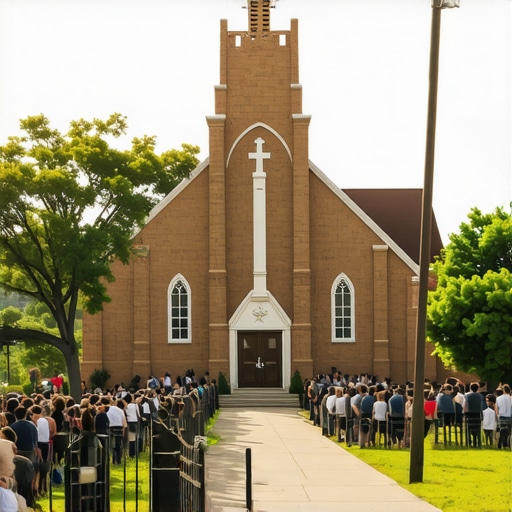
The knock on the door usually happens at 10 AM on a Tuesday. The officer is not looking at the altar. They are looking at the dust on the chairs. They are looking for a sign of life. If the church is a storefront in a strip mall with a locked door and a disconnected phone line, the petition is dead. I have seen R-1 visas denied because the site inspector could not find a sign on the building. The administrative record is built on these small, petty details. You need a litigation architect to build a file that anticipates the inspector’s path. We document the physical reality of the building. We include photos of the hymnals, the vestments, and the offering plates. We prove that the church is a living organism, not just a 501c3 shell designed to bypass labor certifications.
“Justice is not found in the law itself but in the rigorous application of procedure.” – Common Law Maxim
The trap of the non-traditional worship space
Local zoning laws and occupancy permits serve as the primary evidentiary standard for USCIS when determining if a religious facility can support the employment of a religious worker. If a church size is limited by fire code to fifty occupants, the government will question the operational necessity of multiple R-1 visa holders within that specific geographic jurisdiction.
This is where the procedural zooming becomes vital. We look at the exact phrasing of the Certificate of Occupancy. If the building is zoned for retail but used for worship, you are handed a notice of intent to deny on a silver platter. The government uses zoning non-compliance as a proxy for fraud. They will argue that an illegal operation cannot be a bona fide religious organization. My job is to bridge that gap before the Request for Evidence arrives. We ensure the legal services provided include a land use analysis. We do not let the client walk into a deposition or an interview without knowing the exact square footage of their sanctuary. It is chess. You do not move the piece until you have mapped the entire board.
Evidence that overrides the tax status
Internal Revenue Code 501c3 tax exemption is merely the threshold requirement and does not constitute prima facie evidence of a valid religious denomination for immigration purposes. Successful R-1 petitions require supplemental evidence such as denominational bylaws, articles of incorporation, and ecclesiastical endorsements that establish a nexus between the religious worker and the petitioning entity.
A tax letter is a piece of paper. It is not a legal strategy. The abogado de inmigración must dig deeper. We show the history of the ministry. We show the ordination certificates of the leadership. We show the curriculum of the theological training. If the church is small, the burden of proof is higher. You are guilty until proven innocent in the eyes of the California Service Center or the Texas Service Center. They see a small group and they see a visa mill. We counter that by showing a robust religious life. We provide video evidence of services. We provide testimony from community leaders. We create an informational gain that the officer cannot ignore. While the standard advice is to provide three months of bank statements, we provide twelve. We show the cash flow. We show the tithing trends. We show the litigation readiness of the organization.
“The burden of proof in the administrative process rests squarely upon the petitioner to establish eligibility in every discrete element.” – ABA Section of Administrative Law and Regulatory Practice
What the government hides in the R-1 request for evidence
USCIS utilizes internal field manuals to identify indicators of fraud which often include discrepancies in member-to-staff ratios and unexplained financial growth within a religious organization. A denial is frequently based on the petitioner’s failure to explain how a small congregation can justify the specialized duties of a religious professional without secular overlap.
They want to see if the pastor is also the janitor. If the religious worker is spending forty hours a week counseling five people, the USCIS will call it a sham. They look for the job description to fail the reality test. In my courtroom experience, the cases that fall apart are the ones where the job duties are too broad. We refine the position description until it is a surgical strike. We define the liturgical hours. We define the administrative hours. We leave no room for the immigration officer to speculate about unauthorized employment. The procedural mapping of the R-1 process requires extreme detail. We document the bulletin from three years ago to show consistency. We show the evolution of the church size. We prove that the growth is organic. The defense, which in this case is the government, wants to find a contradiction. We give them a monolith of evidence instead. You do not win by being right. You win by being undeniable.
Tactical maneuvers for the R-1 site visit
Preparation for an unannounced site inspection involves maintaining an evidentiary binder on-site that includes current payroll records, valid identification for all religious staff, and operational logs that match the initial petition. Failure to produce these documents during a compliance review results in an immediate revocation of the approved visa and potential debarment from future petitions.
When the officer arrives, they are aggressive. They want to rattle the office manager. I tell my clients to stay calm. Do not volunteer information. Give them the binder. The binder is the silent witness. It contains the truth so the staff does not have to speak. One wrong answer about church size can trigger a fraud referral. If the secretary says there are fifty members but the petition said five hundred, the visa is gone. We audit the staff before the government does. We conduct mock interviews. We scrutinize the back-of-house operations. We look for the dust. We look for the disconnect. The litigation architect ensures that the physical reality and the paper reality are identical. There is no room for error. There is only room for victory through precision.