
The Reason Your TN Visa Was Denied at the Port of Entry
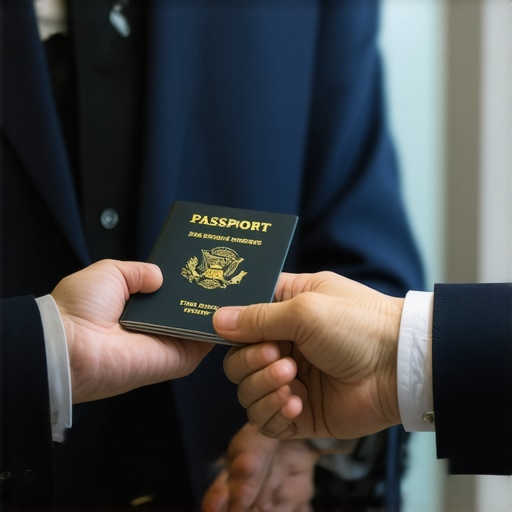
I watch people walk into my office every week with a look of stunned disbelief after being turned away at the border. They spent months preparing a resume and securing a job offer, only to have their professional future dismantled in six minutes at a secondary inspection station. I watched a client lose their entire claim in the first ten minutes of a deposition because they ignored one simple rule about silence, and the same psychological trap exists at the Port of Entry. The officer is not your friend. The officer is a forensic gatekeeper looking for one reason to find you inadmissible. Most people think they are there to prove they are qualified. In reality, you are there to prove you do not have immigrant intent and that your specific job title is not a clever fiction designed to bypass standard labor certifications. The smell of burnt coffee in a windowless CBP room is the scent of a career about to be delayed by years due to a single poorly phrased sentence.
The catastrophic silence of a failed entry interview
Customs and Border Protection officers deny TN visas when applicants provide inconsistent testimony regarding their job duties or intent. Failure to align verbal answers with the technical requirements of the USMCA professional list results in immediate rejection. Most denials occur because the applicant provides extraneous information that contradicts their letter of support. Case data from the field indicates that officers often use tactical silence to force applicants to keep talking. When an applicant feels the need to fill that silence, they often describe job duties that fall outside the narrow scope of the USMCA professional categories. For example, a Management Consultant who mentions they will be performing day-to-day operational tasks has just admitted to being a permanent employee in disguise. Procedural mapping reveals that once that admission is on the record, the application is effectively dead. The officer will use those words to justify a finding that the position is not a legitimate consultancy, leading to a summary denial. You must understand that the legal services of a professional immigration attorney are often the only thing preventing this verbal self-destruction.
“Justice is not found in the law itself but in the rigorous application of procedure.” – Common Law Maxim
Structural flaws in the employer support letter
A TN visa denial often stems from an employer support letter that lacks the specific regulatory language required under 8 CFR 214.6. If the letter does not explicitly detail the professional activity, the fixed duration of stay, and the educational credentials of the applicant, the officer must deny the entry. While many HR departments believe a standard offer letter is sufficient, the reality is far more clinical. The support letter must be a surgical document. It must map the applicant’s degree directly to the job duties listed in the Occupational Outlook Handbook. If you are applying as a Graphic Designer but the letter mentions you will be managing a marketing budget, you have exceeded your category. The abogado de inmigración knows that the border officer is looking for a one-to-one match. Any deviation creates a friction point that the officer will exploit to maintain their high standard of scrutiny. The support letter is not a recommendation; it is a legal exhibit. If it reads like marketing fluff, the officer will treat it as such and hand you a Form I-827 to withdraw your application.
The myth of the temporary entry requirement
Non-immigrant intent is the primary hurdle for any TN visa applicant seeking entry at a land port or pre-clearance center. Applicants must demonstrate a clear intent to depart the United States at the end of their authorized stay to satisfy the requirements of the INA. Many applicants fail because they have recently sold a home in Canada or Mexico, or they have family members who are already US citizens. The officer sees these as ties to the United States that outweigh ties to the home country. While most lawyers tell you to sue immediately, the strategic play is often the delayed demand letter or a comprehensive re-filing that addresses these specific ties. Procedural mapping reveals that the burden of proof is entirely on you. You do not get the benefit of the doubt. If the officer suspects you are using the TN visa as a bridge to a Green Card, they will issue an expedited removal. This is not a simple rejection; it is a five-year ban from the country. The clinical reality of immigration law is that your intent is whatever the officer decides it is based on the evidence you present in that moment.
“The right of a citizen of one country to enter the territory of another is not a right at all but a privilege granted under strict adherence to statutory mandates.” – ABA Journal of International Law
Hidden technicalities of the Management Consultant category
The Management Consultant category is the most scrutinized profession under the USMCA because it is the most frequently abused. To qualify, the applicant must be an independent contractor or an employee of a consulting firm, not a direct employee of the US entity. If your offer letter suggests a permanent role with benefits and a 401k, the officer will immediately flag it as a sham consultancy. This is a contrarian data point that many applicants miss: the more a job looks like a traditional career, the less likely it is to qualify under this specific TN category. The officer will analyze the fee structure. Is it a salary or a consulting fee? If it is a salary, you are an employee, not a consultant. The microscopic reality of these cases often hinges on the exact phrasing of the contract. An immigration attorney must deconstruct the agreement to ensure it reflects a temporary, advisory role rather than an operational one. The officer’s desk is where dreams of American expansion go to die when the paperwork lacks this specific legal architecture.
Procedural triggers for secondary inspection
Secondary inspection is a high-pressure environment where officers use interrogation techniques to uncover inconsistencies in a visa application. Being sent to the back room means the primary officer has found a red flag in your documentation or your initial verbal responses. In this room, the atmospheric calibration changes. The air is thinner, the lights are harsher, and the questions are repetitive. This is where the officer will review your social media, your emails, and your text messages if they suspect you are lying about your intent. Case data from the field indicates that many denials at this stage are based on information found on the applicant’s phone. If you have a text message discussing your plan to move to the US permanently, your TN visa will be denied. The abogado de inmigración advises clients that their digital footprint is just as important as their physical paperwork. The procedural reality is that you are under oath from the moment you roll down your window or step up to the podium. Any slip in consistency is grounds for a permanent record of misrepresentation.
The importance of selecting the correct professional category
TN visa applicants must fit into one of the sixty-three professional categories established by the USMCA agreement. If your degree does not match the category you are applying under, the officer will deny the application for lack of qualifications. A common mistake is trying to fit a complex modern job into an archaic category list. For instance, a Data Scientist does not exist on the USMCA list. An applicant must strategically align themselves with the Statistician or Mathematician category, but this requires an exhaustive breakdown of the job duties and the curriculum of their degree. If the officer sees a mismatch, they will not help you find the right category. They will simply issue a denial. This is where the expertise of legal services becomes vital. The attorney must draft a legal brief that explains the nexus between the degree and the profession. Without this structural support, the application is at the mercy of the officer’s personal interpretation of labor statistics.