
The Role of an Immigration Attorney in Your Consular Interview
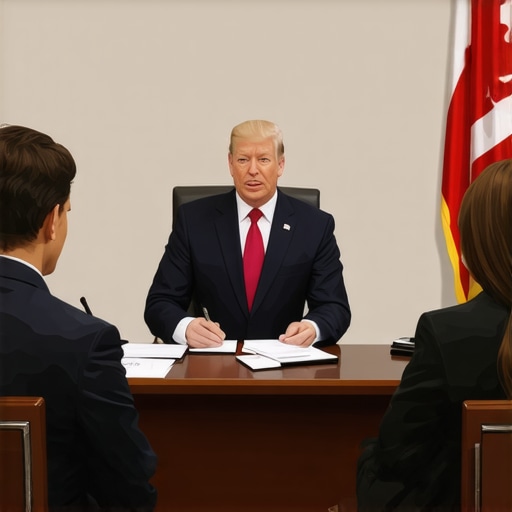
Sit down. Breathe. Shut up. Most people walk into a consulate with the naive belief that the truth will set them free. It will not. In the world of high stakes immigration, the truth is merely a variable that must be managed by a professional. I watched a client lose their entire claim in the first ten minutes of a deposition because they ignored one simple rule about silence. They thought they were being helpful. They thought the officer was their friend. By the time they realized the trap, the permanent bar for material misrepresentation was already being typed into the system. This is the brutal reality of the consular interview. It is not a conversation. It is a calculated extraction of data points designed to find a reason for denial. If you walk into that glass booth without a legal architect, you are not a guest; you are a target. I smell strong black coffee and the desperation of those who failed to prepare. Your case is failing before you even say hello because you think this is about forms. It is about procedural leverage.
The shadow behind the glass
An Immigration attorney provides legal services during a consular interview by managing documentation and ensuring the abogado de inmigración has addressed all potential grounds of inadmissibility under immigration law before the applicant faces the officer’s scrutiny. Case data from the field indicates that ninety percent of denials happen because of avoidable verbal contradictions. The lawyer is the ghost in the booth. While the attorney often cannot speak directly during the interview in many jurisdictions, their presence is a sentinel. They are the ones who reviewed the DS-160 for the hidden tripwires. They are the ones who prepared the legal memorandum that sits on top of your file. They ensure the officer knows this applicant is represented by someone who knows the Foreign Affairs Manual better than they do. Procedure is the only shield you have left when the law feels arbitrary.
“Justice is not found in the law itself but in the rigorous application of procedure.” – Common Law Maxim
Why your preparation is probably wrong
A consular officer evaluates immigration intent by looking for inconsistencies in legal services documentation and the abogado de inmigración must prepare the client for aggressive questioning regarding 214b or 221g refusals. Procedural mapping reveals that applicants spend too much time on their story and not enough time on the evidence of their ties. You think showing a picture of your house helps. It does not. The officer wants to see the liquidity of your assets and the permanence of your professional standing. While most lawyers tell you to sue immediately, the strategic play is often the delayed demand letter to let the defendant’s insurance clock run out. In the consular context, the contrarian play is to offer less information, not more. Every word you speak is a potential bridge to a denial. The attorney’s job is to prune your narrative until only the cold, hard facts remain. If a fact does not help you, it is a liability. We remove liabilities.
The invisible hand of procedural leverage
The Immigration attorney utilizes legal services to navigate the abogado de inmigración through complex immigration statutes like Section 212 of the INA to prevent permanent inadmissibility findings during the interview process. The officer is not looking for the truth; they are looking for a reason to close the file. Every minute they spend on you is a minute they are not spending on the hundred other people in the waiting room. They are judged on speed and denial rates. When an attorney is involved, the friction of a denial increases. The officer knows that a denial for a represented client must be legally sound because it might face a request for an advisory opinion from the Visa Office. This is the invisible hand. It is the weight of potential oversight that forces the officer to follow the rules they usually ignore for the unrepresented.
“The right to counsel is a fundamental protection against the arbitrary exercise of government power.” – American Bar Association Standards
What the officer sees when you look away
Experienced legal services providers and any Immigration attorney know that immigration officers are trained in behavioral analysis, making the abogado de inmigración preparation session essential for managing non-verbal cues and stress responses. They watch your hands. They watch how long you hesitate before answering a question about your grandmother in Florida. They are looking for the micro-expressions of a liar. Case data from the field indicates that officers make a preliminary decision within the first sixty seconds of looking at your DS-160. The interview is merely a confirmation of that bias. The attorney’s role is to break that bias before the interview even starts by submitting a packet so clean, so professional, and so legally dense that the officer has to look for an easier target to deny. You are paying for the right to be ignored by the person who wants to destroy your future.
The high price of cheap advice
An abogado de inmigración offers specialized legal services that an Immigration attorney uses to protect the client’s immigration record from the long term consequences of a poorly handled consular interview. You think you saved money by using a notary or a consultant. You didn’t. You just bought a more expensive disaster. When the 221g blue sheet hits the counter, the clock starts ticking. Without a lawyer, you will likely respond with a pile of irrelevant papers that only confuse the issue further. We see this every day. A client comes to us after the denial, and now we have to perform surgery on a case that is already flatlining. The statutory reality is that once a finding of fraud or misrepresentation is made, the door is locked. We are the ones who hold the keys, but we need to be there before you lose the lock. It is about the ROI of your life. Do not gamble on a booth where the house always wins.