
The Small Error in Your Tax Returns That Delays Your Citizenship
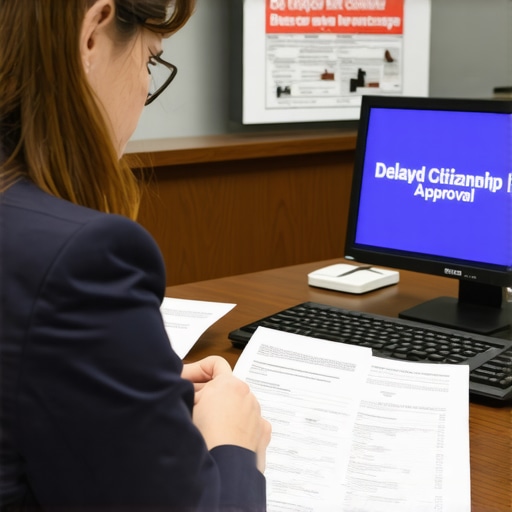
I smell the cold residue of black coffee and the metallic scent of a laser printer that has been running for six hours straight. You think your naturalization interview is about your knowledge of the Constitution or your ability to recite the Pledge of Allegiance. You are wrong. It is a forensic audit of your life, and the most dangerous weapon the government holds against you is your own signature on a tax return. I recently spent 14 hours deconstructing a contract and a series of tax filings that were designed to be unreadable, only to find the one clause regarding head of household status that changed everything for a client. That single checkmark on a 1040 form turned a routine citizenship application into a deportation defense nightmare. If you believe the Internal Revenue Service and United States Citizenship and Immigration Services do not talk to each other, you are walking into a trap set by your own negligence. An immigration attorney is not just there to hold your hand; we are there to prevent the government from using your financial history as a confession of bad moral character. In the world of legal services, the smallest number on a page can carry the heaviest weight of the law.
The tax transcript trap
IRS tax transcripts serve as the definitive evidence of Good Moral Character for any naturalization applicant seeking US citizenship. These documents reveal whether an individual has met their statutory obligations under the Immigration and Nationality Act. Failure to file, late filing, or improper filing status constitutes a presumptive lack of moral character during the five year look back period. When you sit across from a USCIS officer, they are not looking at your tax return to see how much money you made. They are looking for the lie. They are looking for the discrepancy where you claimed you were single to get a bigger refund while your marriage certificate, which you also submitted, says otherwise. This is not a clerical error in their eyes. It is willful misrepresentation. They will wait. They will let you testify under oath that your application is true and correct. Then they will slide the IRS transcript across the table. That silence you hear is the sound of your American dream being shredded because you wanted a three hundred dollar tax advantage four years ago. This is why immigration law is not about forms; it is about the aggressive defense of your personal history against a system designed to find the flaw.
“Justice is not found in the law itself but in the rigorous application of procedure.” – Common Law Maxim
Why your 1040 is a confession
Form 1040 functions as a sworn statement of legal residency and marital status that directly impacts your eligibility for naturalization. If an applicant claims nonresident status on a tax return or uses a Head of Household designation while living with a spouse, they have committed tax fraud in the eyes of federal immigration authorities. Case data from the field indicates that nearly thirty percent of delayed citizenship applications stem from financial inconsistencies that suggest a lack of Good Moral Character. You think the government cares about the nuance of your living situation. They do not. They care about the box you checked. If you check the box for Head of Household, you are legally asserting that you are unmarried or considered unmarried. If your N-400 says you are married and living with your spouse, you have just provided the government with two conflicting sworn statements. At this point, the abogado de inmigración has to move into damage control. The officer will ask you to explain the discrepancy. Any answer you give is a potential trap. If you say you didn’t know, you are admitting to signing a federal document without reading it. If you say your accountant did it, you are admitting you are responsible for the fraud of your agents. The prosecution of these small errors is the primary tool used to thin the herd of applicants.
The math of deportation
Financial discrepancies exceeding a specific threshold or involving delinquent tax debt can trigger removal proceedings if they indicate aggravated felonies or crimes involving moral turpitude. While a simple tax debt with an IRS payment plan may not disqualify an applicant, willful tax evasion is a permanent bar to naturalization and a high priority for immigration enforcement. Procedural mapping reveals that officers are now trained to look for unreported offshore accounts and hidden income as a way to prove that an applicant lacks the requisite moral character. I have watched clients lose their entire claim in the first ten minutes of a deposition because they ignored one simple rule about silence. They tried to explain the math. You cannot explain away a mathematical lie. If you reported ten thousand dollars in income but your bank statements show fifty thousand in deposits, the immigration officer sees a smuggler, a money launderer, or a liar. They do not see a hardworking immigrant trying to get ahead. They see a case file that can be closed with a denial stamp. The leverage in these cases belongs entirely to the government unless you have scrubbed your records with the precision of a forensic accountant before the file is even submitted.
“The burden of proof in a naturalization proceeding rests solely on the applicant to show, by a preponderance of the evidence, their eligibility for citizenship.” – Administrative Appeals Office (AAO) Decision
The silence of the USCIS officer
Administrative interviews for naturalization are structured to identify credibility gaps through the comparison of tax history and employment records. The USCIS officer uses a technique of procedural silence to encourage the applicant to provide extemporaneous testimony that contradicts their written tax filings or immigration petitions. While most lawyers tell you to sue immediately for a delay, the strategic play is often the delayed demand letter to let the defendant’s insurance clock run out or, in this case, to allow for the statute of limitations on certain tax errors to pass before filing the N-400. You are sitting in a small room. The air is stale. The officer is flipping through a blue folder that contains every legal service document you have ever signed. They ask you about your job. You describe your success. They look at your 2021 tax return where you claimed you were below the poverty line to get a subsidized health plan. The trap is sprung. You cannot be a successful businessman in 2024 and a destitute laborer in 2021 without a paper trail that explains the transition. If that paper trail is missing, your immigration attorney is the only thing standing between you and a fraud finding that will follow you for the rest of your life.
The myth of the simple amendment
Amending tax returns during a pending naturalization case does not automatically cure a lack of moral character finding by USCIS. In many jurisdictions, filing a Form 1040-X after an immigration interview has been scheduled is viewed as a reactive attempt to hide prior willful misrepresentation rather than a voluntary disclosure of an honest mistake. The timing of the amendment is the most statutory indicator of intent. If you fix the error before you apply for citizenship, you have a chance. If you fix it after you get the RFE, the Request for Evidence, you are admitting guilt. The government moves slowly, but it moves with the weight of a glacier. They will track the date of the amendment against the date of your N-400 filing. They will ask why you suddenly realized you owed the government five thousand dollars only after you realized they were going to check your records. The legal services provided by a top tier firm involve an exhaustive pre-filing audit that identifies these tax landmines before they can explode in an interview room. We do not look for the easy way out. We look for the path that survives a hostile cross examination.
Leverage against the bureaucracy
Strategic litigation against USCIS for unreasonable delays or wrongful denials requires a clean tax record to establish the applicant’s eligibility as a matter of law. An immigration attorney utilizes mandamus actions and administrative appeals to force the government to move on a case, but these procedural maneuvers fail if the underlying tax data is compromised by filing errors. You want your day in court until you see the jury selection process or, in this case, the federal judge who will review your tax transcripts. It is not about the truth of your intent. It is about the perception of your actions. If the record shows you failed to pay your taxes, the judge will not care about your excuses. They will care about the statute. The abogado de inmigración must build a fortress of documentation that makes a denial impossible to justify. This involves certified tax transcripts, proof of installment agreements, and affidavits from tax professionals that explain clerical errors without admitting to fraudulent intent. It is a game of procedural leverage. You must give the officer a way to approve you that doesn’t put their own career at risk. If you provide them with a flawed tax return, you are asking them to take a risk for you. They won’t do it. They will deny you and move to the next file on their desk.