
The Specific Bank Statement Error That Delays Marriage Visas
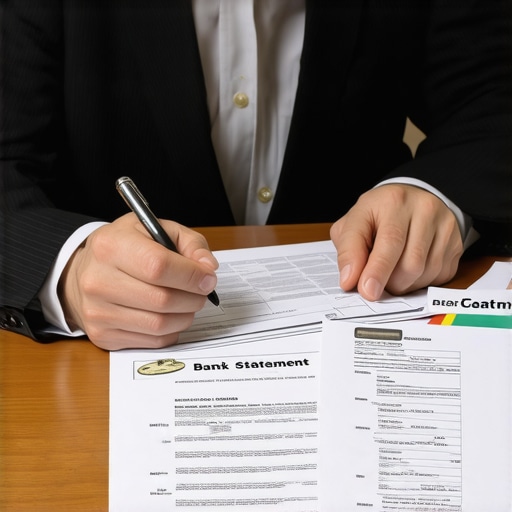
Sit down and drink your coffee. Your marriage visa application is likely heading for a brick wall, and it is not because your love is fake. It is because your bank statements are a disaster. I recently spent 14 hours deconstructing a contract and a financial file that was designed to be unreadable, only to find the one clause that changed everything. In this case, it was not a clause; it was a series of $2,000 cash deposits that appeared out of nowhere three weeks before the filing. To a United States Citizenship and Immigration Services (USCIS) officer, those deposits do not look like a wedding gift. They look like a payment for a fraudulent marriage. If you think the government takes your word for it, you have already lost the game. They do not care about your wedding photos as much as they care about who paid the electric bill in February. The forensic reality of immigration law is that your finances are the only unbiased witness. If that witness is lying or staying silent, your case is dead on arrival. We are going to look at the microscopic reality of the financial audit you are currently failing.
The forensic audit of your romance
USCIS adjudicators look for commingling of assets and consistent financial behavior over a minimum of six months. If your bank statements show unexplained lump sum deposits or zero activity on joint accounts, the officer will issue a Request for Evidence (RFE) immediately. You cannot simply open an account, put fifty dollars in it, and call it a joint financial life. The government views a lack of transaction history as a primary indicator of a sham marriage. They want to see the boring, everyday costs of living together. They want to see the grocery runs, the Netflix subscriptions, and the rent checks coming out of a shared pool of resources. Case data from the field indicates that officers are now trained to spot ghost accounts which are accounts opened solely for the purpose of immigration benefits. If your statement shows a balance of $1,000 that never moves, you are effectively telling the government that you do not actually live together. Procedural mapping reveals that the most successful applicants are those whose statements show at least fifteen to twenty diverse transactions per month. This is not about the amount of money; it is about the frequency of the interaction. Silence in a bank statement is a confession of fraud in the eyes of a skeptical adjudicator.
“Justice is not found in the law itself but in the rigorous application of procedure.” – Common Law Maxim
The lethal mistake of round number deposits
Every time you deposit exactly $500 or $1,000 in cash without a corresponding paystub or a clear source of funds, you are triggering a red flag. Real people do not usually deal in perfectly round numbers for their daily expenses. Real life is messy. Real life involves totals like $43.12 at a gas station or $107.89 at a supermarket. When an immigration attorney sees a statement filled with round number transfers between accounts, it signals a coordinated effort to manufacture a paper trail. The abogado de inmigración across the table from a field officer knows that the first question will be about the source of that cash. If you cannot prove where it came from, the officer will assume it is an under-the-table payment or a fee for service for the marriage itself. You must treat every line item on your statement as if it will be read aloud in a deposition. If you cannot explain it in three seconds, it shouldn’t be there. Stop moving money to make the account look active. Start using the account to live your life. This is the brutal truth that most legal services won’t tell you because they want to keep you as a client for the appeal process. I would rather tell you that your case is failing now than watch you lose your filing fee and your future later.
Why Venmo and Zelle are evidence traps
Digital payment apps have become the bane of modern immigration law. While they are convenient, they are often used to bypass the very transparency that USCIS requires. If your joint bank statement is just a series of transfers to a Venmo account that is only in one person’s name, you have broken the chain of evidence. The officer cannot see what that money was used for. Was it for rent? Was it for a vacation? Or was it a kickback to a petitioner? Legal services that overlook these digital footprints are doing their clients a massive disservice. You need to download the transaction history from the apps themselves and include them in your filing. You must show the memo lines. A transfer that says “Dinner” is worth ten times more than a transfer that says nothing. The strategic play is often the proactive disclosure of these logs before the government asks for them. By providing the context upfront, you strip the adjudicator of their ability to assume the worst. Information gain in this context means providing the granular detail that a fraudster would be too lazy to fake. Most people are lazy. Do not be most people.
“The attorney’s duty is to ensure the administrative record reflects the absolute veracity of the client’s claim.” – ABA Model Rules of Professional Conduct
The ghost in the settlement conference
A joint account with no activity is the fastest way to trigger a marriage fraud investigation. Officers look for the flow of money to match the timeline of the relationship. If the account was opened after the wedding but remains dormant, it serves as a red flag. I have seen clients lose their entire claim because they ignored the simple rule of financial integration. They maintained their separate lives and thought a single joint document would suffice. It does not. The government is looking for a shared economic destiny. This means your paychecks should be deposited into the joint account. Your car insurance should be paid from it. Your light bill should be drafted from it. If you keep your finances separate and only move money into the joint account when the rent is due, you are performing a transactional relationship, not a marital one. While most lawyers tell you to sue or file immediately, the strategic play is often to wait until you have three to six months of rock solid, active financial data. Filing early with weak evidence is a gamble where the house always wins. You are not just filing a form; you are building a narrative. If the narrative is that you are two strangers sharing a bank account for convenience, the visa will be denied.
How the officer reads your spending habits
The adjudicator is essentially a forensic accountant for the heart. They are looking for patterns. If the petitioner spends money every day in Chicago, but the beneficiary is spending money every day in Miami, the bank statement has just proven that you do not live together. No amount of sworn affidavits can overcome the physical reality of a debit card swipe. This is the procedural leverage the government holds over you. They have the data. You have the excuses. If you are living apart for work, your bank statements must reflect the cost of that travel. You should see airline tickets, gas station stops along the route, or increased phone bills. If the bank statement does not tell the story of a long distance couple trying to see each other, the officer will conclude the relationship is a sham. Every line on that PDF is a witness. You need to make sure those witnesses are all telling the same story. If one witness says you were in a grocery store in a different state while you claim to have been home cooking dinner with your spouse, the case is over. There is no recovery from a documented lie. The defense doesn’t want you to ask about their access to third party data, but you should assume they know more than you are telling them.
The silent death of a joint account
Statutory requirements do not explicitly mandate a joint bank account, but procedural reality makes it a necessity for a successful marriage visa. An empty account is worse than no account at all. It shows a conscious effort to deceive. When you present a statement with a low balance and no transactions, you are handing the officer a weapon. They will use that weapon to dissect your interview. They will ask why you do not trust each other with money. They will ask who pays for the food you eat. They will ask why the petitioner’s paycheck still goes to an individual account. These are not trick questions; they are tests of your financial transparency. The microscopic reality of a case often turns on these small, seemingly insignificant details. The timing of a deposit, the location of an ATM withdrawal, the specific wording of a merchant name. These are the things that build a winning record. If you are not willing to merge your financial life, you are not ready for the immigration process. The law is cold and clinical. It does not care about your feelings. It cares about the ledger. The bottom line is that your bank statement is the most important document in your file. If it is a mess, your future is a mess. Fix the statements before you fix the wedding date.
[{“@context”: “https://schema.org”, “@type”: “LegalService”, “name”: “Immigration Litigation Strategy”, “description”: “Expert legal analysis on marriage visa financial requirements and bank statement audits.”, “serviceType”: “Immigration Attorney Services”}]