
The Specific Reason Your Abogado de Inmigración Wants to See Your Paystubs
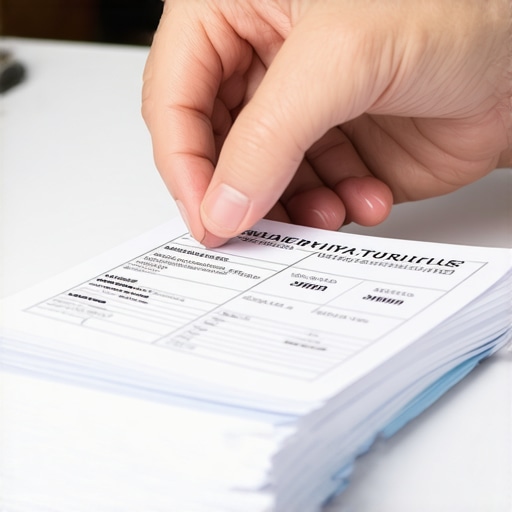
I smell like strong black coffee because I have been up since 4:00 AM deconstructing a failing petition that should have been an easy win. You think your abogado de inmigración is being difficult when they demand six months of paystubs. You think it is a bureaucratic formality. You are wrong. I watched a client lose their entire claim in the first ten minutes of a deposition because they ignored one simple rule about silence and documentation. They claimed they were working full-time, but their paystubs showed a thirty-two-hour average. The USCIS officer did not even wait for the explanation. They saw a discrepancy, and in the world of federal litigation, a discrepancy is a lie until proven otherwise. This is the brutal reality of legal services in the current enforcement climate. If you cannot prove your income down to the cent, you are not a resident; you are a target.
The paper trail that prevents immediate deportation
Abogados de inmigración use paystubs to build a defensive wall around your residency status. These documents prove you are currently employed in the role described in your petition and that your income exceeds the federal poverty guidelines required for the affidavit of support by a significant margin. If your gross pay does not match the prevailing wage listed on your Labor Condition Application, you are out of status. It is that simple. The government does not care about your excuses or your boss’s promises. They care about the numerical reality of your YTD earnings. Many people believe that a letter from an employer is sufficient. This is a strategic failure. A letter is a narrative; a paystub is a forensic fact. I tell my clients that if they cannot produce a clean sequence of paystubs, they should not even bother filing the I-485. We are not in the business of filing hope; we are in the business of filing evidence.
“Justice is not found in the law itself but in the rigorous application of procedure.” – Common Law Maxim
The forensic anatomy of a paystub check
Immigration officers are trained to look for specific red flags on your earnings statements that signal unauthorized employment or tax evasion. They examine the tax withholdings to ensure you are paying into the system you wish to join. If your paystub shows you are being paid as an independent contractor under a 1099 while your visa requires you to be a W-2 employee, you have just documented your own violation of federal law. While most lawyers tell you to sue immediately when a delay occurs, the strategic play is often the delayed demand letter to let the defendant’s insurance clock run out or to allow the petitioner to accumulate more months of perfect financial records. Every deduction for health insurance, every 401k contribution, and every local tax withholding acts as a tether, binding you to the legal framework of this country. If those tethers are missing, the adjudicator will cut you loose. We look at the pay period dates to ensure there are no gaps. A two-week gap in pay can trigger a Request for Evidence that adds eighteen months to your processing time. We do not accept gaps. We do not accept ‘under the table’ payments. We only accept the cold, hard data of a payroll processor.
The hidden trap of the public charge rule
Legal services regarding residency often hinge on the ability to prove you will not become a financial burden on the state. The paystub is the primary weapon against a public charge finding under Section 212(a)(4) of the Immigration and Nationality Act. When an abogado de inmigración reviews your pay, they are looking for stability. They are looking to see if you can support your household without relying on government subsidies. If your paystubs show erratic income, the government assumes the worst. They assume you will eventually turn to public assistance. This is why we demand the most recent paystubs right before the interview. The data you provided six months ago is stale. The government wants to know what you earned last Friday. I have seen cases denied because a petitioner changed jobs and did not have the first paystub from the new employer ready. The officer took that as a lack of continuous employment. In this office, we do not leave room for assumptions. We provide the proof before they have the chance to ask for it.
“Evidence is the only language the court truly understands; everything else is mere noise.” – Trial Manual for Defense Counsel
The ghost in the settlement conference
Abogado de inmigración tactics often involve anticipating the moves of the Department of Homeland Security months in advance. The paystub is not just about the money; it is about the employer’s compliance. If your employer is not withholding the correct amount of FICA or Medicare taxes, the USCIS can determine that the job is not ‘bona fide’. You might be doing everything right, but if your employer’s payroll department is incompetent, your green card is at risk. We perform a microscopic audit of every document. We look for the company’s FEIN. We verify the address. We check the hourly rate against the Department of Labor’s Foreign Labor Certification Data Center. If there is a one-dollar difference, we fix it before the government finds it. This is the difference between a lawyer who fills out forms and a litigation architect who builds a case. You are paying for the forensic scrutiny, not the filing fee. The final verdict on your case will likely depend on a document you considered trash. Do not throw away your future because you were too lazy to print a PDF. Provide the stubs or prepare for the exit.