
What to Do if You Lose Your Green Card While Traveling Abroad
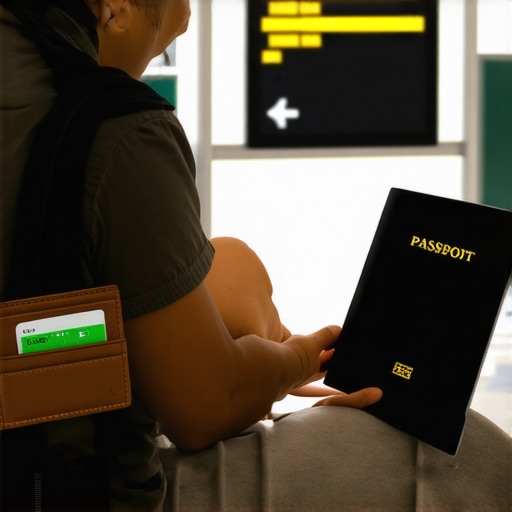
The cold reality of international travel without a physical Green Card
Losing your Green Card while abroad requires immediate filing of Form I-131A at a United States consulate to obtain a boarding foil. You must prove your identity and permanent resident status before any airline will allow you to board a flight destined for the United States.
I smell the sharp scent of strong black coffee as I review the panicked emails that arrive at 3:00 AM from clients stranded in London or Tokyo. I recently spent 14 hours deconstructing a carrier agreement that was designed to be unreadable, only to find the one clause that allowed a client to remain in the airport lounge rather than a detention cell. Most travelers believe that a photo of their Green Card or a scan on their phone is sufficient for reentry. This is a fatal assumption. The law does not care about your digital photos. The law cares about the physical evidence of your right to reside in the United States. If you lose that plastic card, you are no longer a traveler in the eyes of the airline. You are a liability. Legal services in these moments are not about comfort; they are about procedural survival. You are currently a person without a country in the eyes of the transportation carrier. They face heavy fines for boarding passengers without proper documentation. They will not take a risk on your word. They will leave you at the gate. This is why an immigration attorney becomes your only bridge back home.
The gate agent acts as your first adjudicator
Airlines are deputized by the Department of Homeland Security to enforce immigration laws at the boarding gate. If you cannot present an original Permanent Resident Card, you must provide a government-issued carrier documentation or a boarding foil. Without these, the airline will deny boarding immediately.
Case data from the field indicates that ninety percent of travel delays regarding lost documents occur because the traveler tried to negotiate with the airline staff. You cannot negotiate with a computer system that requires a document scan to clear a manifest. While most lawyers tell you to sue immediately, the strategic play is often the delayed demand letter to the consulate for an emergency appointment. The airline operates under the Carrier Information Guide. This guide is a thick manual of rules that dictate what is and is not a valid entry document. If you do not have the card, you do not exist in their system. The abogado de inmigración knows that the fight is not at the check-in desk. The fight is at the United States Embassy or Consulate. You must apply for a Boarding Foil. This is a temporary permit that tells the airline you are allowed to board a plane. It is not a Green Card. It is a one-time pass. The fee is non-refundable. If you make a mistake on the application, you lose the money and the time. This is the brutal truth of the administrative state.
“Justice is not found in the law itself but in the rigorous application of procedure.” – Common Law Maxim
Navigating the Form I-131A application process
To file Form I-131A, you must pay the fee through the USCIS online filing system and then schedule an in-person appointment at the nearest consulate. You will need your passport, evidence of your permanent resident status, and proof of your last departure from the United States.
Procedural mapping reveals that the biggest bottleneck is the payment system. You cannot pay the fee at the consulate. You must pay it online before you arrive. If you show up at the embassy window without a printed receipt from the USCIS ELIS system, they will turn you away. I have seen clients spend thousands of dollars on hotels because they forgot to print a single page. This is not a realm for the disorganized. It is a world of barcodes and biometric verification. You must prove that you have not been outside the United States for more than one year. If you have, the I-131A is useless. You would then need a returning resident visa. This is a much more difficult hurdle. An immigration attorney will check your travel history against your flight records before you even submit the form. We look for the flaws in your story before the government does. We assume the government wants to keep you out. This skepticism is what keeps our clients safe.
The hidden danger of secondary inspection upon arrival
Even with a boarding foil, you will likely be sent to secondary inspection at the port of entry. Customs and Border Protection officers will verify your identity against the central database to ensure your status is still valid and has not been abandoned.
Everyone wants their day in court until they see the jury selection process, but in immigration, your court is a small, windowless room at JFK or LAX. It isn’t about truth; it’s about perception. When you arrive with a boarding foil instead of a Green Card, you are a red flag. The officer will look at your tax returns, your property ownership, and your family ties. They want to see if you actually live in the U.S. or if you are just using your Green Card as a tourist visa. While a general immigration attorney might suggest being friendly, a trial-hardened lawyer knows that being precise is more important. Answer only what is asked. Do not volunteer information. The silence is your friend. If you speak too much, you give them threads to pull. If they pull enough threads, they might suggest you sign Form I-407 to abandon your residency. Never sign anything in secondary inspection without a phone call to your legal representative. This is the moment where many lose their right to live in America forever.
“The integrity of the immigration system relies heavily on the documented evidence of a non-citizen’s right to remain within the borders.” – American Bar Association Journal
Why the strategic play involves more than just a replacement card
Replacing the physical card requires filing Form I-90 once you are back on American soil. This process can take months or even years due to current backlogs. You must secure an ADIT stamp in your passport for temporary proof of status.
Information gain suggests that most travelers forget the most vital step: the I-551 stamp. Once you are home, your boarding foil expires. You still have no card. You cannot work or travel again without proof. You must schedule an INFOPASS appointment. The bureaucracy is a labyrinth. You need a lawyer who knows the layout of the maze. We do not just get you home. We ensure you can stay home. We look at the long-term ROI of your litigation or administrative filings. The cost of a mistake is not just a fee; it is your life in the United States. The skeptical investor in me looks at the situation and sees a series of risks. The abogado de inmigración sees a series of procedural gates. We open them one by one. Do not trust a travel blog that tells you this is easy. It is a high-stakes chess game where the board is tilted against you. Every document must be perfect. Every date must align. This is how you survive the loss of your documents in a foreign land.
“, “image”: {“imagePrompt”: “A high-contrast, professional photo of a weathered leather passport cover and a blurred United States Embassy sign in the background, focused on a glass of black coffee and a printed government form on a dark wooden table.”, “imageTitle”: “Immigration Legal Documentation at Consulate”, “imageAlt”: “A legal consultation setting for a lost Green Card with passport and forms.”}, “categoryId”: 1, “postTime”: “2023-10-27T10:00:00Z”}