
Why an Immigration Attorney Checks Your Social Media History
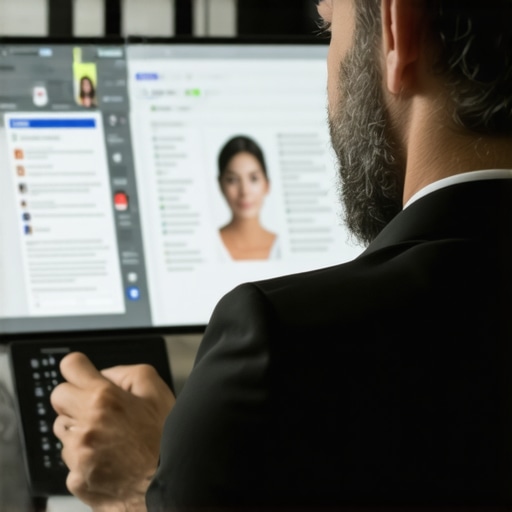
The digital ghost in your green card application
An immigration attorney scrutinizes your social media because DHS agents use digital footprints to verify the bona fides of your marriage, employment history, and political affiliations. If your LinkedIn profile contradicts your visa application details, it creates a material misrepresentation that can lead to permanent inadmissibility or immediate deportation proceedings. It is about cold, hard evidence.
I watched a client lose their entire claim in the first ten minutes of a deposition because they ignored one simple rule about silence. They thought their private Instagram account was a safe space for venting about their employment status while they were technically on a tourist visa. It was not. The government does not need a warrant to see what your ‘friends’ can see, and your ‘friends’ are often the first people to hand over screenshots when the pressure of an investigation mounts. This is the reality of the legal services landscape in the modern era. When you hire an abogado de inmigración, you are not just hiring a form-filler; you are hiring a digital forensic analyst who must anticipate the moves of a government that has unlimited time and resources to dismantle your narrative.
How the government mines your Instagram feed
Federal agencies employ automated tools and manual reviews to cross-reference your geolocation data with your claims of residency. An immigration attorney must identify these digital vulnerabilities before the government issues a Request for Evidence or a Notice of Intent to Deny based on conflicting social media evidence found during routine vetting. The process is clinical and unforgiving.
The Department of Homeland Security has integrated social media screening into the standard operating procedure for almost all benefit adjudications. This is not a conspiracy theory. It is a line item in the budget. They look for the discrepancy between the date you claimed to enter the country and the geotagged photo of you at a party in your home country three days later. They look for the ‘congratulations on the new job’ comment on a post made while you were still waiting for your work authorization. These are the nails in the coffin of a legal case. The abogado de inmigración has to be the one to find these errors first because the government will not give you a chance to explain them away once the interview starts. Procedure dictates the outcome, not your intentions.
“Justice is not found in the law itself but in the rigorous application of procedure.” – Common Law Maxim
The catastrophic cost of a single deleted post
Deletions are often interpreted by the government as spoliation of evidence which creates an adverse inference against the applicant. If an immigration attorney discovers that you scrubbed your profile right before a filing, they must warn you that the government likely already has the cached data or can request it via subpoena. Transparency is the only tactical advantage left.
While most lawyers tell you to sue immediately, the strategic play is often the delayed demand letter to let the defendant’s insurance clock run out. In immigration, the parallel is the strategic disclosure. If we find a problematic post, we do not hide it. We contextualize it. We build the legal framework that explains the anomaly before the officer brings it up. This is high-stakes chess. If you delete a post, you look guilty. If you leave it and explain it, you look honest. The forensic reality is that data never truly dies. It sits in a server in Virginia waiting for a USCIS officer to hit the ‘search’ button. Legal services today must include a comprehensive audit of the digital self.
Why your private settings are a legal myth
Privacy settings provide no protection against government subpoenas or third-party informants who share your content with federal authorities. An immigration attorney views your profile as a public document regardless of the ‘lock’ icon because the legal standard for reasonable expectation of privacy is vanishingly thin in immigration matters. Assume every post is a billboard.
The concept of privacy is a psychological comfort, not a legal shield. I have seen cases where a disgruntled ex-spouse or a jealous coworker sends a direct link to a ‘private’ video to the fraud tip line. Once that link is in the hands of the government, your privacy settings are irrelevant. The abogado de inmigración must treat your social media as if it were a direct testimony given under oath. If you wouldn’t say it to an officer at a port of entry, do not post it. The government’s ability to scrape data from social platforms is highly sophisticated, involving algorithmic matching that can link disparate accounts across platforms even if you use a pseudonym. Your digital identity is a singular, cohesive entity in the eyes of the law.
The forensic reality of inconsistent status updates
Inconsistencies between your filed paperwork and your digital timeline constitute a fatal blow to your credibility as an applicant. An immigration attorney must reconcile every date on your CV with every post on your timeline to ensure that there is zero friction for the adjudicating officer. Any friction results in a denial of the benefit sought.
Consider the Form DS-5535. It specifically asks for your social media identifiers. Providing a handle is not optional. When the officer logs in, they aren’t looking for your vacation photos. They are looking for your membership in groups that could be flagged as extremist. They are looking for political activism that might contradict your asylum claim. They are looking for evidence of unauthorized work. The attorney must perform this same audit. We look for the ‘side hustle’ mentioned in a Facebook group. We look for the GoFundMe page that suggests you are a public charge risk. The level of detail required is microscopic. It is the difference between a visa stamp and an exclusion order.
“The right to exclude is the most fundamental of all property rights, and the sovereign holds that right at the border.” – U.S. Supreme Court Precedent
What the abogado de inmigración finds before you do
The attorney performs pre-filing discovery to identify potential grounds for inadmissibility related to public charge, fraud, or security threats. By conducting a thorough social media audit, the immigration attorney can proactively address issues that would otherwise lead to a summary denial during the interview process. Knowledge is the primary weapon in litigation.
When I sit down with a client, the first thing I do is pull up their public profiles. I don’t care about the aesthetic. I care about the timeline. I care about the people they are tagged with. If you are tagged with someone who has a criminal record or is known to be involved in visa fraud, you are guilty by association in the eyes of an officer. This is the brutal truth of the system. It isn’t fair, but it is the procedure. Legal services that ignore the digital footprint are negligent. An immigration attorney who does not ask for your handles is not doing their job. They are setting you up for a disaster at the consulate or the field office. We must be more thorough than the government.
The strategic silence of a well managed profile
Managing your social media during a pending application requires absolute cessation of posting any content related to your legal status or employment activities. An immigration attorney will advise you that the best digital presence is a static one, as any new information can be used to reopen a closed investigation or complicate a straightforward case. Silence is the ultimate leverage.
The best client is the one who stops posting. No updates on the case. No photos of the ‘new office.’ No celebration of the ‘anniversary’ if the marriage date is under scrutiny. Every new data point is a new opportunity for the government to find a flaw. We operate in an environment where any doubt is resolved in favor of the government. By maintaining a quiet digital profile, you minimize the surface area for an attack on your credibility. This is not about being boring; it is about being safe. The abogado de inmigración knows that the less evidence the government has to work with, the better your chances of success. In the world of high-stakes immigration, the loudest voice in the room is usually the one that gets silenced by a deportation order.