
Why Your Abogado de Inmigración Asks About Your Participation in Groups
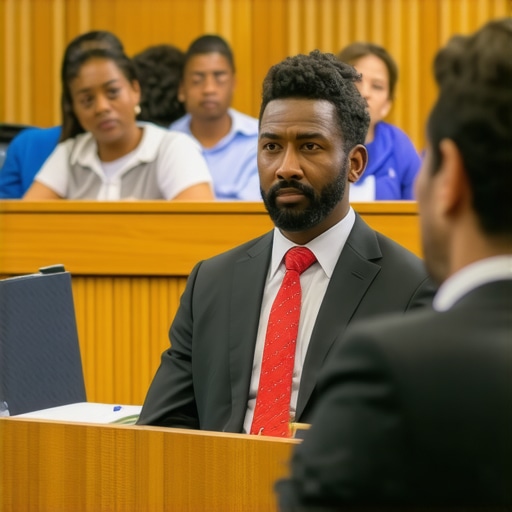
Your case is likely hanging by a thread and you do not even know it. Sit down. The coffee in this office is black and the truth is colder. I watched a client lose their entire claim in the first ten minutes of a deposition because they ignored one simple rule about silence. They thought their past participation in a local neighborhood committee back home was irrelevant. The government thought it was a gateway to a Tier III terrorist organization. That silence, that failure to disclose what they considered a minor detail, became the smoking gun the Department of Justice used to shred their credibility. If your abogado de inmigración is grilling you about every club, group, or organization you ever touched, it is not for small talk. It is because the Immigration and Nationality Act is a minefield where a single undeclared membership can trigger a permanent bar to entry. Let us be clear. The government is not looking for the truth to help you. They are looking for a reason to deny you. Every group you joined, every digital footprint you left, and every donation you made is a potential liability that must be neutralized before the interview begins. Strategy wins cases, not hope.
The trap of the forgotten membership
United States Citizenship and Immigration Services (USCIS) and Department of State (DOS) officers review Form I-485 and Form DS-260 to identify potential security-related grounds of inadmissibility or material support for organizations that the Immigration and Nationality Act defines as Tier I, II, or III groups. Case data from the field indicates that even benign associations can be reframed by the government as evidence of extremist leanings if not disclosed properly. When I sit across from a client, I am looking for the gaps in their memory. You might think that being a member of a student union twenty years ago is irrelevant history. In the eyes of a cynical adjudicator, that union might have been an offshoot of a political party currently on the Foreign Terrorist Organization list. If you do not tell your immigration attorney, we cannot build the defense for the categorical approach of legal analysis. Procedural mapping reveals that the most common reason for a Request for Evidence (RFE) is a mismatch between your testimony and the intelligence gathered by the National Benefits Center. While most lawyers tell you to sue immediately, the strategic play is often the delayed demand letter to let the defendant insurance clock run out or, in this case, to allow the background check to clear through a Mandamus action if the delay is unreasonable. We are talking about 8 U.S.C. § 1182, a statute that is unforgiving to those who omit details. One slip of the tongue during a merits hearing and the Executive Office for Immigration Review (EOIR) will mark you as a fraud.
“Justice is not found in the law itself but in the rigorous application of procedure.” – Common Law Maxim
How the government defines a group
Section 212(a)(3)(B) of the INA provides an incredibly broad definition of what constitutes a terrorist organization or a group of concern. It is not limited to those with weapons. It includes any group of two or more individuals, whether organized or not, which engages in activities that the Secretary of State deems a threat. This is where the Brutal Truth-Teller persona becomes your best friend. Your involvement in a religious group or a social movement that protested a government back home might satisfy the definition of engaging in terrorist activity under current U.S. jurisprudence. Procedural zooming allows us to look at the exact phrasing of the statute. The term material support is a catch-all. Did you pay dues? Did you provide food? Did you host a meeting? If the answer is yes, you have provided material support. Information gain from recent case law suggests that the government is increasingly using social media harvesting to find these associations. They will find that photo of you at a rally from 2012. If it is not in your filing, you are hiding it. That is the logic they use. My job as your immigration attorney is to dissect these associations and determine if they fall under the duress exception. We need to prove that any support given was under the threat of force, which requires a mountain of evidence and expert witness testimony. This is not a game of checking boxes. This is about building a forensic defense against a system designed to keep you out.
Digital footprints and the discovery process
Electronic surveillance and data mining have transformed the way immigration attorneys and federal agents interact with the discovery process during an application for residency or citizenship. The government is no longer relying on your paper trail alone. They are looking at your digital exhaust. The National Security Entry-Exit Registration System and modern equivalents track your movements and your associations across borders. If you were part of a WhatsApp group that discussed political change in a volatile region, you are on the radar. The skepticism of the system is the only constant. I tell my clients that their phone is a witness against them. During the adjustment of status interview, the officer might ask about your contacts. If you hesitate, you lose. This is why we conduct mock interviews that last hours. We need to exhaust the forensic psychology of the case. We need to know what the government knows before they ask it. Procedural data shows that many applicants are blindsided by questions about groups they joined on Facebook ten years ago. While some practitioners suggest a passive approach, the aggressive strategy is to provide a supplemental disclosure that contextualizes these groups before the government can use them as a weapon. This is the difference between a trial attorney and a paper pusher. We control the narrative by being the first to define the nature of your participation.
“The integrity of the legal profession depends on the absolute candor of the client to their counsel during the discovery phase.” – American Bar Association Journal
The danger of material support allegations
Material support of terrorism is the most common and most lethal ground of inadmissibility used against individuals who have participated in foreign political groups. This is not about being a bad person. It is about the rigid application of 8 U.S.C. § 1182(a)(3)(B)(iv)(VI). If you provided any fund, however small, to a group that has ever used force for a political purpose, you are potentially inadmissible. The government does not care about your intent. They care about the transaction. This is the Skeptical Investor view of the law. What is the risk? The risk is a permanent bar. I have seen cases where a local merchant paid a small fee to a local group just to keep their shop open without being harassed. To the Department of Homeland Security, that is funding an insurgency. We must use statutory zooming to find the de minimis arguments or the CARRP (Continuous Enrollment and Adjudication Risk Processing Program) challenges to fight back. Information gain reveals that the government often hides these delays under the guise of administrative processing. An experienced abogado de inmigración knows how to peel back the layers of the Freedom of Information Act (FOIA) to see exactly what the FBI has flagged. We do not wait for the denial. We attack the premise of the investigation. If your lawyer is not asking you about your bank statements and who you sent money to in your home country, you need a new lawyer.
Navigating the interview without sinking the ship
Adjudicatory interviews are the final testing ground where your legal representative must manage the balance between disclosure and defense. The officer will ask, Have you ever been a member of any group? If you say no and they have a record of a club membership from your high school years, your credibility is destroyed. Credibility is the currency of the Immigration Court. Once it is gone, no amount of evidence can save your case. The Ex-Military Strategist approach is to treat the interview like a hostile engagement. Every answer must be precise. No fluff. No rambling. No explanations that were not rehearsed. We use the Answer Capsule method. Direct answer. Statutory basis. Stop talking. Silence is a weapon. If the officer is silent, do not fill the void with more information. That is how you reveal inconsistent statements. Procedural mapping shows that cases are won or lost on the nuances of these interactions. Your immigration attorney should be sitting there, ready to object if the officer exceeds their authority under the Adjudicator Field Manual. We are not there to be friends with the government. We are there to ensure the law is followed and your rights are protected. If you have been part of a group, we own it, we explain it, and we prove why it does not make you a threat to the national security of the United States. That is how we win. That is the only way to navigate the litigation architect engine of a complex immigration filing.