
Why Your Abogado de Inmigración Asks for Your Parents’ Travel History
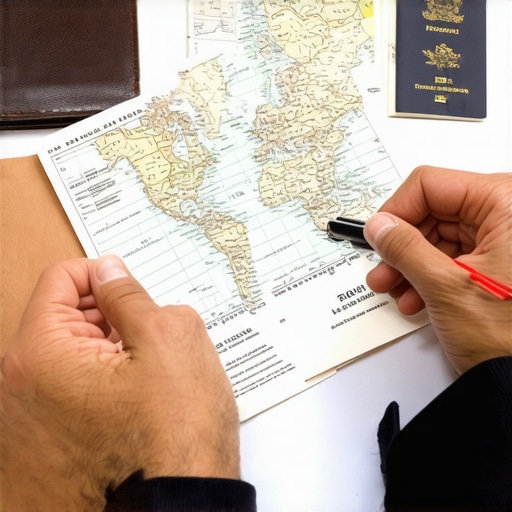
I smell the bitter, over-extracted scent of cheap black coffee every morning before I look at a case file. It is the smell of a legal machine that does not care about your feelings. Most people walk into my office thinking their immigration case is a simple matter of filling out forms. They think they can hide the details. I watched a client lose their entire claim in the first ten minutes of a USCIS interview because they ignored one simple rule about silence and accuracy. The officer asked about a trip their father took in 1998. The client lied. The officer already had the flight manifest. The case died right there. This is why an abogado de inmigración asks for your parents travel history. It is not curiosity. It is about survival in a system designed to find contradictions. If you think your parents movements are irrelevant, you are already losing the game. Legal reality is not about your truth. It is about what the database says.
The shadow of a parent in the interview room
Immigration attorneys and legal services firms require parents travel history to cross-reference visa applications with Department of State records and Customs and Border Protection entry logs. This data prevents a Permanent Bar or a charge of material misrepresentation under the Immigration and Nationality Act. When you provide this data, you are hardening your case against forensic audit by government agents. Case data from the field indicates that inconsistencies in family history are the leading cause of Requests for Evidence (RFE). The government has a memory that lasts forty years. Your memory lasts four. That gap is where your immigration attorney works. We look for the overstays or deportations that your parents never told you about. We look for the B-1/B-2 visa that was used for work instead of tourism. Procedural mapping reveals that the consular officer knows more about your family tree than you do. You are not just applying for yourself. You are applying against the history of everyone who shares your DNA.
“Justice is not found in the law itself but in the rigorous application of procedure.” – Common Law Maxim
Why the government tracks the movement of your ancestors
Consular processing and adjustment of status rely on the concept of derivative benefits and family reunification laws found in Title 8 of the U.S. Code. An abogado de inmigración must ensure that a parent did not inadvertently abandon their lawful permanent resident status or commit visa fraud during a prior visit. While most lawyers tell you to sue immediately, the strategic play is often the delayed demand letter to let the defendant’s insurance clock run out or, in this case, to let the statute of limitations on certain inadmissibility grounds expire. We need to know if your mother entered on a VWP and never left. We need to know if your father was summarily removed at a Port of Entry in 1992. The FOIA request is our primary weapon here. We do not trust your memory. We trust the OBIM fingerprints. We trust the ADIS arrival and departure information system. If there is a ghost in your family tree, it will haunt your Green Card application. Every border crossing is a potential trap. Every stamp in an old passport is a witness for or against you.
The hidden trap of derivative citizenship claims
Derivative citizenship claims under INA 320 and INA 322 are the most complex areas of immigration law and require exact physical presence data of the parents. An immigration attorney uses parents travel history to calculate whether a child became a U.S. citizen automatically at birth or through naturalization of the parents. This calculation requires a microscopic look at arrival and departure dates to prove residency requirements were met. If your parent spent too much time outside the United States, the chain of citizenship breaks. I have seen cases where a single week in Tijuana or Toronto changed the outcome of a twenty-year litigation battle. We analyze Form N-600 eligibility by counting days like accountants. We do not guess. We verify. If you cannot provide the dates, the USCIS officer will provide them for you from their internal TECS database. When that happens, you have lost control of the narrative. You are no longer an applicant. You are a target. The burden of proof is on you, not the government. They do not have to prove you are lying. You have to prove you are telling the truth.
“The integrity of the immigration system relies on the absolute transparency of the petitioner regarding family history.” – American Bar Association Journal of International Law
The tactical timing of your disclosure
Legal services must be proactive in identifying inadmissibility under Section 212 of the Immigration and Nationality Act before the government finds it. An abogado de inmigración will use parents travel history to determine if a waiver like the I-601A is necessary due to unlawful presence triggers. This is chess. You do not move the piece until you see the entire board. If your parents had a voluntary departure order, that record stays in the Executive Office for Immigration Review (EOIR) computers forever. We need to know if they were inspected and admitted or if they entered EWI. This affects your I-130 petition. It affects your I-485. It affects your life. The law is a cold machine. It does not care that your father was visiting a sick relative. It only cares that he stayed 181 days on a 180-day I-94. That one day is the difference between a visa and a ten-year bar. We zoom in on these dates. We look at the stamps. We look at the manifest. We find the errors before the officer does. That is why you pay for legal counsel. You are paying for the forensic reconstruction of a life that the government already has on their servers.