
Why Your Abogado de Inmigración Needs Your Childhood Entry Records
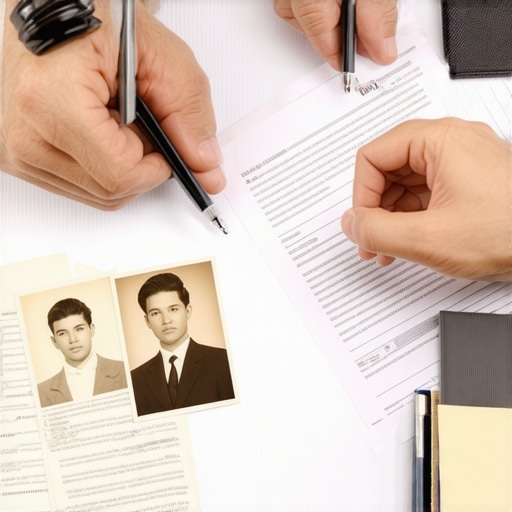
The hidden trap of missing childhood paper trails
Childhood entry records serve as the primary evidence for establishing continuous physical presence in the United States. Your abogado de inmigración uses these documents to prove eligibility for relief under statutes like DACA or Section 245(i). Without them, the government assumes you entered later than you actually did. I watched a client lose their entire claim in the first ten minutes of a deposition because they ignored one simple rule about silence. They tried to fill the void with guesses about when they arrived in 1994. The government attorney pounced. One wrong date turned a legitimate path to citizenship into a fraud investigation. If you cannot prove you were here, you do not exist in the eyes of the law. This is not about being honest. This is about being able to prove honesty with ink and paper. Most people think their memory is enough. It is not. The court only cares about what can be verified through third party sources. If you want to stay in this country, you must become a forensic historian of your own life. This means looking for records that most people throw away. Your immigration attorney is not a magician. They are a strategist who needs raw material to build your defense. Without childhood records, your case is a house built on sand. The USCIS officers are trained to find the gaps in your timeline. They will look at a three year gap in your childhood and argue that you left the country and re-entered. This triggers bars to admission that can end your legal journey instantly. You must bridge every gap with a document. There is no middle ground in a removal proceeding. You either have the proof or you face the consequences.
“Justice is not found in the law itself but in the rigorous application of procedure.” – Common Law Maxim
Proof of entry that survives a government audit
High quality evidence includes certified school transcripts, medical records from pediatricians, and religious documents like baptismal certificates. These legal services focus on creating a chronological timeline that leaves no room for USCIS doubt. The government requires clear and convincing evidence to establish that your initial entry occurred as claimed. You should look for vaccination records from the mid-nineties. These are often the only government-recognized documents that place a child in a specific clinic on a specific date. A single shot record from a county health department is worth more than ten affidavits from family friends. Affidavits are weak. They are seen as biased. A record from a public school district is nearly impossible for the government to impeach. We also look for dental records. Many families forget that the first time a child saw a dentist in the United States, a permanent record was created. These records often contain the date of birth and the address of the family at the time. This creates a link between your identity and your physical presence. We also examine the records of local libraries. If you had a library card in 1998, there is a database somewhere that proves it. This is the level of detail required for a successful immigration filing. The goal is to make the officer feel that denying the case would be a violation of the obvious facts. You must overwhelm the system with data points. Every year of your life in this country needs at least two distinct markers. If you are missing a year, you are vulnerable.
The logic of ancient school records
School attendance registers provide a daily log of your presence and are the gold standard for childhood evidence. These documents prove you were physically sitting in a classroom in a specific city on specific dates throughout the academic year. Your abogado de inmigración will use these to satisfy the continuous presence requirement. When we request these, we do not just ask for a diploma. We ask for the underlying attendance data. A diploma only proves you finished. The attendance records prove you stayed. This is a vital distinction in litigation. I have seen cases fail because the applicant only provided a graduation certificate. The prosecutor argued the student could have left for two years and returned to finish. The attendance log closes that door. We also look for disciplinary records or awards. Even a certificate for perfect attendance in the third grade is a legal weapon. It is a dated, third party verified document. You must contact the school district’s records department directly. Do not wait for them to find you. You must be aggressive in your pursuit of these papers. Some districts destroy records after twenty years. If you wait, the evidence of your life might be shredded. This is why immediate action is required the moment you consider filing for a status adjustment. The clock is always running against the immigrant. You are either gathering evidence or you are losing it.
“The lawyer has a duty to conduct a reasonable investigation into the facts of a client’s case to ensure the integrity of the judicial process.” – American Bar Association Standards
Why your lawyer asks for the impossible
Attorneys demand specific historical documents because the burden of proof rests entirely on the applicant in almost all legal services regarding status. If you cannot produce a record, the law assumes the negative fact is true. This is the brutal reality of the immigration system. Your immigration attorney is trying to protect you from a summary denial. When we ask for a receipt from a grocery store from 1996, we are not joking. We are looking for anything that proves you were here. While most lawyers tell you to sue immediately, the strategic play is often the delayed demand letter to let the defendant’s insurance clock run out or to ensure your record packet is impenetrable. In the immigration context, filing a weak application is worse than not filing at all. A weak application creates a record of failure that follows you forever. It gives the government a roadmap to deport you. We need the childhood records to build a shield. We are looking for the footprint you left in the economy and the culture. Did your parents list you on their taxes? Even if they used an ITIN, those tax transcripts are vital. They show a household unit that included you. We look for childhood photos at recognizable U.S. landmarks. A photo of you at a specific park in Los Angeles in 1995 can be used if we can verify the date through the film processing marks or the background details. This is forensic work. It is slow and it is tedious. But it is the difference between a green card and a bus ticket to the border.
The tactical advantage of early medical history
Medical history provides a scientific and chronological baseline for your entry and residence that is difficult for the government to dispute. Your abogado de inmigración uses these to show you were receiving care within the domestic healthcare system since childhood. This establishes a history of residency that predates most enforcement actions. We look for the blue immunization cards. We look for emergency room visits. If you broke your arm in 1997, that X-ray is a legal document. The hospital archives will have a record of your admission. These records are often kept longer than school records because of medical malpractice statutes. We use this to our advantage. We also look for records from non-profit clinics. These organizations often serve the undocumented community and keep meticulous records. They understand the stakes. A letter from a doctor who treated you as a child carries immense weight. It shows that you have been part of the community for decades. This goes to the heart of the good moral character and the hardship arguments. If you have been here since you were five, moving you to a country you do not know is a significant hardship. But the judge will not take your word for it. They need the medical file. They need to see the progression of your growth within the United States medical system. Every check-up is a data point. Every prescription is a piece of the puzzle. We collect them all to create an undeniable narrative of a life lived here.
How the government uses your silence against you
Silence in the face of a government request for evidence is interpreted as an admission that the evidence does not exist. Your immigration attorney must fill the void with childhood records to prevent the government from creating its own narrative. If you do not provide the story, the prosecutor will. They will paint you as a recent arrival who is trying to game the system. This is why we need the records before we even file the first form. We need to know what the government will find before they find it. Procedural mapping reveals that the most successful cases are those that provide more evidence than requested. We do not just meet the minimum. We bury the officer in proof. We want them to see that there is no logical way you were anywhere else but the United States. If you are silent about your early years, you are giving the government a weapon. They will use that silence to suggest you were outside the country. They will check travel records and border crossings. If you have a clean record but no proof of presence, they will invent a story of illegal re-entry. This is why the paper trail is your only defense. It is the only thing that speaks louder than the government’s suspicion. You must be prepared to prove every month of every year. It is an exhausting process, but it is the price of legal status in a system designed to keep you out. Your childhood is not just a memory. It is a legal case file. Treat it with the seriousness it deserves.