
Why Your Asylum Claim Needs Credible Personal Testimony
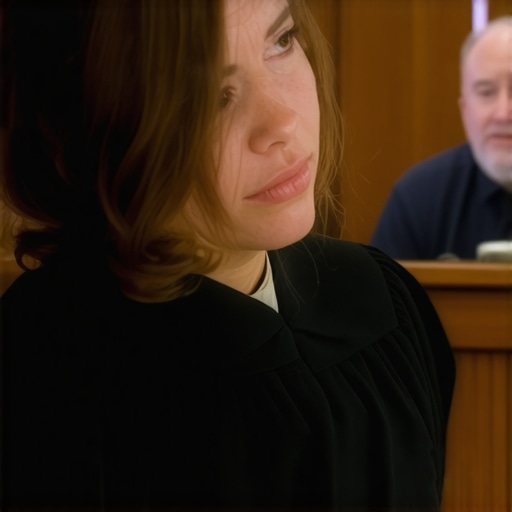
The smell of strong black coffee permeates the air before the first case of the day is even called. I have spent twenty-five years watching lives hang in the balance of a single sentence. Most people believe that immigration law is about filing the right forms or having a pile of documents, but they are wrong. It is about the brutal reality of the witness stand. I watched a client lose their entire claim in the first ten minutes of a testimony because they ignored one simple rule about silence. The judge had stopped typing and was looking for a specific exhibit. The client felt the silence was an accusation and began to elaborate on a point that was already settled. That unnecessary chatter created a factual conflict that no legal services could fix. If you cannot maintain a consistent narrative under the pressure of a government cross-examination, your case is dead on arrival. In the world of an immigration attorney, credibility is the only currency that matters. You can have a thousand pages of country reports, but if the adjudicator does not believe your personal story, none of it counts.
The razor edge of witness credibility
Credible testimony remains the foundation of asylum claims because federal judges and asylum officers rely on personal consistency to establish truth. Without corroborating evidence, your spoken word is the only bridge to safety. An abogado de inmigración focuses on ensuring that your narrative survives the intense scrutiny of government cross-examination and strict procedural standards.
When we examine the mechanics of a merit hearing, we are looking at the REAL ID Act of 2005. This statute changed the landscape of immigration law by giving judges the power to base a credibility determination on any inconsistency, even if it does not go to the heart of the claim. If you say the event happened on a Tuesday in your written declaration but say it was a Wednesday during your oral testimony, the judge can use that minor slip to deny your entire application. This is not about memory, it is about the appearance of truth. A seasoned immigration attorney knows that the government is not looking for the truth of your suffering, they are looking for a reason to find you untrustworthy. Every pause, every shift in your seat, and every glance at your legal counsel is being recorded and analyzed as demeanor evidence. The court is a theater of precision where the script is your life and the critics have the power to deport you.
“Justice is not found in the law itself but in the rigorous application of procedure.” – Common Law Maxim
[image_placeholder_1]
How the asylum officer detects deception
Asylum officers are trained in forensic interviewing techniques designed to identify gaps in logic and emotional incongruity. They use the BFS approach, which focuses on Baseline, Fluctuations, and Specifics, to determine if a claimant is telling a rehearsed story or a lived experience. Quality legal services prepare you for this aggressive interrogation.
Case data from the field indicates that officers often revisit the same question three different ways over the course of a four-hour interview. They are checking for the stability of your facts. While most lawyers tell you to provide as much detail as possible, the strategic play is often the disciplined response. Over-explaining is a primary indicator of deception in the eyes of a skeptical adjudicator. You must understand that the asylum office is not your friend. They are a gatekeeper. They are looking for specific markers of trauma that align with psychological profiles. If your testimony is too clinical, they suspect a fabricated story. If it is too emotional without specific dates and names, they suspect a vague fabrication. The balance is narrow. Procedural mapping reveals that cases with high levels of specific, non-essential detail often fare better because these details are harder to invent on the fly. An Immigration attorney will drill you on these details until they are anchored in your subconscious.
Where the written application and oral testimony diverge
Discrepancies between the Form I-589 and live testimony are the most frequent causes of adverse credibility findings in the United States. Adjudicators compare every word of your written statement against your spoken answers to find any grounds for impeachment or denial of the claim.
The contrarian data point here is that the more you write in your initial application, the more surface area you provide for the government to attack. Many people think a fifty-page declaration is helpful, but in reality, a concise and focused statement is often safer. Every sentence you write is a hostage you give to the prosecution. If you mention a cousin was present during an incident in your writing but forget to mention them in court, the judge will note the omission. These omissions are treated with the same weight as outright lies. The litigation architect understands that the written word is a map, and the oral testimony is the journey. If the map and the journey do not match, the court assumes you are lost or lying. This is why legal services must include a line-by-line audit of your history before any documents are submitted to the Executive Office for Immigration Review.
“The trier of fact may base a credibility determination on the demeanor, candor, or responsiveness of the applicant.” – Section 208(b)(1)(B)(iii) of the INA
The high cost of minor inconsistencies
Minor errors in dates, locations, or the sequence of events can trigger a total collapse of an asylum case under current federal guidelines. These inconsistencies allow the judge to make an adverse credibility finding, which effectively ends the legal viability of the claim regardless of external evidence.
Statutory zooming into 8 CFR Section 1208 reveals the granularity of these requirements. The judge does not need a smoking gun to find you non-credible. They only need a lack of “cogent reasoning” in your explanations for why your story changed. If you claim you were persecuted by a specific group, but cannot describe their insignias or the color of their vehicles with consistency, the judge will find your fear is not objectively reasonable. This is where the logistics of the case matter. An immigration attorney will use Google Earth to verify the distance between your home and the site of the incident to ensure your testimony about travel times is physically possible. If you say it took ten minutes to walk a distance that is five miles, you have just handed the government an easy victory. The courtroom is not a place for approximations. It is a place for forensic accuracy.
Why an immigration attorney focuses on memory recall
Professional legal representation involves more than just presence in court; it requires the psychological preparation of the witness to handle traumatic recall without losing factual integrity. Memory is fragile and the high-stress environment of a hearing often causes witnesses to fail on simple facts.
While most people think the lawyer’s job is to talk to the judge, the real work happens in the conference room months before. We use mock cross-examinations that are often more brutal than the actual hearing. We smell for the weaknesses. We look for the “bleed” in the story where the facts get blurry. In the context of immigration, the attorney acts as a structural engineer for your testimony. We build a framework that can withstand the weight of a hostile government attorney who is paid to find reasons to deport you. We teach you how to say “I do not remember” instead of guessing. A guess is a lie in the eyes of the court. A strategic admission of a memory gap is often more credible than a perfect, rehearsed answer that sounds like a script. This is the difference between a settlement mill and a trial lawyer who knows how to win a verdict.