
Why Your Citizenship Interview Might Be Delayed by Old Records
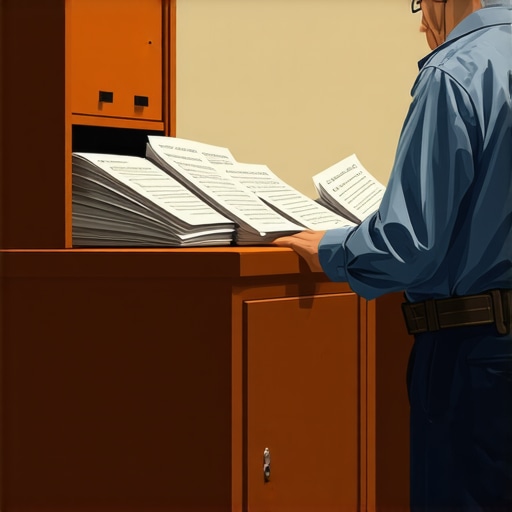
The ghost in the USCIS filing cabinet
I smell strong black coffee and the metallic tang of old filing cabinets every time I walk into a field office. I have seen too many people walk into their naturalization interview with a smile and walk out with a Notice of Continuance that effectively kills their timeline for years. One client lost their entire path to citizenship because of one line in a 20 year old record they forgot existed. They thought the passage of time granted them immunity. It did not. The law does not care about your memory. It cares about the paper trail. If you are sitting in a waiting room wondering why your case has stalled, the answer is likely buried in a federal record center in Missouri or a dusty police archive in a city you left decades ago. This is not a game of intent. This is a game of forensic documentation. You are not just being judged on who you are today. You are being judged on every version of yourself that the government has ever recorded.
The archive that never sleeps
Naturalization delays often stem from the USCIS background check process where old criminal, medical, or travel records fail to reconcile with current testimony. If your A-File is incomplete, the adjudicating officer cannot approve the application. They will wait for physical paper files from distant federal storage facilities. Many applicants believe that if a crime happened twenty years ago, it is irrelevant. That is a dangerous lie. The N-400 application asks if you have ever been arrested or cited. Ever. Not just in the last five years. When you check ‘No’ but the FBI fingerprint check pulls a record from 1992, the officer does not see a mistake. They see a lack of good moral character. They see a lie. Now, the officer has to request the physical record of conviction. That request goes into a queue. That queue is miles long. Your case sits on a desk gathering dust while the bureaucracy churns at a glacial pace. An experienced abogado de inmigración knows that you never file until you have the physical record in your hand. You do not trust your memory. You trust the certified copy.
“Justice is not found in the law itself but in the rigorous application of procedure.” – Common Law Maxim
Why USCIS investigators are better at research than you
Government agents have access to inter-agency databases that track every border crossing, every visa application, and every interaction with law enforcement across all fifty states. They use the Treasury Enforcement Communications System and the National Crime Information Center to verify your history. You might think that a dismissed shoplifting charge from your college days is gone. It is not. The court might have purged the record, but the FBI kept the arrest data. When the USCIS officer sees an arrest without a disposition, the case stops. They cannot verify that the case did not result in a conviction that makes you deportable. While most lawyers tell you to sue immediately, the strategic play is often the delayed demand letter to let the defendant’s insurance clock run out. In immigration, the move is the proactive FOIA request. You must sue the government for your own records before they use them against you. This is the only way to see what they see. If you walk into that room blind, you are a victim of your own hubris. An immigration attorney provides the shield by finding these records before the government does.
The tactical error of the silent applicant
Silence during an interview is often perceived as evasion rather than caution by USCIS officers trained in behavioral analysis. When an officer asks about a gap in your travel history or an old address, they are testing your consistency against existing records. Discrepancies trigger a secondary review. This is where cases go to die. Once a supervisor is involved, the level of scrutiny triples. They will look at your initial entry into the country. They will look at how you obtained your green card. If they find a single material misrepresentation from ten years ago, they can not only deny your citizenship but also put you in removal proceedings. This is the brutal truth that ‘settlement mill’ firms won’t tell you. They want your fee for the filing. They don’t want to do the 14 hours of deconstructing your past to ensure you are safe. Legal services are not about filling out forms. They are about risk mitigation. You pay for the expertise to know which questions are traps. You pay to ensure the immigration process does not become a deportation process.
“The right of an alien to challenge the government’s evidence is a cornerstone of procedural fairness.” – American Bar Association Model Rules
How an immigration attorney deconstructs the past
A professional legal review involves a comprehensive audit of your A-File through a Freedom of Information Act request to ensure all prior applications are consistent. This prevents the government from finding contradictions in your testimony that could lead to a permanent bar. We look at the G-639 forms. We look at the I-94 history. We analyze the exact phrasing of every police report. If there is a ‘ghost’ in your record, we find it first. We prepare a memorandum of law that explains why an old record does not impact your current eligibility. We don’t wait for the officer to ask. We provide the answer before they can form the question. This is how you win. You don’t win by being a ‘good person.’ You win by having a cleaner paper trail than the government. The abogado de inmigración is the architect of that trail. We build the bridge between your past mistakes and your future citizenship. The final verdict is not written in the interview room. It is written in the months of preparation that happen before you ever step foot in that building. If you value your future, stop guessing about your past. Get the records. Get the truth. Get a strategist who knows how to fight the bureaucracy on its own terms.
Comments are closed.