
Why Your Citizenship Might Be Revoked Due to Fraudulent Entry
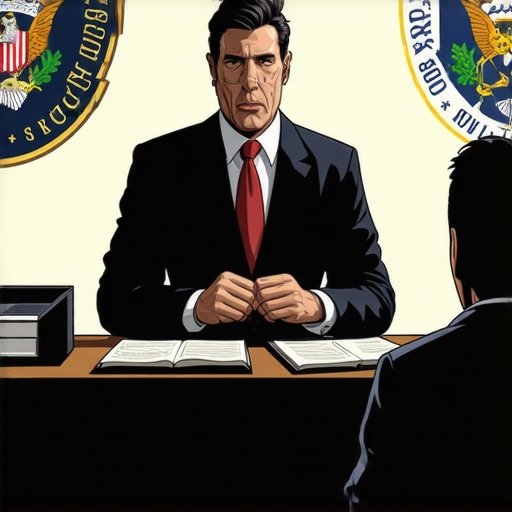
Why Your Citizenship Might Be Revoked Due to Fraudulent Entry
The office smells like strong black coffee and the cold residue of a long night spent reviewing digitized records from the nineties. If you are reading this, you likely believe your naturalization certificate is a final, ironclad shield. It is not. The government has a memory that spans decades and a digital archive that never sleeps. Your status is only as secure as the honesty of your initial entry into this country. If that foundation was built on a lie, the entire structure is currently leaning toward collapse. I have seen the most settled lives uprooted because of a single checkbox marked incorrectly on a form two decades ago. You need to understand that federal prosecutors do not care about your community service or your clean record if your very presence here is based on a fraud.
I watched a client lose their entire claim in the first ten minutes of a deposition because they ignored one simple rule about silence. They felt the desperate need to fill the air with justifications for why they used a different name at the border in 1994. By the time they stopped talking, they had admitted to a level of intent that the government had not even proven yet. That client walked into the room a citizen and walked out a defendant in a denaturalization lawsuit. The legal system does not reward your reasons for lying; it only catalogs the lie itself as a weapon to be used against you in federal court. When you sit across from a federal agent, your history is not a story. It is a data set. If the data does not align, you are a target.
The ticking clock on your naturalization papers
Citizenship revocation occurs when the Department of Justice proves you obtained status through willful misrepresentation or fraudulent entry. This civil process, governed by 8 U.S.C. 1451, allows the government to strip rights from individuals who were never legally eligible for the benefit because of a prior immigration fraud or a failure to disclose a criminal past. There is no statute of limitations on this power. Whether the event happened five years ago or fifty, the legal mechanism remains the same. The government views a fraudulently obtained naturalization as void from the beginning. This is known as the relation back doctrine. It means the law treats you as if you were never a citizen at all. This has devastating consequences for your family, as any derivative citizenship granted to your children or spouse based on your status may also be terminated immediately.
“Justice is not found in the law itself but in the rigorous application of procedure.” – Common Law Maxim
The strategic play is often the delayed demand letter to let the defendant’s insurance clock run out, but in immigration cases, the strategy is about pre-emptive audits. While many people believe that once they have the blue passport they are safe, the reality is that USCIS has launched initiatives like Operation Janus and Operation Second Look. These programs use high resolution fingerprint scanning to compare old paper files with modern naturalization records. Case data from the field indicates that thousands of files are being reopened because a fingerprint from a 1990s deportation matches a 2010 naturalization application. If you used a different identity during a prior encounter with Border Patrol, the government now has the technology to find that link in seconds. An Immigration attorney knows that the defense starts not when you get the notice, but when you first suspect a discrepancy in your record.
The ghost in the USCIS archives
Immigration authorities use digital facial recognition and old paper files to identify material misstatements that occurred during the green card or naturalization process. This tactical identification involves cross-referencing fingerprints from old border encounters that were previously unconnected to a person’s current legal identity and naturalization file. The government does not need to prove you are a bad person. They only need to prove that you were ineligible for the visa you received. Procedural mapping reveals that the government often focuses on the initial entry. If the entry was fraudulent, every subsequent legal step you took is considered tainted. This is the fruit of the poisonous tree applied to your life. If the visa that led to your green card was obtained through a sham marriage or a false asylum claim, the naturalization that followed is legally brittle.
You must realize that an abogado de inmigración faces a different battle in federal court than in administrative hearings. In a denaturalization case, you are in the realm of Article III judges. These are not immigration judges working for the executive branch. These are federal judges who demand strict adherence to the rules of evidence. The government must meet a high burden of proof. They must show through clear, unequivocal, and convincing evidence that you misrepresented a material fact. However, do not let that high burden lull you into a false sense of security. The government rarely brings these cases unless they already have the documents to win. They have the flight manifests. They have the original handwritten applications. They have the forensic experts who can prove your signature hasn’t changed in thirty years. They are patient. They are thorough. They are relentless.
Why your defense depends on the materiality test
Legal services in denaturalization defense hinge on the concept of materiality, which determines if a lie actually influenced the government’s decision to grant citizenship. A misrepresentation is material if it had a natural tendency to influence the decisions of the immigration officials or if it closed off a line of inquiry that would have resulted in a denial. Not every mistake on a form is fatal, but any lie involving your identity, your criminal history, or your previous deportations is almost always considered material. The defense must argue that even if the truth had been known, you still would have been eligible for the benefit. This is a narrow and difficult needle to thread. It requires a deep dive into the statutes as they existed at the time of your entry. Laws change. What was a bar to entry in 1992 might not be a bar today, and vice versa.
“The government carries a heavy burden of proof in denaturalization proceedings, requiring evidence that is clear, unequivocal, and convincing.” – American Bar Association Standing Committee on Ethics
I have argued many times that the government’s own record keeping is the weak point. Often, the files they rely on are incomplete or contain errors made by the officers themselves. If the government cannot produce the original document containing the alleged lie, their case begins to fracture. We look for the gaps. We look for the missing pages in the A-file. We look for evidence that the officer who interviewed you did not follow the proper manual protocols. In the courtroom, the law is not what you think it is; it is what you can prove. If the government’s evidence is messy, we exploit that mess. Every immigration attorney worth their salt knows that a case is won in the discovery phase, not the trial. We demand every internal memo. We demand the training records of the officers involved. We make the government work for every inch of ground they try to take.
The brutal reality of civil denaturalization trials
Federal litigation involving citizenship revocation is a high-stakes chess match where the defendant’s entire future is the only prize on the table. Unlike a criminal trial, you do not have a right to a public defender in a civil denaturalization case. You either bring your own fire or you get burned by the Department of Justice. The process begins with a complaint filed in the U.S. District Court. You have a limited time to answer. If you fail to respond properly, the government can take a default judgment against you. This is why you cannot ignore the knock on the door. The government will use every tool in the Federal Rules of Civil Procedure to extract information from you. Interrogatories, requests for admission, and grueling depositions are all standard. They will ask you about people you haven’t seen in twenty years. They will ask you about addresses you don’t remember living at. They want you to trip.
The contrarian reality is that sometimes the most aggressive defense is to admit the mistake but argue it was not willful. Willfulness requires a level of intent that is often hard for the government to prove if the applicant was misled by a previous consultant or if there was a language barrier that prevented them from understanding the question. However, this is a dangerous gambit. If the judge believes you are continuing the lie in court, the penalties can shift from civil to criminal. You could face prison time for making false statements to a federal agent. This is why you need a strategist who can evaluate the evidence before you ever open your mouth. We look at the logistics of the case. We look at the territory. We look for the flank attack. We do not just sit back and wait for the government to move. We anticipate the motion for summary judgment and we hit back with our own forensic evidence.
What the defense does not want you to ask
Strategic litigation requires an immigration attorney to ask the questions the government has already decided are irrelevant to their narrative of fraud. Does the government have the actual recording of the naturalization interview? Did the officer follow the specific guidelines for the Spanish language version of the form? Was the applicant under duress during the initial border encounter? These questions are the friction that slows down the government’s momentum. They want a clean, fast path to revocation. Our job is to make that path as difficult and expensive as possible. The government has limited resources. If we turn a simple revocation into a three year war, the cost-benefit analysis for the prosecutor starts to change. They want easy wins. We do not give them easy wins.
The truth is that citizenship is a contract between you and the United States. Like any contract, it can be rescinded if it was entered into under false pretenses. But the law also provides protections against government overreach. You have a right to be heard. You have a right to confront the evidence. You have a right to a defense that treats your life as more than just a file number. If you are facing these allegations, do not listen to the people who tell you to just explain it to the officer. The officer is not your friend. The officer is a witness for the prosecution. You need a trial lawyer who understands that in the courtroom, silence is a shield and procedure is a sword. We do not seek mercy; we seek the strict application of the law because that is the only place where a defense can truly live. The coffee is cold, the files are open, and the clock is moving. The only question is whether you are ready to fight back or if you will let the government rewrite your history without a word of protest.