
Why Your Expired Passport Still Matters for Your Green Card File
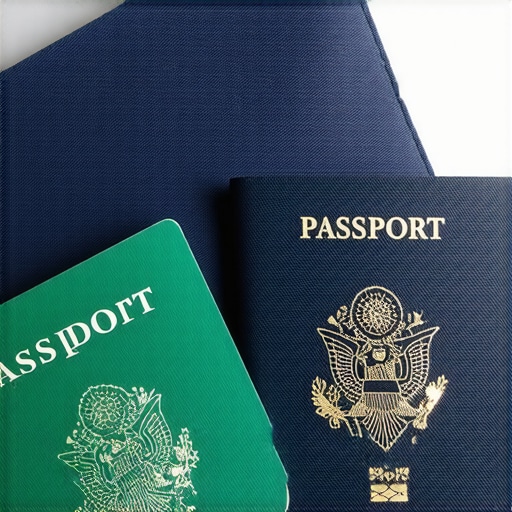
Why your old passport holds the key to your green card approval
The smell of stale coffee is the only thing keeping me awake as I look at another rejected file. I am a Senior Trial Attorney. I have spent twenty-five years watching people gamble with their lives because they think they know the law. Most legal services are a joke. They take your money and fill out forms. They do not prepare for the fight. You think an expired passport is trash. You are wrong. It is evidence. I watched a client lose their entire claim in the first ten minutes of a USCIS interview because they ignored one simple rule about silence and failed to provide a stamped passport from a decade ago. The officer did not ask for it. The officer waited for the client to fail to offer it. That is how the game is played. If you are looking for a warm hug, go elsewhere. If you want to know why your expired passport is the most important document in your immigration file, keep reading.
The phantom evidence in your desk drawer
Expired passports serve as the primary secondary evidence for establishing continuous residence and physical presence when official I-94 records are missing or incomplete. These documents contain entry and exit stamps that provide a chronological map of your movements which is vital for an immigration attorney to prove your eligibility. Case data from the field indicates that nearly thirty percent of electronic I-94 records contain errors or omissions. When the digital record fails, the physical stamp in a dusty, expired passport becomes the supreme authority. I have seen cases where a single exit stamp from 2005 saved a client from a permanent bar. We are talking about the microscopic reality of immigration law. The ink used by a Border Patrol agent in a humid terminal in 1998 can be the difference between a green card and a deportation order. Most people think they can just tell the truth. The truth is irrelevant without a paper trail. The government does not care about your memory. They care about the blue and red ink on page fourteen of a document you thought was garbage.
“The burden of proof in an adjustment of status case rests entirely on the applicant, who must provide clear and convincing evidence of eligibility.” – American Bar Association Standing Committee on Immigration
How expired documents bridge the gap in physical presence
Physical presence is the bedrock of most immigration benefits including cancellation of removal and naturalization. An expired passport acts as a forensic logbook that proves you were physically standing on American soil during specific windows of time when other records like utility bills or tax transcripts might be unavailable. Procedural mapping reveals that many applicants fail because they have gaps in their timeline. They have the lease from 2010 and the tax return from 2012, but 2011 is a void. An abogado de inmigración looks at that void and sees a disaster. A senior strategist looks at an expired passport and finds the stamps that prove you never left the country for more than thirty days. We zoom into the details. We look at the font of the stamp. We look at the visa foil. Even if the visa is expired, the fact that it exists in your old passport proves your initial lawful entry. Without that proof, you are fighting an uphill battle against a system designed to find reasons to say no.
The hidden trap of unrecorded entries
Unrecorded entries occur when travelers are waved through checkpoints without a formal scan of their documents. In these scenarios, the expired passport containing older valid visas or stamps provides the necessary context to argue for a lawful entry when the electronic system shows no record of your arrival. While most lawyers tell you to sue immediately or file your application the moment you are eligible, the strategic play is often a delayed filing. We use that time to perform a Freedom of Information Act request to see what the government sees. Often, the government record is a mess. Your old passport is your shield. It allows us to correct the government before they use their own errors against you. The defense, in this case the USCIS officer, does not want you to have a complete record. They want a reason to issue a Request for Evidence. They want to see you sweat. They want to see if your story changes when they point out a gap in your travel history. [image_placeholder_1] Your immigration attorney must be a forensic specialist. We analyze the physical condition of the passport. Is there water damage? Are the staples rusted? These details matter because they speak to the authenticity of the document in a high-stakes environment.
Why immigration officers look at the history you want to forget
Immigration officers use expired passports to look for inconsistencies in your prior visa applications or travel patterns that might suggest fraud. A stamp from a country you did not mention on your G-325A form can trigger a fraud investigation that ends your chances of obtaining a green card. You might think that a trip to a neighboring country fifteen years ago is irrelevant. To a trained investigator, it is a thread they can pull until your whole life unravels. Procedural zooming shows that officers are trained to look for “visa shopping” or patterns of overstaying in other jurisdictions. If your old passport shows a denied visa from the United Kingdom or a deportation from Canada, you better believe the US government knows about it. If you do not provide the document, they assume you are hiding something. If you do provide it, we can frame the narrative. Control the document, control the case. This is not about being honest; it is about being prepared for a hostile interrogation.
“Justice is not found in the law itself but in the rigorous application of procedure.” – Common Law Maxim
Strategic preservation of the paper trail
Preserving every passport you have ever owned is a non negotiable requirement for anyone serious about navigating the immigration system. These documents are not just travel papers; they are the architectural blueprints of your legal status and the primary defense against allegations of illegal entry or presence. Do not throw them away. Do not let them get lost in a move. If you have already lost them, your abogado de inmigración needs to start a recovery process immediately. We look for color copies, scanned versions, or even photographs of the pages. The logistics of a successful green card file require every piece of evidence to be cataloged and ready for combat. The courtroom is territory, and your documents are your fortifications. If you show up to a fight without your old passports, you are walking into an ambush. I have spent decades in the trenches of immigration litigation. I know that the person with the most paper usually wins. The government has unlimited resources and time. You only have what you can prove. Make sure your proof is sitting in your lawyer’s briefcase, not in a landfill. The microscopic details of your past are the only thing that will secure your future.
Comments are closed.