
Why your green card interview focus changes depending on the officer
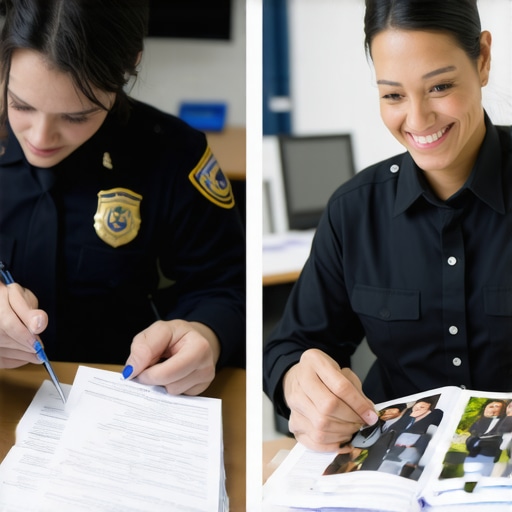
The green card interview is not a friendly conversation. It is a calculated cross-examination where the adjudicating officer is the judge, jury, and investigator. Most applicants walk into the room thinking their marriage certificate or their job offer is a shield. It is not. The reality of federal adjudication is that your success depends almost entirely on the subjective lens of the individual sitting across from you. I have spent twenty-five years watching the machinery of the law grind through human lives, and the most dangerous mistake you can make is assuming that the law is a set of rigid rules. It is a set of interpretations. My office smells like strong black coffee and the ozone of a laser printer that never stops, and that is because we spend hours preparing for the specific officer, not just the case.
The human variable in federal adjudication
The human variable in federal adjudication dictates that every USCIS officer possesses broad discretionary authority to weigh evidence differently. While one officer focuses on financial co-mingling, another might prioritize the timeline of the romantic relationship. Your interview success depends on identifying these subjective priorities within the first five minutes of interaction. I watched a client lose their entire claim in the first ten minutes of a deposition because they ignored one simple rule about silence. They felt the need to fill the quiet gap left by the officer with nervous chatter. That chatter became a contradiction. That contradiction became a finding of material misrepresentation. The officer did not care about the three hundred photos of the wedding. They cared about the fact that the client could not remember which side of the bed the spouse slept on during a high-pressure moment. This is the brutal truth of the immigration process. The officer is trained to look for the lie, not the truth. When you hire an abogado de inmigración, you are not paying for someone to hold your hand; you are paying for someone to prevent you from walking into a procedural ambush.
“Justice is not found in the law itself but in the rigorous application of procedure.” – Common Law Maxim
Discretionary power and the burden of proof
Discretionary power and the burden of proof remain the central pillars of the I-485 adjustment of status process. Under Section 245 of the Immigration and Nationality Act, the burden is entirely on the applicant to prove they are eligible for the benefit. Officers use this statutory weight to probe for inconsistencies in your testimony. While most lawyers tell you to provide as much documentation as possible, the strategic play is often to provide less but higher-utility data. Over-documenting a case with irrelevant fluff often triggers a fraud flag. If you provide twenty different utility bills but none of them show both names, you are handing the officer a reason to deny. The officer has the right to determine your credibility based on your demeanor, the consistency of your story, and the way you react to stressful questioning. This is where the legal services of a seasoned litigator become mandatory. We map the procedural landscape before you step onto it. We know that if you are assigned to a specific officer known for high denial rates in marriage fraud cases, we need to lead with heavy financial co-mingling evidence like joint tax transcripts and life insurance beneficiary designations immediately.
The myth of the standard interview checklist
The myth of the standard interview checklist leads many applicants to believe that if they check every box, they are guaranteed a green card. In reality, the USCIS Policy Manual gives officers the latitude to move beyond the checklist if they have a reasonable suspicion of fraud or ineligibility. The interview is a live environment where the officer is testing your resilience. I have seen officers spend forty-five minutes questioning the brand of toothpaste a couple uses simply to see if their stories diverge. This is not about toothpaste; it is about the psychological pressure of the immigration process. The officer is looking for the fracture in the narrative. They are looking for the moment your eyes dart to the corner of the room or the moment you look at your spouse for the answer. A professional immigration attorney will have put you through a mock interview that is ten times harder than the real thing. We use the same forensic tactics the government uses because we want you to bleed in the office, not in the field office.
“The attorney’s role is to ensure that the administrative record reflects the legal truth, not merely the officer’s personal inclination.” – American Bar Association Standing Committee on Immigration
Procedural traps during the testimony phase
Procedural traps during the testimony phase often involve the use of leading questions or the strategic use of silence by the adjudicator. Officers are trained to ask questions that assume a fact not in evidence, forcing the applicant to either correct them or inadvertently agree to a falsehood. When an officer asks, “When did you stop living together?” to a couple that still lives together, it is a trap. If the applicant is nervous, they might stutter or fail to provide a definitive correction. This is where the transcript of the interview becomes your worst enemy. Every word is recorded, and every pause is noted. The officer is building a record. If that record is filled with hesitation, it provides the legal basis for a discretionary denial. This is the microscopic reality of the law. It is not about the grand gestures of justice; it is about the specific phrasing of your response to a trap question. You must treat every question as a potential landmine. My job is to ensure that the record remains clean and that the officer stays within the bounds of 8 CFR regulations.
Documentation gaps that trigger officer suspicion
Documentation gaps that trigger officer suspicion usually involve missing periods of shared residency or unexplained gaps in employment history. An officer will zoom in on these gaps to create a narrative of instability or fraudulent intent during the green card interview. If there is a three-month period where you cannot prove you lived with your spouse, the officer will assume you were separated. They will not ask you for clarification out of the goodness of their heart; they will ask you in a way that suggests you are hiding something. The abogado de inmigración must bridge these gaps with affidavits and secondary evidence before the interview even begins. We do not wait for the officer to find the hole; we patch it before they ever see the file. This is the difference between a settlement mill and a trial-ready firm. We anticipate the attack and provide the counter-evidence in the initial filing. We know that the officer is looking for a reason to clear their desk, and the easiest way to clear a desk is to issue a Request for Evidence or a Notice of Intent to Deny based on a documentation gap.
The professional necessity of legal services
The professional necessity of legal services becomes clear when you realize that the immigration system is designed to be adversarial. Without a strategist to navigate the procedural nuances and the officer’s personal biases, you are essentially gambling with your future in the United States. You need a lawyer who views the courtroom and the interview room as territory to be defended. You need someone who understands that the law is a tool of leverage. When an officer oversteps their bounds, a trial attorney knows how to interject an objection that protects the record for a potential appeal. We do not sit silently while our clients are bullied. We use the rules of evidence and the USCIS’s own internal guidelines to keep the officer in check. The green card process is a high-stakes game of chess, and you should never play without an architect who understands the board. If you walk into that room alone, you are not a participant; you are a target. Secure your status by ensuring your legal representation is as aggressive as the system you are facing. There is no room for error when your life is on the line. The time for preparation is now, before the officer ever opens your file.