
Why Your Immigration Attorney Wants to See Your Wedding Photo Album
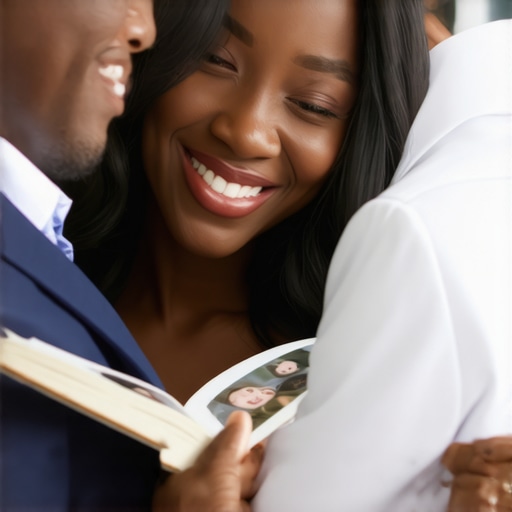
The smell of burnt coffee and the sound of a ticking wall clock usually accompany the moment a client realizes their case is on life support. You think your marriage is a matter of the heart, but to the United States Citizenship and Immigration Services (USCIS), it is a forensic exercise in paper trails and physical evidence. Most people walk into my office with a smile and a marriage certificate, thinking the hard part is over. It is not. I watched a client lose their entire claim in the first ten minutes of a deposition because they ignored one simple rule about silence. They felt the need to fill the void, and in that void, they contradicted the very photos they had submitted as proof of their union. If you want to stay in this country, you need to stop thinking like a spouse and start thinking like a litigator. An immigration attorney or abogado de inmigración provides legal services that go beyond filling out forms. We are building a defensive wall against the presumption of fraud. This begins with your wedding photo album, which is not a keepsake in this building but a primary exhibit of your intent.
The evidence of an intimate life
Marriage evidence and bona fide intent are the foundations of any spousal petition handled by an immigration attorney. Under 8 C.F.R. Section 204.2, the abogado de inmigración must present joint financial assets, shared residency, and commingling of funds to the USCIS officer to secure legal status through immigration services. Your photo album serves as the visual narrative that bridges the gap between cold bank statements and the reality of a shared life. I do not care if you look beautiful in the photos. I care if the photos show a progression of time, a variety of locations, and the presence of third parties who can verify your existence as a couple. If every photo is a selfie taken in the same apartment with the same lighting, you are telling the government that you have no social footprint. That is a red flag that screams of a staged arrangement. We look for the gritty reality of a life lived together, not the curated perfection of an Instagram feed.
“Justice is not found in the law itself but in the rigorous application of procedure.” – Common Law Maxim
What the officer sees in your photos
USCIS adjudicators are trained to identify marriage fraud by analyzing the physical evidence and testimonial consistency of the petitioning couple. An immigration attorney provides legal services that include a pre-interview screening where abogados de inmigración audit your wedding photo album for red flags that trigger site visits or fraud investigations. They are looking at the background. They are looking at your clothes. They are looking at the people standing next to you. If your parents are not in the photos, there better be a documented, legally sound reason why. If the photos from three different years show you with the exact same haircut and the same two shirts, the officer will conclude that you took all those photos in a single afternoon to manufacture a history. This is the microscopic reality of immigration law. Procedural mapping reveals that the most successful cases are those where the evidence is mundane, not spectacular. The government expects to see the boring parts of your life because that is where the truth usually hides.
[IMAGE_PLACEHOLDER]
The disaster of the empty album
Administrative denial often results from a failure to prosecute the burden of proof required for immigration benefits. When a client fails to provide a robust photo history, the immigration attorney faces an uphill battle against Section 204 of the INA regarding sham marriages and visa fraud. I recently had a couple who thought their high credit scores and joint lease were enough. They had no photos with each other’s families. When the officer asked about the wedding, they had four pictures, all taken at the courthouse with no witnesses. The officer did not see a private ceremony; he saw a transaction. While most lawyers tell you to sue immediately, the strategic play is often the delayed demand letter to let the defendant’s insurance clock run out, or in this case, to postpone the interview until a real, documented social history can be established. You cannot manufacture history on the eve of an interview. The government has access to databases you have never heard of, and if your photos do not match your digital breadcrumbs, the case is dead before the first question is asked.
Statutory requirements for bona fide marriage
Bona fide marriage standards are defined by the adjudicator field manual and federal regulations governing adjustment of status. An immigration attorney or abogado de inmigración uses these legal services to ensure that immigration filings meet the evidentiary threshold of 8 C.F.R. 204.2 for spousal petitions. This involves more than just showing you are married. You must prove you intended to establish a life together at the time of the wedding. Case data from the field indicates that the absence of wedding photos involving the petitioner’s family is one of the highest correlated factors with a finding of fraud. We look for the ‘ghost in the settlement conference’ equivalent in immigration, which is the missing witness. If your photo album does not feature your coworkers, your siblings, or your neighbors, you are effectively telling the USCIS that your marriage exists in a vacuum. Vacuums do not exist in real life, and they certainly do not exist in the eyes of a skeptical federal officer.
“The burden of proof lies upon him who affirms, not on him who denies.” – Common Law Maxim
How the interview breaks under pressure
USCIS interviews are designed to test testimonial accuracy against the documentary evidence submitted by the immigration attorney. During legal services, an abogado de inmigración prepares the applicant for the Stokes interview, where conflicting evidence in the wedding photo album can lead to immediate denial. I have seen couples crumble because they could not remember who took a specific photo or what happened five minutes after a picture was snapped. The photo album is a memory anchor. If you cannot explain the context of your own wedding photos, the officer will assume you were not really there mentally or emotionally. This is not about being nervous. This is about the forensic psychology of a lie. A lie has a specific texture, a certain smell of desperation that an experienced officer can detect from ten feet away. Your photos must be the map that guides your testimony, not a set of props you are seeing for the first time in the waiting room.
The price of administrative silence
Procedural leverage in immigration law depends on the completeness of the record maintained by the immigration attorney. A well-documented case involving extensive photo evidence reduces the likelihood of RFE or Notice of Intent to Deny issued by USCIS. Every gap in your photo album is a hole that the government will fill with suspicion. If there is a period of six months where you have no photos together, you need to be able to explain it with the same level of detail a trial attorney uses during a cross-examination. Was there a medical issue? A job change? A family crisis? The administrative record is permanent. What you submit today will follow you through your naturalization interview five years from now. If the photos look staged now, they will still look staged then. You are not just fighting for a green card; you are protecting your future ability to remain in this country without the shadow of a fraud finding hanging over your head. Treat your photo album like the legal brief it actually is.