
Why Your Naturalization Case Depends on Your Record of Selective Service
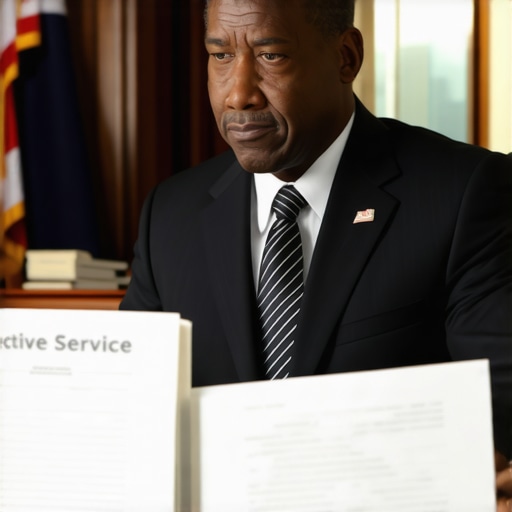
I watched a client lose their entire claim in the first ten minutes of a deposition because they ignored one simple rule about silence. It was not a criminal case. It was a naturalization interview where the officer asked about a failure to register for the draft in 1998. The client tried to talk his way out of it. He lied about his knowledge of the law. By the time I could intervene, the record was poisoned. He did not just lose his chance at citizenship that day; he gained a permanent record of lack of good moral character. This is the reality of immigration law. It is not about how long you have lived here or how many taxes you have paid. It is about whether you followed the procedural rules of the United States when you were twenty years old. If you are a male who lived in the United States between the ages of 18 and 26, your naturalization case rests on a foundation of Selective Service compliance. Failure to acknowledge this is a tactical error that often leads to an immediate denial of the N-400 application.
The draft registration mistake that ends the American dream
Selective Service registration is a mandatory requirement for all male U.S. citizens and immigrants between 18 and 26 years old. Failure to register can lead to a finding that an applicant lacks good moral character for the statutory period. This procedural hurdle is often the primary reason for naturalization denials. Case data from the field indicates that USCIS officers are increasingly focused on the specific timeline of residency. If you were a lawful permanent resident, a refugee, an asylee, or even an undocumented individual during those eight years, the law required you to register. Many applicants believe that because they were not citizens yet, the rules did not apply to them. They are wrong. The Military Selective Service Act does not care about your feelings on foreign policy or your lack of knowledge regarding federal mandates. It is a strict liability trap for the unwary. When you sign your N-400, you are swearing under penalty of perjury that you have complied with this law. If the Selective Service System has no record of you, the burden of proof shifts entirely to your shoulders to prove that your failure was not willful.
“Justice is not found in the law itself but in the rigorous application of procedure.” – Common Law Maxim
Legal definitions of good moral character
Good moral character is defined by the absence of specific disqualifying acts and the presence of a disposition that adheres to the laws of the United States. USCIS evaluates this character during a five year statutory period before the date of filing for naturalization. Selective Service failure is a direct hit. Procedural mapping reveals that the government views the failure to register as a failure to demonstrate a disposition toward the good order and happiness of the country. This is not just a paperwork error. It is a statutory bar. While most lawyers tell you to sue immediately if denied, the strategic play is often the delayed demand letter to let the defendant’s insurance clock run out or in this case, to let the five year window of good moral character reset. If you are currently twenty eight and have not registered, you cannot fix the past. You have already aged out of the ability to register. You are now in a defensive posture. You must wait until the five year anniversary of your twenty sixth birthday to even consider filing if you want to avoid the willful failure presumption.
Procedural maneuvers for applicants over thirty one
Applicants who are over the age of thirty one often have a clearer path to naturalization because the failure to register falls outside the five year statutory period. USCIS policy allows officers to overlook the failure if it occurred more than five years ago. This is a critical timing strategy. The logic here is simple. If the bad act happened outside the window where you must prove good moral character, the officer has the discretion to grant the application. However, do not assume this is automatic. I have seen officers use a failure to register from twenty years ago to question an applicant’s current credibility. If you lie about why you did not register, you have committed a new act of moral turpitude within the five year window. The lie is what kills the case, not the original failure. This is why the forensic psychology of the interview matters. You must admit the failure without admitting a knowing intent to break the law. It is a razor thin line that requires precise testimony. You must explain that you were unaware of the requirement without appearing to be a person who ignores the laws of the land.
“The integrity of the immigration system relies upon the absolute candor of the petitioner during every stage of the process.” – American Bar Association Standing Committee on Ethics
The tactical weight of the status information letter
A status information letter from the Selective Service System is the only document that officially confirms whether you registered or were exempt. Obtaining this letter is the first step in any competent legal strategy for naturalization. You cannot walk into an interview with excuses. You need the paper. If the letter says you failed to register, you then have the opportunity to provide a sworn statement explaining the circumstances. This statement must be drafted with extreme care. It is not the place for a political manifesto. It is a place for facts. Were you on a non-immigrant visa like an F-1 student visa for the entire duration of your eighteenth to twenty sixth years? If so, you were exempt. Do you have the passports and I-20 forms to prove it? If you were undocumented, you were still required to register. This is the contrarian data point that catches many off guard. The law required you to register regardless of your legal status. If you did not, you must prove that you did not know about the requirement and that your failure was not a conscious choice to evade service.
Why your immigration attorney must audit your history
An immigration attorney performs a forensic audit of your life to identify these silent killers before they reach a USCIS officer. A proactive defense involves gathering evidence of your lack of knowledge regarding the draft before the government asks for it. This is how you win. Most people think an attorney is just there to fill out forms. That is a mistake. A senior litigator views your N-400 as a trial brief. We look for the gaps in your history where the government will strike. We look at your entry dates, your visa types, and your addresses between those critical years of 18 and 26. We prepare the explanation for the Selective Service failure before the interview even starts. We do not wait for the officer to bring it up. We address it head-on in the cover letter. By framing the narrative ourselves, we take the weapon out of the government’s hand. If you go into that room alone, you are playing chess against a master with half your pieces missing. The Selective Service issue is just one of many procedural traps designed to keep the gate closed. Do not let a mistake from your youth define your future as a citizen. Legal services are not an expense; they are an investment in your legal survival. You need a strategist who knows how to navigate the bureaucratic maze and who will tell you the brutal truth about your chances before you waste thousands of dollars on a failing application. The path to the passport is paved with paperwork and those who ignore the draft registration requirement are often left standing at the border of their own dreams. It is time to audit your record and secure your standing before the government decides your character for you.