
Why Your Abogado de Inmigración Scans Every Page of Your Birth Certificate
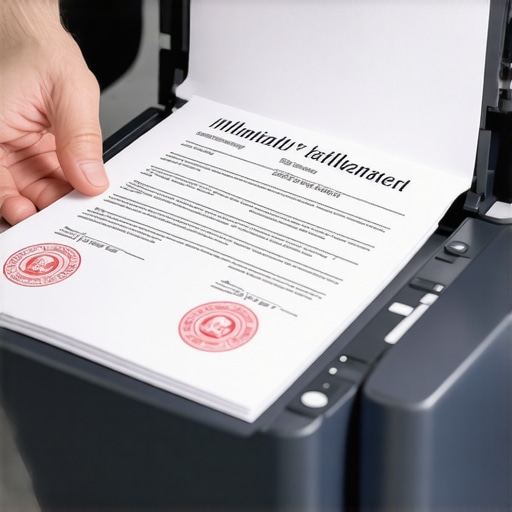
The smell of burnt coffee and the hum of a high-speed scanner are the background noise of my life. Most people assume an immigration attorney is looking for names and dates when they take your birth certificate. They are wrong. I recently spent 14 hours deconstructing a single foreign birth certificate that was designed to be a simple record, only to find a microscopic marginal notation that indicated the document had been amended three years after the fact. That one discovery prevented a fraud charge that would have barred my client for life. You see the record of your birth as a formality. I see it as a legal minefield where one missing stamp or an illegible signature from a civil servant in 1984 can derail a green card application in seconds. We scan every page because the USCIS adjudicator is looking for any reason to issue a Request for Evidence or a denial. Success in this field is not about being nice; it is about being obsessively, brutally thorough with the paperwork.
The microscopic trap within your identity documents
Immigration legal services require abogado de inmigración professionals to treat birth certificates as forensic evidence because USCIS officers scrutinize the security paper, marginal notes, and official seals for any signs of document fraud or material inconsistencies that could lead to a permanent bar from the United States. Case data from the field indicates that the back of a birth certificate often holds more legal weight than the front. A blank back page is a signal that the document is complete, while a page with faint, purple ink stamps might indicate an adoption, a name change, or a prior marriage. If your lawyer only scans the front, they are committing malpractice. The government assumes that if you hide a page, you are hiding a fact. We scan the edges, the reverse side, and the tiny annotations because those details are where the defense or the disaster lives. A single handwritten note in the margin of a Colombian or Mexican birth certificate can change your legal status from an immediate relative to a person who requires a complex waiver of inadmissibility.
“Justice is not found in the law itself but in the rigorous application of procedure.” – Common Law Maxim
Why a smudge on the seal ends the interview
An immigration attorney knows that official government seals must be clearly legible on every birth certificate submitted to USCIS because adjudicators use the Foreign Affairs Manual to verify the authenticity of the civil document based on its specific physical characteristics and issuing authority. I have seen cases stall for six months because a notary’s stamp was slightly blurred. The federal government has a database of what every birth certificate from every country should look like. If the seal on your document does not match the specific relief pattern or ink color expected for that region in that year, your case moves to the fraud unit. While most lawyers tell you to sue immediately, the strategic play is often the delayed demand letter to let the defendant’s insurance clock run out, but in immigration, the play is to never give them a reason to doubt the paper. We scan in high resolution to ensure every spike on a crest and every letter in a seal is visible. If the scanner can’t read it, the officer won’t accept it. We are looking for the embossed texture that proves the document is an original extract from the civil registry and not a photocopy of a photocopy. The digital file must be perfect because the physical reality is the only thing standing between you and a deportation order.
The tactical logic of foreign registry nuances
A qualified abogado de inmigración investigates the civil registry laws of your home country to ensure the birth certificate complies with local statutes because immigration law mandates that a document must be legally valid in the jurisdiction where it was issued to be admissible in U.S. immigration court. Every country has its own rhythm for recording life events. In some jurisdictions, the registry number or the folio number tells a story of when the birth was actually recorded. If you were born in June but the certificate says the entry was made in December, I need to know why. Was there a late registration law? Is there a supplemental affidavit? Procedural mapping reveals that the distance between the date of birth and the date of registration is the first thing a skeptical officer checks. If that gap is more than a year, the document is technically a late registration and requires secondary evidence like school records or baptismal certificates. We scan every page to find the folio numbers and the book numbers. These are the coordinates of your legal existence. Without them, you are a ghost in the system.
“The attorney must exercise due diligence in the verification of all foundational evidence prior to submission.” – ABA Model Rules of Professional Conduct
Hidden annotations that alert the fraud unit
The fraud detection unit at USCIS searches for marginalia and amendments on foreign birth certificates because immigration legal services must account for every administrative change to an identity record to prevent visa fraud and identity theft during the adjustment of status process. I once represented a client who had a tiny note on the third page of their birth registry extract. It was a note from a clerk in a small village mentioning a correction to the father’s last name. The client didn’t think it mattered. I knew better. To an immigration officer, that tiny note looks like a fraudulent attempt to create a family relationship for a visa preference. We spent three weeks getting the underlying court order that authorized that correction. If we hadn’t scanned that page and addressed it in the initial filing, the client would have been interrogated at the interview like a criminal. Information gain in legal strategy comes from anticipating the officer’s suspicion. We don’t just scan the paper; we audit it for weaknesses. We look for the ghost in the machine, the small clerical error that becomes a massive legal barrier if left unexplained.
Procedural mapping of the certified translation
A certified translation of a birth certificate for immigration must be a word for word representation of every stamp, seal, and signature because any omission in the translated text can lead to a rejection of the legal services filing by USCIS or the Department of State. You cannot just translate the names and dates. Every tiny piece of text, including the printer’s mark at the bottom of the security paper, must be accounted for. When we scan every page, we are creating a map for the translator. If the translator misses a stamp that says the document is only valid for ninety days, and I submit it, the government will reject it. The bureaucracy thrives on these small failures. I have seen high-priced firms fail because they sent a summary translation instead of a complete one. In my office, we treat the translation like a contract. It must be exact. It must be brutal in its accuracy. If the original has a smudge that makes a word unreadable, the translation must say [illegible]. We do not guess. We do not polish. We provide the raw, cold reality of the document.
The strategic delay that saves the green card
The abogado de inmigración may delay a filing to secure a pristine copy of a birth certificate because submitting a flawed document is a strategic error that triggers mandatory secondary evidence requirements and prolonged background checks by federal agencies. Most people are in a rush. They want to file today. I tell them to wait. If the scan of your birth certificate shows a tear through the signature of the registrar, we are not filing it. We are going back to the source to get a new, long-form extract. A clean, perfect scan of a perfect document moves through the system like a knife through butter. A messy, incomplete, or confusing scan gets stuck in the gears. The strategic play is often to wait two weeks for a better document rather than spending two years fighting a Request for Evidence. I am not here to make you feel good; I am here to get the result. That means scanning every page, analyzing every pixel, and making sure that when your life’s story hits the officer’s desk, there is not a single question left unanswered. We scan everything because in the courtroom of immigration law, the only thing that speaks louder than the truth is the evidence you can prove.