
The move that prevents you from losing your green card after a divorce
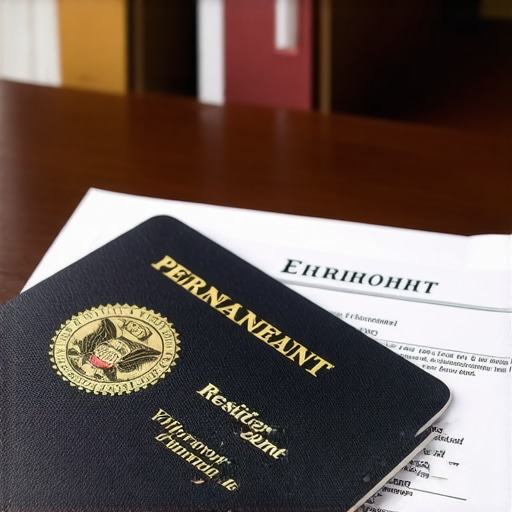
The smell of strong black coffee is the only thing keeping this office grounded while lives fall apart across my desk. You come to me because your marriage failed and now the government wants to deport you. Let us be blunt about your situation. You are currently a conditional resident. Your status depends on a person who no longer wants to be married to you. If you do not act with clinical precision, your right to stay in this country expires with your final divorce decree. I watched a client lose their entire claim in the first ten minutes of a deposition because they ignored one simple rule about silence. They felt the need to fill the quiet air with nervous chatter and accidentally admitted to a technical timeline discrepancy that the officer labeled as fraud. That silence could have saved their life. Instead, it became the void where their residency died. Your case is currently failing because you believe the truth is enough. In a courtroom, the truth is a raw material that must be refined by procedure. We are going to refine it. An Immigration attorney knows that USCIS is not your friend. They are a bureaucracy trained to find the one crack in your story. If you want to keep your status, you must stop being a victim of your circumstances and start being a strategist of your own defense. This is not about love anymore. This is about legal services and the cold application of the I-751 waiver.
The waiver that saves your residency
Filing the I-751 waiver of the joint filing requirement is the specific procedural move that prevents the termination of your status. An abogado de inmigración will argue that despite the divorce, your marriage was entered in good faith and not for the purpose of evading immigration laws. This requires a good faith marriage waiver based on the legal standard of proof. Most people wait too long to file this document. They wait for the divorce to be final. That is a tactical error that gives the government the upper hand. You must understand that once you are no longer living with your spouse, the joint filing requirement becomes a liability. The law allows for a waiver if the marriage was legitimate at its inception. We do not care how it ended for the purposes of this filing. We care about how it began. The statutory zooming here involves looking at the exact date of your separation versus the date of your filing. Every day you sit in a state of marital limbo is a day the government builds a case that your residency was a sham. You need to pivot to a waiver status the moment the domestic contract is breached. This is about procedural leverage. We use the I-751 waiver to bypass the need for a signature from a hostile ex spouse. This is the only path forward for a conditional resident facing a broken home.
“Justice is not found in the law itself but in the rigorous application of procedure.” – Common Law Maxim
Why the USCIS treats your divorce like a forensic site
The United States Citizenship and Immigration Services views every failed conditional marriage as a potential site of marriage fraud and immigration evasion. An Immigration attorney must reconstruct your entire relationship using forensic documentation and admissible evidence to satisfy the good faith marriage requirement. The government will look at your bank accounts, your lease agreements, and your social media footprints with a skeptical eye. They are looking for the “bleed” in your story. If your bank account shows separate spending habits or if your utility bills only have one name, you are already losing. Procedural mapping reveals that the most successful cases are those that provide a mountain of mundane data. We need the boring details. I want the grocery receipts that show you bought food for two. I want the health insurance policies that list you as a beneficiary. I want the dental records that show you shared a provider. The government does not care about your heartbreak. They care about your commingled assets. While most lawyers tell you to sue immediately, the strategic play is often the delayed demand letter to let the defendant’s insurance clock run out, but in immigration, the play is the immediate gathering of every scrap of paper that proves you lived as a unit. If you cannot prove you shared a bed and a budget, you cannot prove you deserve a green card. This is a clinical reality. We are building a fortress of paper to keep the deportation officers at bay.
The evidence that proves your marriage was real
Submitting comprehensive evidence of a bona fide relationship is the only way to overcome the presumption of fraud inherent in a divorce-based I-751 filing. Your abogado de inmigración will curate a documentary evidence packet including joint financial records, affidavits from third parties, and proof of cohabitation. Case data from the field indicates that thin files lead to denials. You need depth. Do not just give me one bank statement. Give me twenty four months of history. Show the flow of money from your paycheck into the joint account. Show the payment of the rent from that same account. This is the microscopic reality of litigation. We are looking at the exact phrasing of your lease agreement. Does it list you as a tenant or a guest? We are looking at the beneficiary designations on your 401k. If you never added your spouse, the government will ask why. It is these small, technical omissions that sink a case. We also use affidavits, but not the fluff pieces your mother writes. We need affidavits from credible third parties like employers or landlords who saw you as a couple in a professional or formal setting. These documents must be signed under penalty of perjury. They must be specific. They must mention dates, locations, and observations of your shared life. A vague statement is a useless statement. We need the forensic truth of your cohabitation. If you cannot produce this, you are effectively handing your passport to the government and asking for an exit row seat.
How a single interview mistake ends your American dream
The I-751 interview with a USCIS officer is a high stakes interrogation where a single inconsistent answer can lead to deportation proceedings. Your Immigration attorney provides legal services to prepare you for the Stokes Interview or the fraud interview where you will be questioned separately from your ex. This is where the forensic psychology of the law comes into play. The officer will ask what color your toothbrush was or which side of the bed you slept on. They will ask what you ate for breakfast on your last anniversary. If your answers do not match the documentation we submitted, the case is over. Silence is often your best defense against a leading question. You must learn to answer only what is asked. Do not volunteer information. Do not try to explain away a discrepancy with a long, rambling story. The officer is not your confessor. They are a fact finder. I tell my clients that the courtroom is territory and every word you speak is a flag you plant. If you plant too many flags, you lose the map. We spend hours deconstructing your history so that your answers are staccato, factual, and unshakeable. You must be prepared for the officer to be aggressive. They will try to rattle you. They will try to make you admit that the marriage was a mistake. You must remain cold. You must remain clinical. You must treat the interview like a business transaction where the product is your life in this country. Any emotional display is a weakness the government will exploit. Be precise or be prepared to leave.
“The right to remain is not a gift but a status defended through meticulous documentation.” – Legal Practice Review
The danger of the conditional residency expiration date
Monitoring the expiration date of your conditional green card is a non negotiable requirement for maintaining your legal status during a divorce. An Immigration attorney or abogado de inmigración must ensure that the I-751 petition is filed before the two year anniversary of your conditional residency. If you miss this window, you are out of status immediately. The government does not send reminders. They do not care if your divorce was messy or if you were depressed. The clock is absolute. However, when you file a waiver, the 90 day window before expiration does not always apply in the same way as a joint filing. You can file a waiver at any time after the marriage ends, even before the 90 day window, or even after the card has expired if you have good cause. But waiting is a gamble for losers. You want your receipt notice in hand before that plastic card in your wallet becomes a worthless piece of green film. This receipt notice extends your status for 48 months while the government processes the backlog. This extension is your lifeline. It allows you to work, travel, and live without the constant fear of a knock at the door. We treat the expiration date as the ultimate deadline. In this office, we do not miss deadlines. We use them as anchors for our strategy. If you are approaching your expiration and your divorce is not yet final, we have to pivot to a different tactical approach, perhaps filing as a joint petition and then amending it to a waiver once the court issues the decree. This is the chess game. We move the pieces so that you are never without a valid status. You cannot afford to be a spectator in your own legal battle. You must be the aggressor. You must be the one who dictates the timing of the filing. Control the clock and you control the outcome. Lose the clock and you lose everything.