
How to respond to a marriage fraud investigation
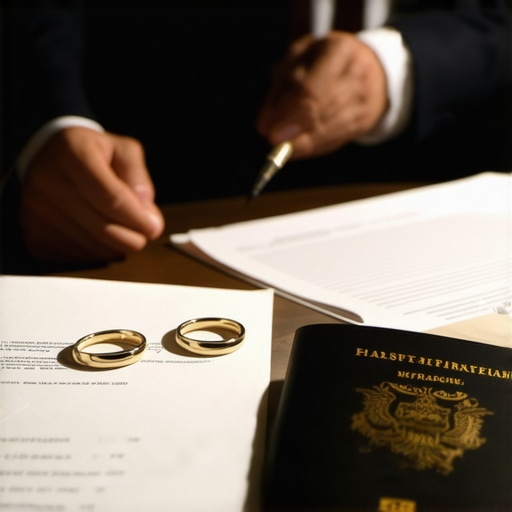
I smell like strong black coffee and I have seen a thousand people walk into my office thinking love is enough to satisfy the federal government. It is not. The immigration system does not care about your feelings; it cares about your utility bills, your tax returns, and whether your spouse knows which side of the bed you sleep on. I watched a client lose their entire claim in the first ten minutes of a deposition because they ignored one simple rule about silence. The officer asked a question about their morning routine, and instead of a simple answer, the client rambled for five minutes until they contradicted their own sworn statement from three years ago. That silence is where cases die. In the world of high-stakes legal services, silence is your only shield against a system designed to find a crack in your narrative. This is not a friendly chat. This is a forensic audit of your private life. If you are reading this, you are likely already under the microscope of the USCIS Fraud Detection and National Security (FDNS) directorate, and you need to understand that the burden of proof has shifted entirely onto your shoulders.
The mistake that kills your residency
To respond to a marriage fraud investigation, you must immediately audit all joint financial records, secure legal representation, and prepare for a Stokes interview. Marriage fraud triggers a Section 204c ban, which permanently bars an individual from future visa approvals. Effective immigration defense requires a comprehensive abogado de inmigración strategy to prove the bona fides of the relationship. Case data from the field indicates that the primary reason for a fraud finding is not a lack of love, but a lack of preparation. When the government issues a Notice of Intent to Deny (NOID), they are telling you that they already believe your marriage is a sham. You are no longer in the application phase; you are in the defense phase. Every document you submit from this moment forward must be scrubbed for consistency. If your tax transcripts show a different address than your driver’s license, you have already handed the government the rope they will use to hang your case. A senior Immigration attorney knows that the tiny details, like the timing of a joint bank account opening relative to the filing date, are the first things an officer checks. If you opened that account two days before you sent the I-130, you have signaled a lack of authenticity.
“Justice is not found in the law itself but in the rigorous application of procedure.” – Common Law Maxim
Where the USCIS Stokes interview goes wrong
The Stokes interview is a high pressure separation tactic where spouses are questioned in different rooms to find discrepancies in their testimony. Officers look for material inconsistencies regarding daily life, family history, and household layout. A successful abogado de inmigración will prepare clients by conducting mock sessions that mimic this legal services environment. Procedural mapping reveals that officers often focus on mundane details that couples rarely discuss, such as the color of a toothbrush or the specific contents of a refrigerator on a Tuesday night. This is where the psychological pressure of the investigation becomes a weapon. One spouse says the curtains are blue; the other says they are grey. In a normal marriage, this is a simple disagreement. In a fraud investigation, this is evidence of a conspiracy to evade immigration laws. You must understand the granularity of the questions. They will ask what you did for your spouse’s last birthday, who cooked, what gift was given, and who else was present. If you cannot answer with 100 percent certainty, the tactical play is to admit you do not remember rather than guessing. A guess is a lie in the eyes of the FDNS. The goal of the officer is to create a cold, clinical record of your failure to know your partner.
What the FDNS officer hides from you
FDNS officers conduct site visits and background checks without prior notice to verify that a couple actually resides together. They look for physical evidence of cohabitation, such as clothing, toiletries, and shared furniture. These immigration investigators often interview neighbors or landlords to gather adverse information about your living arrangements. I have seen cases where an officer arrived at 6 AM, asked to see the bedroom, and noted that there was only one set of shoes by the door. They are not there to be your friend. They are looking for the “bleed” in your story. They will check the medicine cabinet. They will look for mail addressed to other people. They will even check the garbage to see if the consumption patterns match two people living in the home. The strategic play is often the delayed demand letter to let the defendant’s insurance clock run out, but in immigration, you do not have that luxury. You must be ready for the knock at the door every single morning. If you are not living there because of a work assignment or a family emergency, you must have the paper trail ready before they even ask. Without it, the officer will write a report stating that the residence is a “sham location,” and your path to a green card will effectively end that day.
“The integrity of the immigration system rests upon the veracity of the petitioner’s claims.” – ABA Standards for Immigration Litigation
Why your joint bank account is not enough
Simple joint bank accounts are often dismissed as superficial evidence if they lack active transaction history showing shared household expenses. Immigration officers require commingling of assets that demonstrates a true financial partnership. Evidence must include joint insurance policies, lease agreements, and utility bills that span the entire duration of the marriage. Many people think that putting both names on a piece of paper is a magic wand. It is not. An experienced Immigration attorney will tell you that the government wants to see the flow of money. They want to see that you both pay for the groceries, the rent, and the car insurance from a shared pool of funds. If your bank statement shows a thousand-dollar deposit and then immediate withdrawals for individual bills, it looks like a front. You need to show the mundane reality of marriage: the $4.00 coffee, the Netflix subscription, the utility bill that went up in the winter. This is the forensic psychology of the case. A real couple shares the burden of life. A fake couple shares a piece of paper. If your financial records are thin, you are essentially telling the USCIS that your marriage is a business transaction, and they will treat it as such by denying your petition and initiating removal proceedings.
The risk of the voluntary withdrawal trap
Voluntary withdrawal of a petition is a common suggestion by officers that can result in a permanent record of suspected fraud. Withdrawing the I-130 petition does not erase the FDNS investigation or prevent the government from using the evidence in deportation hearings. An abogado de inmigración should usually advise against this unless a specific tactical advantage exists. Officers use this tactic when they know their evidence is weak but they want to clear the case from their desk. They will tell you that if you just sign this paper, you can go home and “fix things” later. It is a lie. Once you sign that withdrawal under the cloud of a fraud investigation, you have essentially confessed. That confession will follow you to every future visa interview, every border crossing, and every interaction with the Department of Homeland Security. You are better off fighting a bad case with a strong legal services team than you are giving up and admitting to a crime you did not commit. The litigation of these cases requires a stomach for conflict. You must be willing to take the case to a verdict, so to speak, by forcing the government to prove their allegations in front of an immigration judge rather than folding under the pressure of a windowless interview room.
How to handle the site visit at dawn
Handling a dawn site visit requires staying calm, allowing entry if a warrant is present, and documenting every interaction with the officers. You should contact your immigration lawyer immediately while the officers are on site to ensure your constitutional rights are protected. Do not volunteer excessive information that is not directly asked for during the inspection. The officers will look at the layout of your home. They will count the pillows. They will ask who sleeps on which side. They will look for your spouse’s underwear. This is the microscopic reality of the case. If your spouse is at work, you should have their schedule memorized. If they are out of town, you should have the flight itinerary on your phone. Any hesitation is viewed as a sign of a fraudulent arrangement. This is where the forensic nature of the investigation is most intrusive. You are being judged on the physical state of your home. If the guest room looks like someone is living there permanently, and your spouse’s belongings are missing from the primary bedroom, the officer will conclude that you are living separate lives. Procedural mapping reveals that these reports are nearly impossible to overturn once they are filed, so your performance during the visit is the most important ten minutes of your life.
Your strategy for the 204c permanent ban defense
Defending against a Section 204c ban requires a robust rebuttal of any fraud allegations through sworn affidavits and secondary evidence. You must challenge the government’s evidence by pointing out procedural errors or factual inaccuracies in the FDNS report. High-level legal services involve filing a comprehensive response to the NOID that overwhelms the officer with authentic proof of the marriage. You need more than just photos. You need affidavits from neighbors, friends, and coworkers who have seen you together in social settings. You need records of text messages, phone calls, and social media interactions that show a continuous relationship. The government’s goal is to prove that the marriage was entered into solely for the purpose of evading immigration laws. Your goal is to prove the totality of the circumstances shows a life lived together. While most lawyers tell you to sue immediately, the strategic play is often to build such a massive administrative record that the government realizes a denial will never hold up in federal court. This is high-stakes chess. Every move counts. Every document is a piece on the board. If you do not treat this with the seriousness of a criminal trial, you have already lost. The final outcome depends on your ability to out-work and out-document a skeptical government officer who is trained to believe you are lying. “