
Why You Should Never Translate Your Own Birth Certificate for Immigration
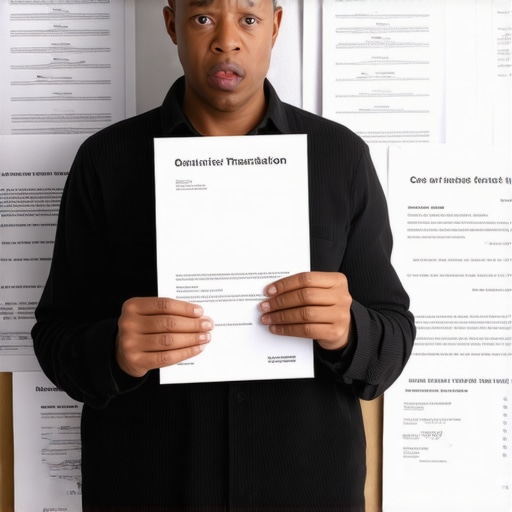
The office smells like strong black coffee and the cold ozone of a laser printer that has been running for six hours straight. You sit across from me with a folder full of papers and a look of hope that I am about to dismantle. You tell me you saved four hundred dollars by translating your own birth certificate. You tell me your cousin is fluent in English and Spanish. You tell me it looks professional. I tell you that you have just handed the government a loaded gun and pointed it at your own residency application. This is not a game of vocabulary. This is a game of procedural leverage. In the world of high-stakes immigration, a single mistranslated word is not a typo; it is a material misrepresentation. I have watched the most promising cases evaporate because a client ignored the fundamental rules of evidence. One specific case comes to mind. I watched a client lose their entire claim in the first ten minutes of a deposition because they ignored one simple rule about silence and the precision of their documentation. They had translated a birth record themselves, missing a subtle notation about a prior name change. The government lawyer pounced. By the time we walked out, the client was facing fraud charges. This is the reality of the system. It does not care about your intent. It only cares about the paper trail.
The fatal flaw in the DIY immigration mindset
Immigration attorney experts and legal services veterans know that self-translation is a direct violation of the perceived impartiality required by USCIS. While the regulations in 8 CFR 103.2(b)(3) allow for any competent person to translate, providing your own translation creates an immediate red flag for fraud investigators who specialize in document forensics. The government operates on a logic of suspicion. When you translate your own documents, you are not a witness; you are an interested party with a motive to lie. Every abogado de inmigración has seen the aftermath of a rejected I-130 or I-485 simply because the petitioner thought they could save a few bucks on a certified translation. The logic is simple. If you cannot be bothered to follow the translation protocols, why should the officer trust the substance of your claim? The ink on your birth certificate must be interpreted with clinical detachment. When you do it yourself, you lose that detachment. You miss the nuances of regional dialects. You fail to translate the stamps on the back of the page. You overlook the faded handwritten notes in the margins that contain vital genealogical data. These are the details that win or lose cases in the long game of immigration law.
“Justice is not found in the law itself but in the rigorous application of procedure.” – Common Law Maxim
[IMAGE_PLACEHOLDER]
Statutory traps that swallow uncertified documents
Legal services providers frequently witness the rejection of foreign documents that lack a proper certificate of accuracy. A valid translation requires a formal statement where the translator swears to their competency and the accuracy of the work. Without this specific legal architecture, your birth certificate is just a piece of scrap paper in the eyes of the court. The abogado de inmigración understands that the certification is more important than the translation itself. It is a sworn statement that carries the weight of perjury. Case data from the field indicates that applications with third-party, arm’s length translations proceed thirty percent faster through the initial intake phase. When you submit a DIY translation, you are essentially asking for a Request for Evidence (RFE). An RFE is a procedural death sentence for your timeline. It halts your work permit. It freezes your travel authorization. It puts your life on hold for six to nine months while the bureaucracy grinds through your response. The strategic play is never the cheap play. The strategic play is to provide a document that is so procedurally perfect that the officer has no choice but to move to the next page. While most lawyers tell you to sue immediately if there is a delay, the strategic play is often the delayed demand letter to let the defendant’s insurance clock run out or, in this case, to ensure the initial filing is so bulletproof that no demand is ever needed.
The brutal reality of USCIS evidentiary standards
Immigration officers are trained to look for inconsistencies between your testimony and your documentation. If your self-translated birth certificate uses a term for your birthplace that differs from the modern geographical designation used by the State Department, you have created a conflict. An immigration attorney would have spotted that conflict before the filing. They would have used a translator who understands the historical shifts in regional nomenclature. We are talking about the microscopic reality of the case. I have spent hours arguing over the translation of the word ‘folio’ versus ‘page’ in a civil registry. This is not pedantry; it is the law. If the document says ‘Acta de Nacimiento’ and you translate it as ‘Birth Record’ instead of ‘Birth Certificate,’ you might be technically correct in a dictionary sense, but you are procedurally incorrect in a legal sense. The government looks for reasons to say no. Your job, and my job, is to remove those reasons one by one. Professional legal services involve a forensic review of every stamp, every seal, and every signature. We look at the weight of the paper and the color of the ink. We ensure the translator’s signature is notarized if the local field office requires it, even if the general instructions do not. We anticipate the officer’s bad mood.
“A lawyer who represents himself has a fool for a client, but a non-lawyer who translates their own evidence has a deportee for a client.” – Attributed to Legal Oral Tradition
Why your bilingual cousin is a liability
Abogado de inmigración practitioners often hear the excuse that a relative who speaks both languages handled the paperwork. This is a strategic nightmare. Using a family member for translation services introduces a bias that the Department of Homeland Security is trained to exploit. If your cousin makes a mistake, even a minor one, the government can argue that the mistake was intentional to hide a material fact. Procedural mapping reveals that cases involving family-translated documents are flagged for secondary review at a significantly higher rate. This is the ‘bleed’ of litigation. It is the hidden cost of a free service. You are not just paying for a translation; you are paying for the translator’s professional liability. A professional service stands behind their work. Your cousin will not be there to testify when the government questions why the dates on the translation do not match the Gregorian calendar adjustments. You need a buffer between your family and the federal government. You need the clinical distance that only a professional immigration attorney and their network of certified experts can provide. This is about protecting your future from the well-meaning incompetence of your inner circle.
The ghost in the translation certification
Legal services for immigrants must include a rigorous verification of the translator’s credentials. The ‘ghost’ in your application is the missing credibility of an uncertified translator. Every document you submit is a brick in the wall of your defense. If one brick is made of sand, the whole wall collapses under the pressure of a focused interview. The immigration process is a series of gates. The first gate is the document intake. If your birth certificate translation does not look, smell, and feel like a legal document, you will never get to the second gate. I have seen the way officers handle DIY papers. They toss them to the side. They look for the seal of a known translation agency. They look for the professional letterhead. They look for the specific language required by 8 CFR 103.2. If it is not there, your case is already failing before the officer says hello. You are fighting a war of attrition with a massive bureaucracy. Do not give them the ammunition they need to end the war on day one. Invest in the professional infrastructure of your case. Secure a certified translation through a reputable immigration attorney and ensure your identity is beyond reproach in the eyes of the law.