
Why Your Previous Overstay Could Trigger a Ten Year Bar
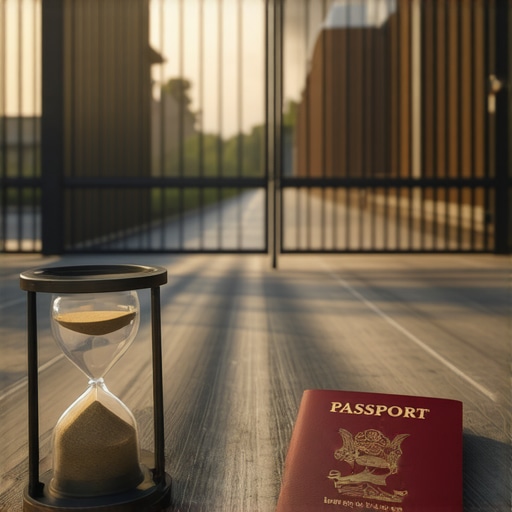
Sit down and pour yourself a cup of black coffee because we need to discuss the reality of your situation without the sugar coating usually provided by marketing brochures. I recently spent 14 hours deconstructing a travel record that was designed to be unreadable by the average person, only to find the one date that changed everything for a family trying to stay together. It was not a grand legal theory that saved them; it was the forensic application of a calendar. In the world of federal immigration, your intentions are irrelevant compared to the cold, hard math of your presence. If you spent more than 365 days in the United States without a valid visa or an approved extension, the law views you through a lens of strict liability. This is the realm where legal services become a shield against a bureaucratic machine that does not care about your story. An immigration attorney will tell you that the ten year bar is not a suggestion; it is a statutory wall that drops the moment you leave the country after an overstay of a specific duration. Let us look at the mechanics of this wall before you make a move that cannot be undone.
The arithmetic of a broken border dream
Unlawful presence begins the day after your authorized stay expires or the day after you enter without inspection. Case data from the field indicates that most applicants fail to realize that even a single day past the date on their I-94 card counts toward the statutory triggers. If you accumulate more than 180 days of unlawful presence but less than one year, you face a three year bar. If you exceed 365 days, the ten year bar is triggered. Procedural mapping reveals that these bars only take effect when the individual actually departs the United States. While some lawyers tell you to sue immediately or file for every available benefit, the strategic play is often the delayed demand for a records search to ensure the government is not operating on faulty data. The clock is the most aggressive prosecutor in the room. It does not stop for holidays or personal emergencies. If you are seeking the help of an abogado de inmigración, you must provide them with every single passport stamp and boarding pass you have ever held. The government will have these records, and if you do not, you are walking into a trap of your own making.
“Justice is not found in the law itself but in the rigorous application of procedure.” – Common Law Maxim
Why your calendar is your worst witness
The Department of Homeland Security maintains a digital shadow of every entry and exit that contradicts your memory of the events. Many people believe that if they were never caught or never received a notice to appear in court, their overstay does not exist. This is a dangerous fallacy that leads to summary denials at the consulate. Evidence shows that the Customs and Border Protection database is the ultimate authority in these matters. If you tell an immigration attorney that you stayed for five months, but the database shows seven, the law will follow the digital record every time. There is a contrarian data point here that most people miss: staying longer to build a life actually weakens your legal standing under the current statutory framework. The more roots you grow, the harder the ten year bar hits when it is finally triggered. It is a paradox of the American legal system that your deep ties to the community can be used as evidence that you are unlikely to respect future visa expirations.
The ghost in the consular interview
Consular officers are trained to look for gaps in your residential history that suggest periods of unlawful presence. When you sit for an interview in your home country, the officer is not just checking your paperwork; they are looking for the hidden years. If you cannot account for your whereabouts between 2012 and 2015, they will assume you were in the United States. This assumption shifts the burden of proof to you. You must prove the negative. This is where legal services become essential because proving you were not in a country requires a specific type of documentary trail. Procedural mapping reveals that many applicants are blindsided by questions about their previous work history or the schools their children attended during the overstay period. Silence at this moment is a confession. The officer will see the overstay, trigger the ten year bar, and hand you a sheet of paper that effectively ends your journey for a decade. It is a cold, clinical process that happens in seconds but lasts for years.
How the government counts the seconds you stayed
Calculating unlawful presence requires a deep dive into the specific nuances of your visa category and any pending applications. Not every day spent without a valid visa is considered unlawful presence. For example, time spent while a non-frivolous application for an extension or change of status is pending may not count toward the bar, provided the application was filed before the original status expired. However, the logic of the system is designed to catch the unwary. If your application is denied for a technicality, the period of unlawful presence may relate back to the original expiration date. This is the granular reality of the law. You are not just fighting a policy; you are fighting a series of interconnected deadlines. An abogado de inmigración must perform a forensic audit of your entire history to identify these safe harbors. Without this audit, you are guessing with your life. The difference between 364 days and 365 days is nine years of your life. There is no middle ground and no room for error.
“The right to exclude is an inherent attribute of sovereignty.” – Supreme Court of the United States
The myth of the easy waiver
Waivers for the ten year bar are not granted based on your desire to be in the United States but on the extreme hardship of a citizen. People often hear about the I-601A waiver and assume it is a simple form. It is not. It is a grueling litigation process that requires proving that a U.S. citizen spouse or parent would suffer in a way that goes far beyond the common consequences of separation. Case data from the field indicates that the standard for extreme hardship is being interpreted more strictly than ever before. You cannot just say you will miss each other. You must demonstrate medical, financial, or psychological devastation. While many firms will take your money and promise a waiver, the strategic play is to build a mountain of evidence long before the application is filed. You have to show that the U.S. citizen cannot relocate to your home country and cannot survive in the United States without you. It is a high bar, and the government is the gatekeeper.
Where the I-601A fails most applicants
The provisional waiver process is a minefield that can blow up if there are any other grounds of inadmissibility present. If the government suspects you have a criminal record, committed fraud, or have a permanent bar due to multiple illegal entries, your I-601A will be denied. This is the brutal truth: a waiver for an overstay does not cure a lie on a previous visa application. Many applicants find themselves trapped in their home country because they were granted a provisional waiver for the overstay, only to have the consular officer find a different issue during the interview. At that point, the provisional waiver is revoked, and you are stuck outside the border. Legal services must include a comprehensive search for any potential landmines in your background. If your immigration attorney is not asking you about your worst mistakes, they are not doing their job. You need someone who is more skeptical than the government to ensure you actually have a path back home.
Tactical timing of the voluntary departure
Leaving the country voluntarily before the 180 day mark is often the only way to avoid the statutory bars entirely. Most people wait until they are forced to leave, which is the worst possible strategy. If you realize you have overstayed, every hour you remain increases the risk of a lifetime of separation. Procedural mapping shows that those who exit and address the issue from abroad before the triggers hit have a significantly higher success rate in obtaining future visas. This is the contrarian advice that hurts to hear: sometimes the best way to stay in America is to leave it immediately. This allows you to maintain a clean record and apply for a legal path without the weight of a ten year bar hanging over your head. It requires discipline and a long term view of the chess board. The courtroom is a territory, and if you have already lost the ground of unlawful presence, you must retreat to a position where you can still win the war. The goal is the green card, not just one more month in the shadows. Consult with an abogado de inmigración to map out this exit and re-entry strategy before the clock runs out on your future. There are no shortcuts in this process. There is only the law, the calendar, and the evidence you bring to the table. Drink your coffee and start counting the days because the government already has.